A toddler girl is flourishing after receiving treatment for a rare genetic disease. In a first for this disease, she received that treatment before she was even born.
Sixteen-month-old Ayla has infantile-onset Pompe disease — a genetic disorder that can cause organ damage that begins before birth. Babies born with Pompe have enlarged hearts and weak muscles. If left untreated, most infants die before they turn 2. Treatment typically begins after birth, but that tactic doesn’t prevent the irreversible, and potentially deadly, organ damage that happens in utero.
Ayla received treatment while still in the womb as part of an early-stage clinical trial. Today, the toddler has a normal heart and is meeting developmental milestones, including walking. Her success is a sign that prenatal treatment of the disease can stave off organ damage and improve babies’ lives, researchers report November 9 in the New England Journal of Medicine.
“It’s a great step forward,” says Bill Peranteau, a pediatric and fetal surgeon at the Children’s Hospital of Philadelphia who wasn’t involved in the work.
Infantile-onset Pompe disease is a rare condition that affects fewer than 1 out of 138,000 babies born globally. It’s caused by genetic changes that either reduce levels of an enzyme called acid alpha-glucosidase, or GAA, or prevent the body from making it at all.
Inside cellular structures called lysosomes, GAA turns the complex sugar glycogen into glucose, the body’s main source of energy. Without GAA, glycogen accumulates to dangerously high levels that can damage muscle tissue, including the heart and muscles that help people breathe.
While some people can develop Pompe disease later in life or have a less severe version that doesn’t enlarge the heart, Ayla was diagnosed with the most severe form. Her body doesn’t make any GAA. Replacing the missing enzyme through an infusion can help curb glycogen buildup, especially if treatment starts soon after birth (SN: 4/26/04).
Early studies in mice suggested that treatment before birth showed promise at controlling a Pompe-like disease. So pediatric geneticist Jennifer L. Cohen of Duke University School of Medicine and colleagues launched an early-stage clinical trial covering Pompe and seven similar conditions, broadly called lysosomal storage diseases.
The team began treating Ayla by infusing GAA through the umbilical vein when her mother was 24 weeks pregnant. Her mother received a total of six infusions, one every two weeks. After birth, the medical team has been treating Ayla with now-weekly infusions, and she will continue to need treatment throughout her life.
The therapy was safe for both mother and child, Cohen says. But until more patients are treated and monitored in the trial, it’s unclear whether this prenatal enzyme replacement is always a safe and effective option. So far, two other patients with other lysosomal storage diseases have received treatment in the trial, but it’s too early to know how they’re faring.
Researchers are also exploring in utero therapies for other rare genetic diseases, including the blood disorder alpha thalassemia. And in 2018, researchers described three children who were successfully treated for a sweating disorder before they were born.
Such approaches have the potential to treat other rare diseases in the future, Peranteau says. But it will be important to first show that any newly developed treatments are safe and work when given after birth before trying them in utero.
For now, it’s unclear how Ayla and other treated patients will fare over the long term, Cohen says. “We’re cautiously optimistic, but we want to be careful and be monitoring throughout the patient’s life. Especially those first five years, I think, are going to be critical to see how she does.”
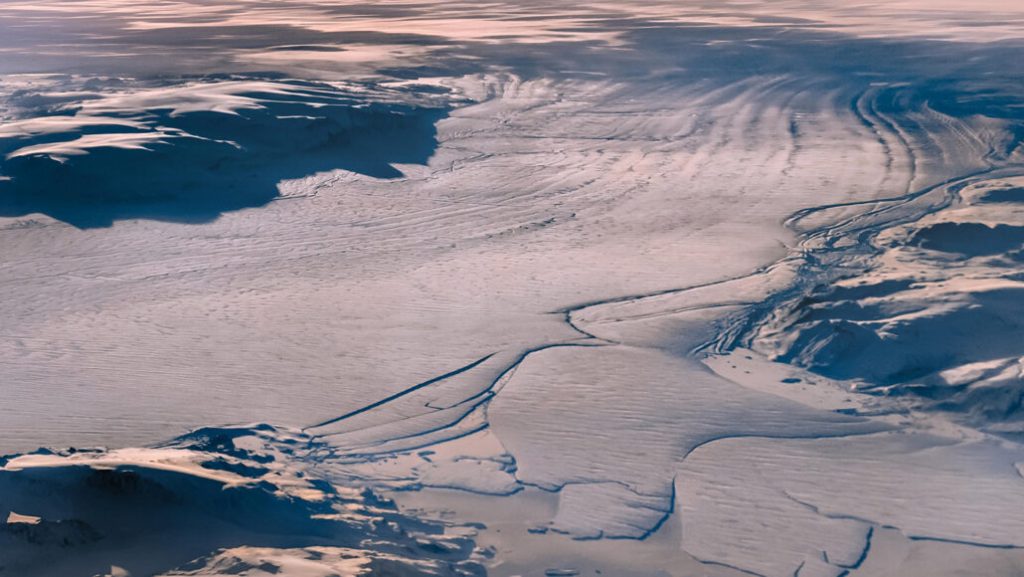
Sea level rise may proceed faster than expected in the coming decades, as a gargantuan flow of ice slithering out of Greenland’s remote interior both picks up speed and shrinks.
By the end of the century, the ice stream’s deterioration could contribute to nearly 16 millimeters of global sea level rise — more than six times the amount scientists had previously estimated, researchers report November 9 in Nature.
The finding suggests that inland portions of large ice flows elsewhere could also be withering and accelerating due to human-caused climate change, and that past research has probably underestimated the rates at which the ice will contribute to sea level rise (SN: 3/10/22).
“It’s not something that we expected,” says Shfaqat Abbas Khan, a glaciologist at the Technical University of Denmark in Kongens Lyngby. “Greenland and Antarctica’s contributions to sea level rise in the next 80 years will be significantly larger than we have predicted until now.”
In the new study, Khan and colleagues focused on the Northeast Greenland Ice Stream, a titanic conveyor belt of solid ice that crawls about 600 kilometers out of the landmass’s hinterland and into the sea. It drains about 12 percent of the country’s entire ice sheet and contains enough water to raise global sea level more than a meter. Near the coast, the ice stream splits into two glaciers, Nioghalvfjerdsfjord and Zachariae Isstrøm.
While frozen, these glaciers keep the ice behind them from rushing into the sea, much like dams hold back water in a river (SN: 6/17/21). When the ice shelf of Zachariae Isstrøm collapsed about a decade ago, scientists found that the flow of ice behind the glacier started accelerating. But whether those changes penetrated deep into Greenland’s interior remained largely unresolved.
“We’ve mostly concerned ourselves with the margins,” says atmosphere-cryosphere scientist Jenny Turton of the nonprofit Arctic Frontiers in Tromsø, Norway, who was not involved in the new study. That’s where the most dramatic changes with the greatest impacts on sea level rise have been observed, she says (SN: 4/30/22, SN: 5/16/13).
Keen to measure small rates of movement in the ice stream far inland, Khan and his colleagues used GPS, which in the past has exposed the tortuous creeping of tectonic plates (SN: 1/13/21). The team analyzed GPS data from three stations along the ice stream’s main trunk, all located between 90 and 190 kilometers inland.
The data showed that the ice stream had accelerated at all three points from 2016 to 2019. In that time frame, the ice speed at the station farthest inland increased from about 344 meters per year to surpassing 351 meters per year.
The researchers then compared the GPS measurements with data collected by polar-orbiting satellites and aircraft surveys. The aerial data agreed with the GPS analysis, revealing that the ice stream was accelerating as far as 200 kilometers upstream. What’s more, shrinking — or thinning — of the ice stream that started in 2011 at Zachariae Isstrøm had propagated more than 250 kilometers upstream by 2021.
“This is showing that glaciers are responding along their length faster than we had thought previously,” says Leigh Stearns, a glaciologist from the University of Kansas in Lawrence, who was not involved in the study.
Khan and his colleagues then used the data to tune computer simulations that forecast the ice stream’s impact on sea level rise. The researchers predict that by 2100, the ice stream will have singlehandedly contributed between about 14 to 16 millimeters of global sea level rise — as much as Greenland’s entire ice sheet has in the last 50 years.
The findings suggest that past research has probably underestimated rates of sea level rise due to the ice stream, Stearns and Turton say. Similarly, upstream thinning and acceleration in other large ice flows, such as those associated with Antarctica’s shrinking Pine Island and Thwaites glaciers, might also cause sea levels to rise faster than expected, Turton says (SN: 6/9/22, SN: 12/13/21).
Khan and his colleagues plan to investigate inland sections of other large ice flows in Greenland and Antarctica, with the hopes of improving forecasts of sea level rise (SN: 1/7/20).
Such forecasts are crucial for adapting to climate change, Stearns says. “They’re helping us better understand the processes so that we can inform the people who need to know that information.”
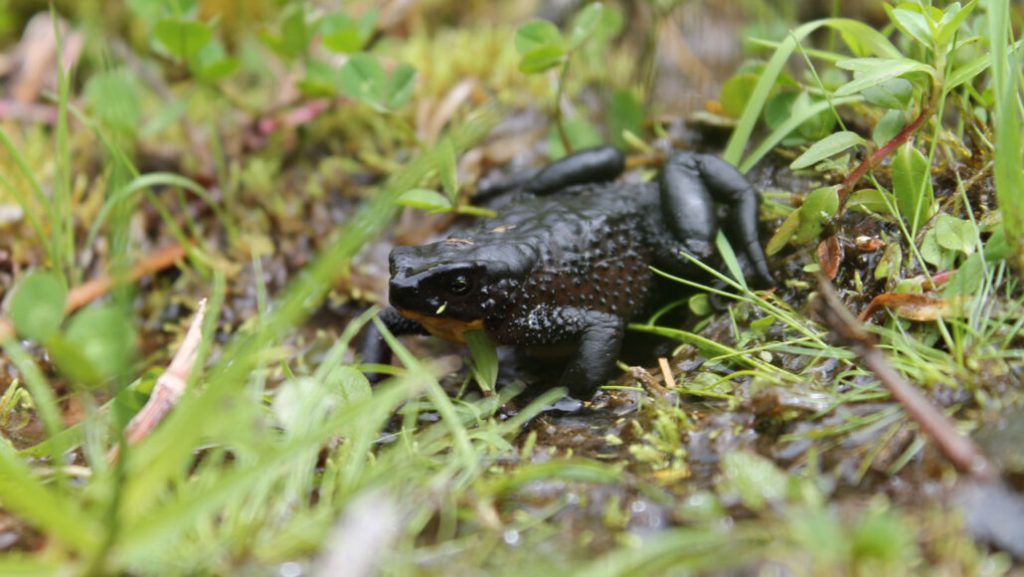
Across Central and South America, one group of bejeweled frogs is making a comeback.
Harlequin frogs — a genus with over 100 brightly colored species — were one of the groups of amphibians hit hardest by a skin-eating chytrid fungus that rapidly spread around the globe in the 1980s (SN: 3/28/19). The group is so susceptible to the disease that with the added pressures of climate change and habitat loss, around 70 percent of known harlequin frog species are now listed as extinct or critically engendered.
But in recent years, roughly one-third of harlequin frogs presumed to have gone extinct since the 1950s have been rediscovered, researchers report in the December Biological Conservation.
The news is a rare “glimmer of hope” in an otherwise bleak time for amphibians around the globe, says Kyle Jaynes, a conservation biologist at Michigan State University in Hickory Corners.
The comeback frog For Jaynes, the path to uncovering how many harlequin frogs have returned from the brink of extinction started when he heard about the Jambato harlequin frog (Atelopus ignescens). This black and orange frog was once so widespread in the Ecuadorian Andes that its common name comes from the word ”jampatu,” which means “frog” in Kichwa, the Indigenous language of the area.
Then came the fungus. From 1988 to 1989, the frogs “just completely disappeared,” Jaynes says. For years, people searched for traces of the frogs. Scientists ran extensive surveys, and pastors offered rewards to their congregants for anyone that could find one.
Then in 2016, a boy discovered a small population of Jambato frogs in a mountain valley in Ecuador. For a species that had been missing for decades, “it seemed like a miracle,” says Luis Coloma, a researcher and conservationist at the Centro Jambatu de Investigación y Conservación de Anfibios in Quito, Ecuador.
Coloma runs a breeding program for Jambato and other Ecuadorian frogs threatened with extinction. In 2019, Jaynes was part of a group of researchers visiting Coloma’s lab to see if they could work out how these frogs had cheated death. After the Jambato frogs returned to the scene, the team started hearing about other missing harlequin species being spotted for the first time in years.
Those stories led Jaynes, Coloma and their colleagues to comb through reports to see just how many harlequin frogs had reappeared. Of the more than 80 species to have gone missing since 1950, as many as 32 species were spotted in the last two decades — a much higher number than the team had expected.
“I think we were all shocked,” Jaynes says.
Ensuring conservation The news comes with caveats. For one thing, it seems like most species avoided disappearing by a hair, and their numbers are still dangerously low. So extinction is still very much on the table. “We’ve got a second chance here,” Jaynes says. “But there is still a lot we have to do to conserve these species.”
Ensuring the continuation of the rediscovered species will depend in part on understanding how they’ve managed to survive so far. Some scientists have speculated that amphibians at higher elevations might be more susceptible to the fungus since it prefers lower temperatures. But a cursory analysis by Jaynes and colleagues revealed that harlequin frogs are being rediscovered at all elevations across their range, indicating that something else may be at play. Jaynes suspects that there is a biological basis for which harlequin frogs live, such as having developed resistance to the fungus (SN: 3/29/18).
Studies like this one can serve as a “launching pad” for understanding how amphibians might survive the dual threats of disease and climate change, says Valerie McKenzie, a disease ecologist at the University of Colorado Boulder who was not involved with the study.
In the meantime, the fact that people are starting to notice the reemergence of species that were once thought to be gone forever “gives me a lot of hope that other species that are harder to observe — because they’re nocturnal or live high in the canopy — are also recovering,” she says. “It motivates me to think we should go look for them.”
Body changes at the brink of adulthood can get awkward in humans, but at least our eyes don’t pop out of our heads on stalks longer than our legs.
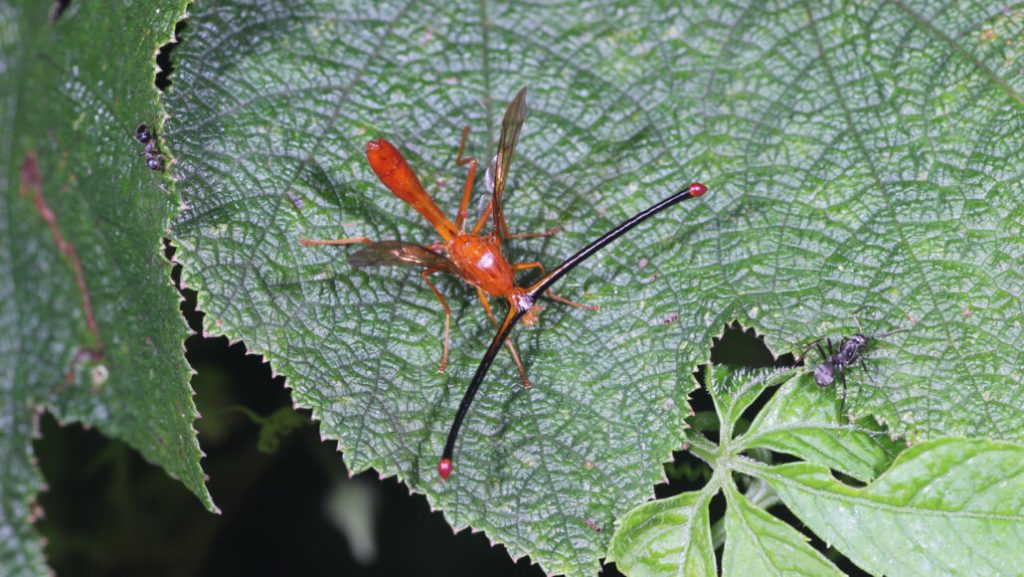
High-rise eyes, however, give macho pizzazz to the adult male Pelmatops fruit fly. In one of the stalkier species, P. tangliangi, the eyes-up transformation takes only about 50 minutes, a new study reports. Once stretched, the skinny eyestalks darken and harden, keeping the eyes stuck out like selfie sticks for the rest of the fly’s life. The details of P. tangliangi’s eye lift come from the first published photo sequence of their ocular blossoming, which appears in the September Annals of the Entomological Society of America. Biologists have known that eyestalks evolved in eight different fly families. Yet Pelmatops flies have gotten so little scientific attention that a lot of their basic biology has been a string of question marks.
Video images show the eyestalks curl and rise irregularly. Yet “they are not flopping around while partly inflated,” says Xiaolin Chen, an entomologist and evolutionary biologist at the Chinese Academy of Sciences in Beijing. “They seem slightly stiff, but still flexible enough.”
Females of the species may raise shorter eyestalks too — if Chen and her colleagues have found the right females. Chen suspects that what are now named as two species, based on the few specimens available, may just be two sexes of the same species. The new paper describes a male P. tangliangi mating with a female known by a different species name. Her stalks aren’t as magnificent as his, but she has some.
While the headgear can burden a flying insect, long eyestalks may give flies some swagger. These Pelmatops and other kinds of stalk-eyed flies face off, eyestalk to eyestalk, with uppity intruders. There’s no knocking and locking stalks in fierce fly disputes though. Any pushing and shoving, Chen says, is “done with other body parts.”
Extreme eyes may also have other benefits. In the wild, Chen finds these fruit flies on long stems of Rubus berry brambles. The eyes naturally periscope outward and upward, allowing the flies to spot danger while the body stays hidden in the greenery.
To kill drug-resistant bacteria, “last-resort” antibiotics borrow a tactic from Medusa’s playbook: petrification.
New high-resolution microscope images show that a class of antibiotics called polymyxins crystallize the cell membranes of bacteria. The honeycomb-shaped crystals that form turn the microbes’ usually supple skins of fat molecules into thin brittle sheets, researchers report October 21 in Nature Communications. When the petrified membranes break, the bacteria die.
The finding was a total surprise, says Sebastian Hiller, a structural biologist at the University of Basel in Switzerland. Hiller, biophysicist Selen Manioğlu and their colleagues had been using the antibiotics as a control for a different experiment. When the researchers turned on their microscopes, “we saw these waffles,” Hiller says. “I immediately recognized, wow, this must be something special.”
Polymyxin antibiotics like colistin were discovered in the 1940s and are now used as a powerful last-ditch defense against bacteria that have evolved resistance to most other drugs. Researchers already knew that polymyxins somehow interfere with bacterial cell membranes. But nobody had imagined a scenario like the “waffles” the team discovered. In the new study, Hiller and colleagues exposed bits of cell membrane from Escherichia coli to varying concentrations of colistin. Imaging with atomic force microscopy revealed that crystals formed at the minimum concentrations required to kill the bacteria. Colistin-resistant strains exposed to the drug didn’t form crystals.
The results indicate that polymyxins work by arranging the cell membrane into a crystalline structure that leaves it brittle and vulnerable. “That’s something that has not even remotely been hypothesized so far,” says Markus Weingarth, a biochemist at Utrecht University in the Netherlands who was not involved in the work. “It’s a very important study. I’d even say it’s a breakthrough.”
How exactly polymyxins crystallize cell membranes remains unclear. That’s a problem because some bacteria have developed resistance to polymyxins and are becoming more widespread (SN: 5/27/16; SN: 10/30/90). Without more studies like this one to help reveal how the drugs work, scientists can’t effectively modify the antibiotics to make them more effective, Weingarth says.
Hiller hopes that this first glimpse of polymyxins’ petrifying powers will help scientists combat resistance to the antibiotics.
“Understanding these concepts will definitely bring a lot of ideas — and the potential to make new drugs,” Hiller says.
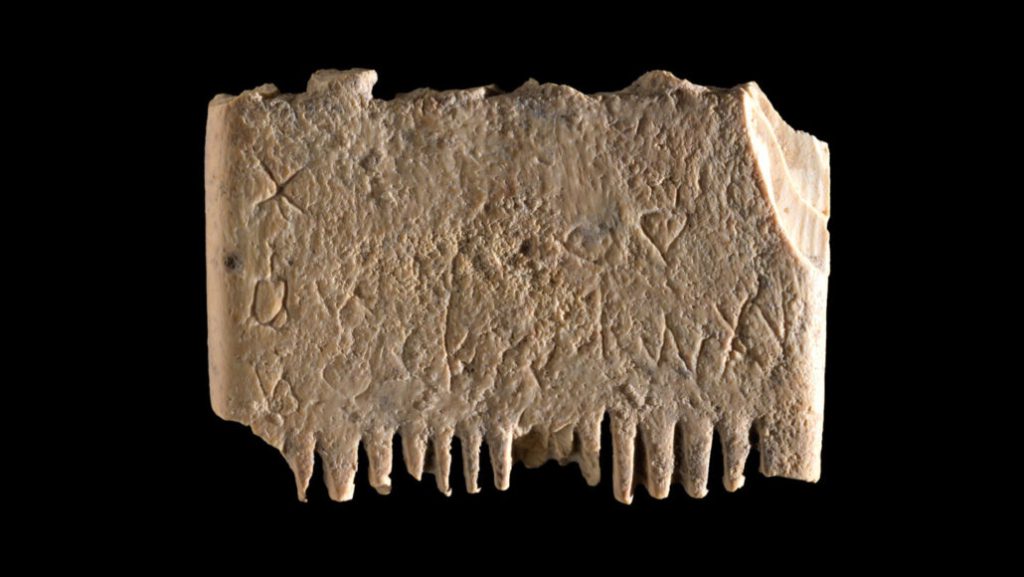
Engraved into the side of a nearly 4,000-year-old ivory comb is a simple wish: Get these lice out of my hair.
This faint inscription, written in the early language of the ancient Canaanites, represents the earliest known instance of a complete sentence written using a phonetic alphabet, says archaeologist Yosef Garfinkel of the Hebrew University of Jerusalem.
The writing system of the Canaanites, who lived in a region in the eastern Mediterranean called the Levant until around 2,000 years ago, later served as a major basis for many modern alphabets (SN: 7/27/17). That makes the comb “the most important object I’ve ever found during an excavation,” says Garfinkel. The research was published November 9 in the Jerusalem Journal of Archaeology. The Canaanites were a cultural group that traded widely across the Mediterranean. Few of their written records have survived, so most of what researchers know about them come from other documents, such as the Old Testament.
The comb was the unearthed in 2016 among the ruins of the ancient city of Lachish in present-day Israel. Years later, when the comb was sent to a lab to search for traces of lice, someone noticed faint symbols etched on the side. A closer look revealed that the symbols spelled out the sentence, “May this tusk root out the lice of the hair and the beard,” Garfinkel and colleagues report November 9 in the Jerusalem Journal of Archaeology.
The discovery may offer a glimpse into the life of one of Lachish’s wealthy denizens. The fact that the sentence refers to a beard suggests it belonged to an elite man, Garfinkel says, since elephant ivory was an expensive good that had to be imported from Egypt.
The plea against lice is “so human,” says Garfinkel, who notes that other writings from the time tend to center around royal accomplishments or religion. It also appears that the comb was able to fulfill its purpose, at least somewhat. Between the teeth, the researchers found the ancient remains of a louse.
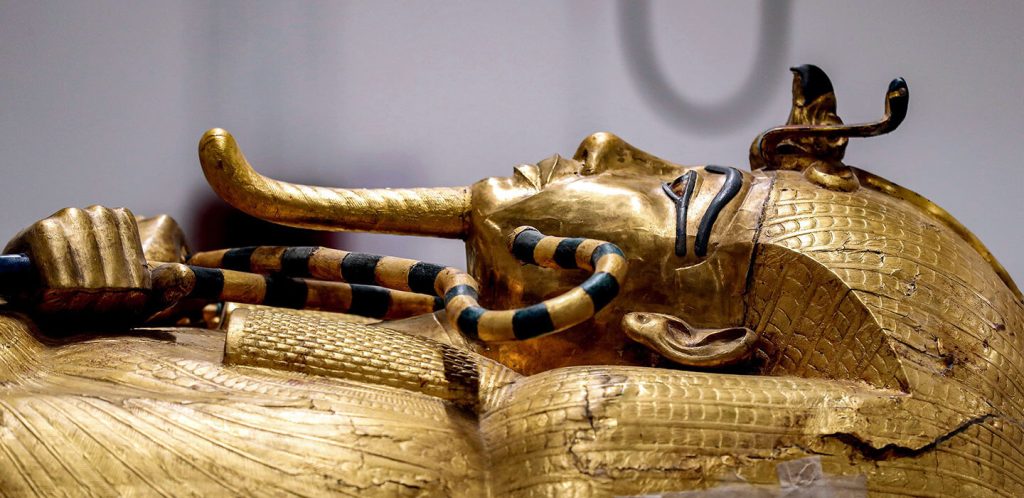
One hundred years ago, archaeologist Howard Carter stumbled across the tomb of ancient Egypt’s King Tutankhamun. Carter’s life was never the same. Neither was the young pharaoh’s afterlife.
Newspapers around the world immediately ran stories about Carter’s discovery of a long-lost pharaoh’s grave and the wonders it might contain, propelling the abrasive Englishman to worldwide acclaim. A boy king once consigned to ancient obscurity became the most famous of pharaohs (SN: 12/18/76).
It all started on November 4, 1922, when excavators led by Carter discovered a step cut into the valley floor of a largely unexplored part of Egypt’s Valley of the Kings. By November 23, the team had uncovered stairs leading down to a door. A hieroglyphic seal on the door identified what lay beyond: King Tutankhamun’s tomb. Tutankhamun assumed power around 1334 B.C., when he was about 10 years old. His reign lasted nearly a decade until his untimely demise. Although a minor figure among Egyptian pharaohs, Tutankhamun is one of the few whose richly appointed burial place was found largely intact.
An unusually meticulous excavator for his time, Carter organized a 10-year project to document, conserve and remove more than 6,000 items from Tutankhamun’s four-chambered tomb. While some objects, like Tut’s gold burial mask, are now iconic, many have been in storage and out of sight for decades. But that’s about to change. About 5,400 of Tutankhamun’s well-preserved tomb furnishings are slated to soon go on display when the new Grand Egyptian Museum, near the Pyramids of Giza, opens.
“The [Tut] burial hoard is something very unique,” Shirin Frangoul-Brückner, managing director of Atelier Brückner in Stuttgart, Germany, the firm that designed the museum’s Tutankhamun Gallery, said in an interview released by her company. Among other items, the exhibit will include the gold burial mask, musical instruments, hunting equipment, jewelry and six chariots.
Even as more of Tut’s story is poised to come to light, here are four things to know on the 100th anniversary of his tomb’s discovery.
Tut may not have been frail. Tutankhamun has a reputation as a fragile young man who limped on a clubfoot. Some researchers suspect a weakened immune system set him up for an early death.
But “recent research suggests it’s wrong to portray Tut as a fragile pharaoh,” says Egyptologist and mummy researcher Bob Brier, who is an expert on King Tut. His new book Tutankhamun and the Tomb That Changed the World chronicles how 100 years of research have shaped both Tut’s story and archaeology itself.
Clues from Tutankhamun’s mummy and tomb items boost his physical standing, says Brier, of Long Island University in Brookville, N.Y. The young pharaoh might even have participated in warfare.
Military chariots, leather armor and archery equipment buried with Tutankhamun show that he wanted to be viewed as a hunter and a warrior, Brier says. Inscribed blocks from Tutankhamun’s temple, which were reused in later building projects before researchers identified them, portray the pharaoh leading charioteers in undated battles.
If more blocks turn up showing battle scenes marked with dates, it would suggest Tutankhamun probably participated in those conflicts, Brier says. Pharaohs typically recorded dates of actual battles depicted in their temples, though inscribed scenes may have exaggerated their heroism.
The frail story line has been built in part on the potential discovery of a deformity in Tut’s left foot, along with 130 walking sticks found in his tomb. But ancient Egyptian officials were often depicted with walking sticks as signs of authority, not infirmity, Brier says. And researchers’ opinions vary about whether images of Tut’s bones reveal serious deformities.
X-rays of the recovered mummy from the 1960s show no signs of a misshapen ankle that would have caused a limp. Neither did CT images examined in 2005 by the Egyptian Mummy Project, headed by Egyptologist and former Egyptian Minister of Antiquities Zahi Hawass.
Then a 2009 reexamination of the CT images by the same researchers indicated that Tutankhamun had a left-foot deformity generally associated with walking on the ankle or the side of the foot, the team reported. The team’s radiologist, Sahar Saleem of Egypt’s Cairo University, says the CT images show that Tutankhamun experienced a mild left clubfoot, bone tissue death at the ends of two long bones that connect to the second and third left toes and a missing bone in the second left toe. Those foot problems would have “caused the king pain when he walked or pressed his weight on his foot, and the clubfoot must have caused limping,” Saleem says. So a labored gait, rather than an appeal to royal authority, could explain the many walking sticks placed in Tutankhamun’s tomb, she says.
Brier, however, doubts that scenario. Tutankhamun’s legs appear to be symmetrical in the CT images, he says, indicating that any left foot deformity was too mild to cause the pharaoh regularly to put excess weight on his right side while walking.
Whether or not the boy king limped through life, the discovery and study of his mummy made it clear that he died around age 19, on the cusp of adulthood. Yet Tut’s cause of death still proves elusive.
In a 2010 analysis of DNA extracted from the pharaoh’s mummy, Hawass and colleagues contended that malaria, as well as the tissue-destroying bone disorder cited by Saleem from the CT images, hastened Tutankhamun’s death. But other researchers, including Brier, disagree with that conclusion. Further ancient DNA studies using powerful new tools for extracting and testing genetic material from the mummy could help solve that mystery.
Tut’s initial obscurity led to his fame. After Tutankhamun’s death, ancient Egyptian officials did their best to erase historical references to him. His reign was rubbed out because his father, Akhenaten, was a “heretic king” who alienated his own people by banishing the worship of all Egyptian gods save for one.
“Akhenaten is the first monotheist recorded in history,” Brier says. Ordinary Egyptians who had prayed to hundreds of gods suddenly could worship only Aten, a sun god formerly regarded as a minor deity.
Meeting intense resistance to his banning of cherished religious practices, Akhenaten — who named himself after Aten — moved to an isolated city, Amarna, where he lived with his wife Nefertiti, six girls, one boy and around 20,000 followers. After Akhenaten died, residents of the desert outpost returned to their former homes. Egyptians reclaimed their old-time religion. Akhenaten’s son, Tutankhaten — also originally named after Aten — became king, and his name was changed to Tutankhamun in honor of Amun, the most powerful of the Egyptian gods at the time.
Later pharaohs omitted from written records any mentions of Akhenaten and Tutankhamun. Tut’s tomb was treated just as dismissively. Huts of craftsmen working on the tomb of King Ramses VI nearly 200 years after Tut’s death were built over the stairway leading down to Tutankhamun’s nearby, far smaller tomb. Limestone chips from the construction littered the site. The huts remained in place until Carter showed up. While Carter found evidence that the boy king’s tomb had been entered twice after it was sealed, whoever had broken in took no major objects.
“Tutankhamun’s ignominy and insignificance saved him” from tomb robbers, says UCLA Egyptologist Kara Cooney.
Tut’s tomb was a rushed job. Pharaohs usually prepared their tombs over decades, building many rooms to hold treasures and extravagant coffins. Egyptian traditions required the placement of a mummified body in a tomb about 70 days after death. That amount of time may have allowed a mummy to dry out sufficiently while retaining enough moisture to fold the arms across the body inside a coffin, Brier suspects.
Because Tutankhamun died prematurely, he had no time for extended tomb preparations. And the 70-day burial tradition gave craftsmen little time to finish crucial tomb items, many of which required a year or more to make. Those objects include a carved stone sarcophagus that encased three nested coffins, four shrines, hundreds of servant statues, a gold mask, chariots, jewelry, beds, chairs and an alabaster chest that contained four miniature gold coffins for Tutankhamun’s internal organs removed during mummification.
Evidence points to workers repurposing many objects from other people’s tombs for Tutankhamun. Even then, time ran out.
Consider the sarcophagus. Two of four goddesses on the stone container lack fully carved jewelry. Workers painted missing jewelry parts. Carved pillars on the sarcophagus are also unfinished.
Tutankhamun’s granite sarcophagus lid, a mismatch for the quartzite bottom, provides another clue to workers’ frenzied efforts. Something must have happened to the original quartzite lid, so workers carved a new lid from available granite and painted it to look like quartzite, Brier says.
Repairs on the new lid indicate that it broke in half during the carving process. “Tutankhamun was buried with a cracked, mismatched sarcophagus lid,” Brier says.
Tutankhamun’s sarcophagus may originally have been made for Smenkare, a mysterious individual who some researchers identify as the boy king’s half brother. Little is known about Smenkare, who possibly reigned for about a year after Akhenaten’s death, just before Tutankhamun, Brier says. But Smenkare’s tomb has not been found, leaving the sarcophagus puzzle unsolved.
Objects including the young king’s throne, three nested coffins and the shrine and tiny coffins for his internal organs also contain evidence of having originally belonged to someone else before being modified for reuse, says Harvard University archaeologist Peter Der Manuelian. Even Tutankhamun’s tomb may not be what it appears. Egyptologist Nicholas Reeves of the University of Arizona Egyptian Expedition in Tucson has argued since 2015 that the boy king’s burial place was intended for Nefertiti. He argues that Nefertiti briefly succeeded Akhenaten as Egypt’s ruler and was the one given the title Smenkare.
No one has found Nefertiti’s tomb yet. But Reeves predicts that one wall of Tutankhamun’s burial chamber blocks access to a larger tomb where Nefertiti lies. Painted scenes and writing on that wall depict Tutankhamun performing a ritual on Nefertiti’s mummy, he asserts. And the gridded structure of those paintings was used by Egyptian artists years before Tutankhamun’s burial but not at the time of his interment.
But four of five remote sensing studies conducted inside Tutankhamun’s tomb have found no evidence of a hidden tomb. Nefertiti, like Smenkare, remains a mystery.
Tut’s tomb changed archaeology and the antiquities trade. Carter’s stunning discovery occurred as Egyptians were protesting British colonial rule and helped fuel that movement. Among the actions that enraged Egyptian officials: Carter and his financial backer, a wealthy British aristocrat named Lord Carnarvon, sold exclusive newspaper coverage of the excavation to The Times of London. Things got so bad that Egypt’s government locked Carter out of the tomb for nearly a year, starting in early 1924.
Egyptian nationalists wanted political independence — and an end to decades of foreign adventurers bringing ancient Egyptian finds back to their home countries. Tutankhamun’s resurrected tomb pushed Egyptian authorities toward enacting laws and policies that helped to end the British colonial state and reduce the flow of antiquities out of Egypt, Brier says, though it took decades. Egypt became a nation totally independent of England in 1953. A 1983 law decreed that antiquities could no longer be taken out of Egypt (though those removed before 1983 are still legal to own and can be sold through auction houses).
In 1922, however, Carter and Lord Carnarvon regarded many objects in Tutankhamun’s tomb as theirs for the taking, Brier says. That was the way that Valley of the Kings excavations had worked for the previous 50 years, in a system that divided finds equally between Cairo’s Egyptian Museum and an expedition’s home institution. Taking personal mementos was also common.
Evidence of Carter’s casual pocketing of various artifacts while painstakingly clearing the boy king’s tomb continues to emerge. “Carter didn’t sell what he took,” Brier says. “But he felt he had a right to take certain items as the tomb’s excavator.” Recently recovered letters of English Egyptologist Alan Gardiner from the 1930s, described by Brier in his book, recount how Carter gave Gardiner several items from Tutankhamun’s tomb, including an ornament used as a food offering for the dead. French Egyptologist Marc Gabolde of Paul-Valéry Montpellier 3 University has tracked down beads, jewelry, a headdress fragment and other items taken from Tutankhamun’s tomb by Carter and Carnarvon.
Yet it is undeniable that one of Tutankhamun’s greatest legacies, thanks to Carter, is the benchmark the excavation of his tomb set for future excavations, Brier says. Carter started his career as an artist who copied painted images on the walls of Egyptian tombs for excavators. He later learned excavation techniques in the field working with an eminent English Egyptologist, Flinders Petrie. Carter took tomb documentation to a new level, rounding up a crack team consisting of a photographer, a conservator, two draftsmen, an engineer and an authority on ancient Egyptian writing.
Their decade-long effort also made possible the new Tutankhamun exhibition at the Grand Egyptian Museum. Now, not only museum visitors but also a new generation of researchers will have unprecedented access to the pharaoh’s tomb trove.
“Most of Tutankhamun’s [tomb] objects have been given little if any study beyond what Carter was able to do,” says UCLA’s Cooney.
That won’t be true for much longer, as the most famous tomb in the Valley of the Kings enters the next stage of its public and scientific afterlife.
Like the rubbery nubs on the bottom of baby socks, microstructures on the bears’ paw pads offer some extra friction, scientists report November 1 in the Journal of the Royal Society Interface. The pad protrusions may keep polar bears from slipping on snow, says Ali Dhinojwala, a polymer scientist at the University of Akron in Ohio who has also studied the sticking power of gecko feet (SN: 8/9/05). Nathaniel Orndorf, a materials scientist at Akron who focuses on ice, adhesion and friction, was interested in the work Dhinojwala’s lab did on geckos, but “we can’t really put geckos on the ice,” he says. So he turned to polar bears.
Orndorf teamed up with Dhinojwala and Austin Garner, an animal biologist now at Syracuse University in New York, and compared the paws of polar bears, brown bears, American black bears and a sun bear. All but the sun bear had paw pad bumps. But the polar bears’ bumps looked a little different. For a given diameter, their bumps tend to be taller, the team found. That extra height translates to more traction on lab-made snow, experiments with 3-D printed models of the bumps suggest.
Until now, scientists didn’t know that bump shape could make the difference between gripping and slipping, Dhinojwala says. Polar bear paw pads are also ringed with fur and are smaller than those of other bears, the team reports, adaptations that might let the Arctic animals conserve body heat as they trod upon ice. Smaller pads generally mean less real estate for grabbing the ground. So extra-grippy pads could help polar bears make the most of what they’ve got, Orndorf says.
Along with bumpy pads, the team hopes to study polar bears’ fuzzy paws and short claws, which might also give the animals a nonslip grip.
The closest black hole yet found is just 1,560 light-years from Earth, a new study reports. The black hole, dubbed Gaia BH1, is about 10 times the mass of the sun and orbits a sunlike star.
Most known black holes steal and eat gas from massive companion stars. That gas forms a disk around the black hole and glows brightly in X-rays. But hungry black holes are not the most common ones in our galaxy. Far more numerous are the tranquil black holes that are not mid-meal, which astronomers have dreamed of finding for decades. Previous claims of finding such black holes have so far not held up (SN: 5/6/20; SN: 3/11/22). So astrophysicist Kareem El-Badry and colleagues turned to newly released data from the Gaia spacecraft, which precisely maps the positions of billions of stars (SN: 6/13/22). A star orbiting a black hole at a safe distance won’t get eaten, but it will be pulled back and forth by the black hole’s gravity. Astronomers can detect the star’s motion and deduce the black hole’s presence.
Out of hundreds of thousands of stars that looked like they were tugged by an unseen object, just one seemed like a good black hole candidate. Follow-up observations with other telescopes support the black hole idea, the team reports November 2 in Monthly Notices of the Royal Astronomical Society.
Gaia BH1 is the nearest black hole to Earth ever discovered — the next closest is around 3,200 light-years away. But it’s probably not the closest that exists, or even the closest we’ll ever find. Astronomers think there are about 100 million black holes in the Milky Way, but almost all of them are invisible. “They’re just isolated, so we can’t see them,” says El-Badry, of the Harvard-Smithsonian Center for Astrophysics in Cambridge, Mass.
The next data release from Gaia is due out in 2025, and El-Badry expects it to bring more black hole bounty. “We think there are probably a lot that are closer,” he says. “Just finding one … suggests there are a bunch more to be found.”
There’s a new way to rip apart harmful “forever chemicals,” scientists say.
Perfluoroalkyl and polyfluoroalkyl substances, also known as PFAS, are found in nonstick pans, water-repellent fabrics and food packaging and they are pervasive throughout the environment. They’re nicknamed forever chemicals for their ability to stick around and not break down. In part, that’s because PFAS have a super strong bond between their carbon and fluorine atoms (SN: 6/4/19). Now, using a bit of heat and two relatively common compounds, researchers have degraded one major type of forever chemical in the lab, the team reports in the Aug. 19 Science. The work could help pave the way for a process for breaking down certain forever chemicals commercially, for instance by treating wastewater. “The fundamental knowledge of how the materials degrade is the single most important thing coming out of this study,” organic chemist William Dichtel said in an August 16 news conference.
While some scientists have found relatively simple ways of breaking down select PFAS, most degradation methods require harsh, energy-intensive processes using intense pressure — in some cases over 22 megapascals — or extremely high temperatures — sometimes upwards of 1000⁰ Celsius — to break the chemical bonds (SN: 6/3/22).
Dichtel, of Northwestern University in Evanston, Ill., and his team experimented with two substances found in nearly every chemistry lab cabinet: sodium hydroxide, also known as lye, and a solvent called dimethyl sulfoxide, or DMSO. The team worked specifically with a group of forever chemicals called PFCAs, which contain carboxylic acid and constitute a large percentage of all PFAS. Some of these kinds of forever chemicals are found in water-resistant clothes.
When the team combined PFCAs with the lye and DMSO at 120⁰ C and with no extra pressure needed, the carboxylic acid fell off the chemical and became carbon dioxide in a process called decarboxylation. What happened next was unexpected, Dichtel said. Loss of the acid led to a process causing “the entire molecule to fall apart in a cascade of complex reactions.” This cascade involved steps that degraded the rest of the chemical into fluoride ions and smaller carbon-containing products, leaving behind virtually no harmful by-products. .
“It’s a neat method, it’s different from other ones that have been tried,” says Chris Sales, an environmental engineer at Drexel University in Philadelphia who was not involved in the study. “The biggest question is, how could this be adapted and scaled up?” Northwestern has filed a provisional patent on behalf of the researchers.
Understanding this mechanism is just one step in undoing forever chemicals, Dichtel’s team said. And more research is needed: There are other classes of PFAS that require their own solutions. This process wouldn’t work to tackle PFAS out in the environment, because it requires a concentrated amount of the chemicals. But it could one day be used in wastewater treatment plants, where the pollutants could be filtered out of the water, concentrated and then broken down.