Trump warns of 50% tariffs on countries supplying Iran with arms; China’s FM says tariff wars have no winners

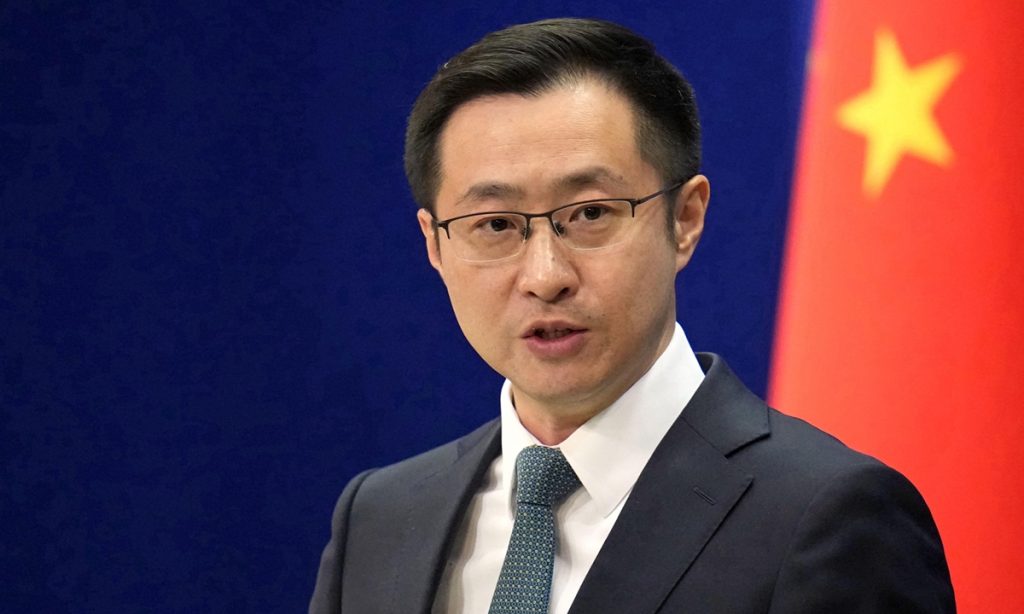
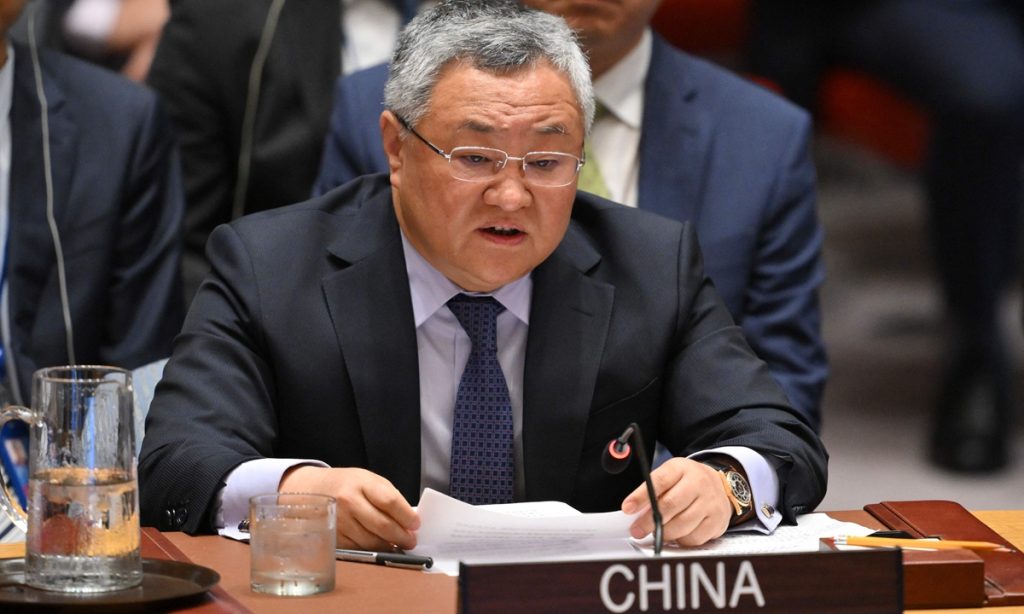
China's position is very clear - there are no winners in tariff wars, Foreign Ministry spokesperson Mao Ning said on Thursday, when asked to comment on remarks by US President Donald Trump on Truth Social that "a Country supplying Military Weapons to Iran will be immediately tariffed, on any and all goods sold to the United States of America, 50%, effective immediately."

Shangcheng, Henan: Power Supply Ensures Fragrant Spring Tea Harvest

On April 7, the foothills of the Dabie Mountains in southern Henan were shrouded in mist and covered with fresh greenery, ushering in the prime season for picking and processing Xinyang Maojian — one of China's Top Ten Famous Teas. Stretching across Hanchong in Shangcheng county, Xinyang city, the 10,000-mu tea plantations present a delightful scene of fragrant spring tea, attracting visitors to taste its flavor.

Xinyang Maojian is famous for plump buds, prominent white pekoe, and fresh, crisp taste. The picking windows for pre-Qingming Festival tea and pre-Grain Rain tea are short but the tea is of premium quality. Fresh tea leaves must go through fixation, strip shaping, baking and other processes on the same day to lock in the unique chestnut aroma and fresh, mellow taste of Maojian. With modern tea processing equipment, stable power supply has become critical to ensure stable output and improved quality of spring tea.

As spring tea processing enters its peak period, fixation machines, strip shaping machines and dryers in tea factories run continuously, leading to a rise in electricity load in tea-growing areas. To guarantee uninterrupted spring tea production, State Grid Shangcheng County Power Supply Company acted in strict accordance with the three-year drive to address the root causes of workplace accidents and ensure production safety, and carried out special power inspections for tea plantations and tea enterprises in advance. It conducted thorough checks on power lines, transformers and processing equipment to eliminate potential electrical hazards in a timely manner. Meanwhile, convenient online service channels were launched to provide all-day power support and rapid response, offering reliable electricity support for tea farmers and enterprises to facilitate efficient processing and on-schedule marketing of spring tea.

At present, hundreds of thousands of mu of tea plantations in Shangcheng county are fully harvested. The tea industry has boosted income for tens of thousands of farming households and become a pillar industry for local rural revitalization. Stable and sufficient power supply has accelerated the production of Xinyang Maojian spring tea, enabling the green leaves from southern Henan to spread their fragrance far and wide, benefiting tea farmers in the spring.

Vietnam’s To Lam to visit China days after being elected head of state

At the invitation of General Secretary of the Communist Party of China (CPC) Central Committee and Chinese President Xi Jinping, General Secretary of the Communist Party of Vietnam Central Committee and Vietnamese President To Lam will pay a state visit to China from April 14 to 17, the Xinhua News Agency reported on Thursday.

The announcement was made by Hu Zhaoming, spokesperson for the International Department of the CPC Central Committee.

Vietnamese local media outlet VietNamNet highlighted on Thursday that this marks the first overseas trip by To Lam in his capacity as head of state since being elected President at the first session of the 16th National Assembly, Vietnam's top legislature, on Tuesday.

Chinese observers noted that the official announcement of the visit, which comes shortly after To Lam assumed the office of president, underscores the strong emphasis both sides place on bilateral ties.

This visit not only consolidates the building of a China-Vietnam community with a shared future, but also facilitates cooperation and exchanges across various fields, advancing alignment between the two sides in their respective modernization drives, observers added.

Deeply valued

Nhan Dan Newspaper of Vietnam reported on Thursday that To Lam's wife and a high-level Vietnamese delegation will accompany him on the visit to China.

A Reuters report described To Lam's visit as taking place "as ties between the two nations continue to warm."

Gu Xiaosong, dean of the ASEAN Research Institute at Hainan Tropical Ocean University, told the Global Times on Thursday that the visit underscored the distinctive strategic standing between China and Vietnam as socialist neighbors - with China being regarded as the primary partner in ensuring a stable external environment and advancing Vietnam's own development.

Echoing Gu, Ding Duo, a deputy director of the Institute of Maritime Law and Policy at China's National Institute for South China Sea Studies, also said that amid the current global geopolitical tensions, this upcoming visit sends a signal that Vietnam's new leadership is unwilling to be swayed by external interference and remains resolutely committed to safeguarding the high-level bilateral relations.

Since the beginning of this year, the two countries have maintained close exchanges across various fields.

From January 29 to 30, Liu Haixing, special envoy of General Secretary of the CPC Central Committee Xi Jinping, visited Vietnam, Xinhua reported. Several days later, Chinese Foreign Minister Wang Yi met with Le Hoai Trung, special envoy of General Secretary of the CPV Central Committee To Lam, in Beijing on February 3, per Xinhua.

On March 16, the first ministerial meeting of the China-Vietnam "3+3" strategic dialogue on diplomacy, defense and public security was held in the Vietnamese capital of Hanoi on March 16. Chinese Foreign Minister Wang Yi, Minister of Public Security Wang Xiaohong and Minister of National Defense Dong Jun chaired the meeting, together with Vietnamese Foreign Minister Le Hoai Trung, Defense Minister Phan Van Giang and Minister of Public Security Luong Tam Quang.

Both sides agreed the successful conclusion of the event signifies that China-Vietnam strategic communication and coordination have established a new platform, advanced to a new stage, and been elevated to a new level, according to a release from Chinese Foreign Ministry on March 17.

Ding said To Lam's upcoming visit also clearly conveys the continuity of Vietnam's policy toward China, prioritizing ties with China in the country's diplomacy.

Analysts say a steady stream of exchanges over the past four months, capped by the upcoming visit, underscores both sides' resolve to deepen a China-Vietnam community with a shared future. They expect the high-level trip to unlock further tangible gains in bilateral cooperation.

Practical outcomes expected

Given the substantial similarities in the political systems of the two countries, the visit is expected not only to consolidate bilateral relations but also to enable Vietnam to draw on China's experience in economic development, energy, infrastructure construction and other sectors, Chinese observers noted.

This visit is expected to yield a series of practical outcomes, potentially cooperation in fields such as railways, energy, economy and trade, as well as Science and technology, they said.

Vietnam Deputy Minister of Industry and Trade Nguyen Sinh Nhat Tan noted that the ongoing conflict in the Middle East has significantly disrupted global oil and gas supply chains, with impacts surpassing previous oil shocks in scale and intensity, VNExpress news reported on April 4.

Ding said as a major country in terms of technology and resources, China could provide power grid interconnection, investment in clean energy projects, as well as technical support for LNG and renewable energy. This can help Vietnam ease supply pressures, stabilize regional supply chains, and prevent disruptions to global manufacturing caused by energy shortages, he added.

BBC reported that a test to To Lam will be whether he can meet the ambitious growth targets he has set his government, at a time when the global economic outlook is so unsettled.

Chinese Ambassador to Vietnam He Wei said that in 2025, the bilateral trade volume between China and Vietnam historically surpassed the $290 billion mark, with China continuing to be Vietnam's largest export market for agricultural and aquatic products, chinanews.com reported on February 12.

Vietnamese fruits and vegetables earned $5.5 billion in foreign exchange from exports to China, greatly contributing to local farmers' income growth and prosperity, He added.

In the first two months of 2026, China was Vietnam's largest trading partner, with bilateral trade turnover reaching $66.7 billion, an increase of 30.2 percent, according to information released on the official website of the Government of Vietnam on Thursday.

Vietnam's exports amounted to $17.4 billion, up 32.5 percent, while its imports reached $49.3 billion, up 29.4 percent, according to the government.

Vietnam's economic development is currently constrained by inadequate infrastructure, an area where China is well positioned to offer substantial support, Gu noted.

Vietnam and China have signed a technical cooperation agreement on planning two standard-gauge railways - Hanoi-Dong Dang and Hai Phong-Ha Long-Mong Cai - marking progress in bilateral railway connectivity, VietNamNet reported on March 25.

Ding said the alignment of railway systems via standard gauge can enhance cross-border logistics efficiency, and when coupled with cooperation on infrastructure such as 5G, it can drive the integration of digital economies, collectively transforming the "hard connectivity" between the two countries into a growth pole for shared development.

Chinese analysts said the two parties, CPC and CPV, are also expected to deepen exchanges on governance through party-to-party channels, sharing experience on reform and development, and anti-corruption efforts. At the same time, broader ties—in areas such as youth engagement, local cooperation, tourism, and cultural exchange—are set to expand, reinforcing the foundation of the bilateral relationship.

Against this backdrop, analysts said closer coordination between China and Vietnam as neighboring socialist countries could help inject greater certainty and stability into regional industrial and supply chains. Such cooperation is also expected to bolster opposition to unilateral pressure and lend momentum to multilateral approaches.

China sets 4.5-5% GDP growth target for 2026 while striving to achieve better results in practice

China targets economic growth of 4.5 percent to 5 percent this year and will strive for better in practice, according to a Government Work Report submitted Thursday to the country's top legislature for deliberation.

The annual growth target was unveiled in the Government Work Report delivered by Premier Li Qiang to the National People's Congress (NPC), the national legislature, which began its annual session on Thursday morning.

Over the next five years, China expects to keep its GDP growth within an appropriate range, with annual growth rates to be determined in light of actual conditions, according to the report.

This will lay a solid foundation for achieving the goal of doubling China's 2020 per capita GDP by 2035 to reach the level of a moderately developed country, the report said.

The target of 4.5 percent to 5 percent economic growth for 2026, while striving to achieve better results in practice, is intended to strike a balance between what is needed and what is feasible, said Shen Danyang, head of the group responsible for drafting this year's government work report, according to Xinhua.

The setting of the economic growth target for 2026 is "proactive and pragmatic", reflecting a broad assessment of domestic conditions and shifts in the external environment, Shen said.

Analysts said that the target range reflects a more prudent assessment of global uncertainties, and allows greater policy flexibility to focus on high-quality development while still signaling policymakers' confidence in maintaining stable growth in the world's second-largest economy amid rising global risks and turmoil.

Flexibility allowed 

This is not the first time China has set its GDP growth target in the form of a range. For example, in 2016, a target range was set at 6.5 to 7 percent. In 2019, the target was set at 6 to 6.5 percent.

Lawmakers, national political advisors, analysts as well as executives of multinationals said that the targeted growth range is set to ensure the Chinese economy gets off to a good start in the inaugural year of the 15th Five-Year Plan period (2026-30), and the figure is of paramount importance to pinpointing new growth engines and maintaining stable and sustained economic growth.

NPC deputy Yu Miaojie, president of Liaoning University, told the Global Times on Thursday that a growth target range of 4.5 percent to 5 percent allows greater policy flexibility, enabling localities to focus on high-quality economic growth as their primary goal and, more importantly, place greater focus on people's livelihoods.

"Maintaining an annual economic growth rate within this range reflects the stability of China's economy," Yu said, noting the steady track record of economic growth in the past several years.

Amid escalating geopolitical conflicts and growing global turmoil, China's economy has maintained stable and sustained growth, driven by the country's economic resilience and social stability, Yu said.

Denis Depoux, global managing director of strategy consulting firm Roland Berger, told the Global Times on Thursday that it is crucial to understand that this "growth consensus" is not a sign of weakness but a necessary trade-off to achieve higher-priority objectives.

"In the context of rising global uncertainty, the growth target creates fiscal and political buffers for China to drive reform and address real problems without the pressure of chasing high growth at all costs. It allows for a significant reallocation of capital away from inefficient investments and toward the real needs of the economy, namely technology and people," Depoux said.

Still, China's GDP growth target range, if achieved, would largely surpass the world's average growth rate in 2026 with the world economy facing unprecedented geopolitical and economic challenges and turmoil, analysts said.

China's newly announced growth range for 2026 is a firm answer to the "China peak theory" and the Chinese economy is expected to serve as a source of stability for the global economy, they noted.

Notably, the Chinese economy is projected to grow faster in 2026 than the US, Japan and the Euro area, according to the International Monetary Fund (IMF), with the US economy projected to grow 2.4 percent in 2026, 0.7 percent for Japan and 1.3 percent for the Euro area. 

The projected pace would also be among the highest for major economies globally, Shen said.

"The growth target is definitely achievable - the target is set in a very practical and realistic way," Yin Tongyue, a National People's Congress deputy and chairman of Chinese automaker Chery Holding Group Co, told the Global Times as he walked out the Great Hall of the People after listening to the delivery of the Government Work Report in Beijing on Thursday.

Pragmatic approach 

Foreign media outlets closely followed China's GDP growth target, with several reports noting that the target range is the lowest range in decades, but creates flexibility for reforms.

Reuters reported that a "lower growth target gives Beijing more flexibility to implement reforms that make the world's second-largest economy less reliant on exports for growth", while the Guardian reported that the figure "reflects an economic strategy that is shifting away from export-led growth to a model that leaders hope will be more resilient to external shocks."

The Wall Street Journal wrote that the "less ambitious growth target also gives Chinese leaders some room to maneuver the economy through complicated geopolitical terrain" and the unchanged deficit target should "give policymakers ample room to rev up government spending if needed."

This is to do with the stage of economic development, as economic growth cannot sustain a continuously high speed, Qu Yongyi, a researcher with the Institute of Industrial Economics of the Chinese Academy of Social Sciences and a national political advisor, told the Global Times on Thursday. "This target range reflects that the government is not solely pursuing GDP growth but is placing greater emphasis on high-quality development."

Tian Xuan, an NPC deputy and a Boya Distinguished Professor of Finance at Peking University, told the Global Times on Thursday that the GDP growth target range is not about "slowing down growth" but rather a "recalibration" of the pace of development.

"It represents the optimal solution found between long-term goals and immediate challenges - one that both upholds the baseline needed to achieve the 2035 vision and reflects a pragmatic approach to development," Tian said. "The modest downward adjustment is not a simple numerical change, but a pragmatic step grounded in economic reality and a move tailored precisely to long-term development goals."

The "range-based regulation" sets a lower bound for growth while preserving upward flexibility and sufficient room for policy maneuvering — all to safeguard the certainty of high-quality development. This also means that achieving the target will be anything but easy; it will require sustained and arduous effort, The People's Daily noted in a commentary published on Thursday.

The commentary, titled China has set an economic growth target of 4.5 percent to 5 percent this year. How should we view it, said that to make further progress from an already high level, we must emphasize both quantity and, more importantly, quality. Can we go even faster? It's not that we cannot; it's that we choose not to. The very "first lesson of the new year" stressed curbing impulsive pursuit of governance achievements, carrying profound significance. 

"Pursuing genuine and unvarnished growth, and advancing high-quality, sustainable development." This demonstrates the determination to forge ahead despite pressure and strive for innovation and high quality, it said. 

China slams US, EU protectionism against nation’s car exports

China slammed protectionist actions by the US and the EU against Chinese car exports on Tuesday, saying that the leapfrog development of China's vehicle industry has provided cost-effective products with high quality to the world.

Division of labor and mutually beneficial collaboration are distinctive features of the auto industry chain, Foreign Ministry spokesperson Mao Ning said during a regular press conference. 

According to the China Association of Automobile Manufacturers, in January, China exported 443,000 vehicles, up by 47.4 percent year-on-year, maintaining rapid growth. The numbers reflected the high-quality development and strong innovation of China's manufacturing industry, Mao noted.

Every one in three exported automobiles from China is an electric model, which contributes significantly to the world's green and low-carbon transition, the spokesperson said.

Protectionist measures taken by relevant countries against China to turn normal trade activities into security and ideological issues, build "small yards with high fences" in the name of "de-risking," and attempt to "trip others up" instead of "running faster" may seem like a win, but they will actually lead to a loss of one's own long-term development and encumber the progress and prosperity of the world, Mao said.

China believes in solidarity, cooperation and openness rather than division, confrontation and isolation. We believe it's important to accommodate the interests of others while pursuing one's own, work for common development while seeking one's own development, create a world-class, market-oriented and law-based environment for global economic and trade cooperation, and make economic globalization more inclusive and beneficial to all, Mao noted.

US Commerce Secretary Gina Raimondo issued a warning over the potential national security threats posed by electric vehicles (EVs) manufactured in China, reported Bloomberg in January. This came as the Biden administration considered implementing further tariffs on vehicles imported from the Asian nation.

The rapid growth of China's auto industry and its expanding export scale are bound to draw attention from other countries. Other Chinese industries have been affected by trade protectionism during their export processes, Cui Dongshu, secretary-general of the China Passenger Car Association, told the Global Times on Tuesday.

The EU has launched several investigations against China. Among these, the European Commission is probing a subsidiary of the Chinese rail company CRRC to ascertain if it received subsidies that unfairly allowed it to undercut European competitors. Additionally, an anti-subsidy investigation into Chinese EVs commenced in October 2023.

The investigations into China's auto exports by the US and the EU are not conducted from a perspective of global interest but originate from hegemonic and unilateral thinking, said Gao Lingyun, an expert at the Chinese Academy of Social Sciences who closely follows China-US trade issues, on Tuesday.

China's opening-up has provided opportunities for developing countries worldwide. China's participation in global governance initiatives is based on common values, not just its own interests. This is China's attitude toward globalization, Gao noted.

China’s clean energy growth to accelerate global power source transformation: FM

China's remarkable progress in the clean energy sector in recent years has provided practical resolution in tackling global climate change, and will accelerate international power source transformation, said the Chinese Foreign Ministry on Friday, calling on the world to work together in addressing challenges of climate change. 

Wang Wenbin, spokesperson for the FM, made the remarks during a press conference while responding to media enquiries on China's prospect of realizing scheduled wind and solar power development goal six years in advance, and that 60 percent of global electricity generated by renewable power source will come from China by 2028. 

Wang stressed that power source transformation is the only way to achieve the goal of the Paris Agreement and a future of green development and sustainability. "China's clean energy sector has grown to a global leader from a follower in a short time, and made significant contribution to the world's low carbon development." 

By the end of 2023, China's capacity of renewable power generators surpassed half of total power generators. China's new-energy vehicle output and sales hit 9.587 million and 9.495 million in 2023, increasing by 35.8 percent and 37.9 percent year-on-year, respectively. The two figures both accounted for over 60 percent of global volume, and have been keeping the first place for nine consecutive years, said Wang. 

International Energy Agency's Renewables 2023 showed that China's acceleration in renewables was extraordinary. In 2023, China commissioned as much solar PV as the entire world did in 2022, while its wind additions also grew by 66% year-on-year, said the report. 

However, Wang emphasized that the world should work together in achieving the same goal by abandoning protectionism, unilateralism and para-politicization. 

In regard to this, China has actively participated in the construction of clean energy infrastructure in other countries such as solar, wind and hydro power plants in United Arab Emirates, Morocco, South Africa, and Pakistan. 

During the 28th meeting of the Conference of the Parties which ended in December 2023, all parties of the meeting highly agreed on China's concept and progress in low carbon transformation, and believed that China's practical solutions have important meaning in global green development, Wang stated. 

"China will stick to the strategy to foster a community of life for man and nature, conduct power source transformation steadily, and make greater contribution in tackling global climate change," said Wang. 

China-Uzbekistan economic and trade ties deepen amid presidential visit

Chinese industry insiders and experts are hailing the fruitful achievements between China and Uzbekistan as bilateral ties experience a historic high against the backdrop of the state visit of Uzbek President Shavkat Mirziyoyev to China, scheduled from Tuesday to Thursday.

There will be more potential in bilateral cooperation, as connectivity between Uzbekistan and Northwest China's Xinjiang Uygur Autonomous Region is expected to strengthen under the China-proposed Belt and Road Initiative (BRI), experts said.

"My company is increasing exports of fruits and vegetables such as apples, nectarines and grapes from Xinjiang to Central Asia, including Uzbekistan, and it is estimated that the company's export value to Central Asia climbed to $1.2 billion in 2023, almost doubling from $683 million in 2022," Yu Chengzhong, chairman of local trading agency Horgos Jinyi International Trade Co, told the Global Times.

Besides, "China's new-energy vehicle and large-scale wind power equipment sectors have expanded exports to Uzbekistan in recent years," Yu said.

Yu's booming business with Uzbekistan is expected to continue, as Xinjiang's role as a trade hub and corridor to Central Asian countries - including Uzbekistan - is being further highlighted.

On Monday, just ahead of the Uzbek president's visit, a forum for China-Uzbekistan cooperation promotion was held in Urumqi, capital city of China's Xinjiang, attracting more than 1,300 guests from both sides.

Speaking at the forum, Ma Xingrui, Party secretary of the Communist Party of China Xinjiang Uygur Autonomous Regional Committee, said that Xinjiang is accelerating the construction of the core area of the BRI, actively building the China (Xinjiang) Pilot Free Trade Zone with high quality, continuously deepening exchanges with five Central Asian countries, and establishing a bridgehead for China's opening up to the West.

Chinese and Uzbek officials signed 20 cooperation agreements at the opening ceremony of Monday's forum.

Xinjiang has played an important role in strengthening connectivity with the Central Asian region, from political interactions to trade and infrastructure development, said Liu Yu, executive chairman of the Uzbek Chamber of Commerce for Chinese Entrepreneurs.

More than 2,400 Chinese companies are doing business in Uzbekistan, covering various fields including petroleum, railways, agriculture and mechanical equipment, Liu told the Global Times.

In 2023, bilateral trade stood at 98.85 billion yuan ($13.93 billion), a year-on-year increase of 53.2 percent, data released by the General Administration of Customs showed. China's exports to Uzbekistan saw a whopping growth of 76.8 percent year-on-year.

Xinjiang has become a key gateway to the Central Asian countries including Uzbekistan.

"Uzbekistan is a populous country and important economic power in the region… strengthening interactions with China under the BRI, in the growing complexity of the world situation today, has become increasingly important to Uzbekistan, especially when it comes to helping the country play a greater role in world governance," Zhang Hong, a research fellow at the Chinese Academy of Social Sciences, told the Global Times on Tuesday.

Uzbekistan is enhancing its economic and trade connectivity with China by transitioning from being landlocked to becoming land-linked. How to effectively navigate its ties with the development of Xinjiang is the key to this transformation, experts said.

Searches for hotels surge 4 times after China-Singapore mutual 30-day tourist visa-free policy is announced

Searches for hotels in Singapore on Chinese online travel platform Qunar.com surged 4 times after China and Singapore announced a 30-day mutual visa exemption arrangement for ordinary passport holders starting from February 9.

Singapore is currently among the top five of popular travel destinations among Chinese tourists ahead of the upcoming Spring Festival holidays which kicks off from February 10, data the company sent to the Global Times showed on Thursday.

According to data VariFlight sent to the Global Times on Thursday, there have been a total of 712 flights flying between the Chinese mainland and Singapore in recent weeks, recovering to 97 percent of pre-COVID-19 levels, with more than 100 flights per day.

Tongcheng Travel told the Global Times that Singapore-related searches rose by more than 340 percent on the platform within an hour after the visa-free policy announcement, with the searches for air tickets flying to and back from Singapore jumping by more than 5 times.

Data from the online travel agency Trip.com indicated a rapid surge in real-time search popularity for Singapore. Within 10 minutes of the announcement, the popularity of Singapore-related travel products saw sharp growth of over 30 percent.

On the platform, the search levels among Singaporean tourists for keywords related to China also saw a marked growth of over 20 percent month-on month. According to Trip.com, as of Wednesday, the number of orders by Chinese tourists traveling to Singapore during the upcoming Chinese Spring Festival holidays has grown up by more than 14 times compared to the same period last year.

China and Singapore are mutually significant travel destinations and sources of tourists, Qin Jing, general manager of the Public Affairs Department at Trip.com, told the Global Times in a statement on Thursday.

The people of both countries engage closely in business, tourism, and family visits, and the visa waiver will stimulate interpersonal exchanges between the two nations, promoting growth in the tourism industry, Qin said.

China to strengthen ‘toolkit of countermeasures’ to safeguard national interests: Commerce Minister

China's commerce ministry will step up efforts in five fields as part of the efforts to building China into a trading power of both quality and quantity, including upgrading cargo trade, seeking innovations in service trade, developing digital trade, deepening international cooperation and safeguarding trade security, Commerce Minister Wang Wentao said in an interview with the People's Daily published on Thursday.

Wang said China's goal of becoming a global trading power is helped by many favorable conditions. 

"We can leverage the political advantage of the CPC leadership and the institutional advantages of socialism with Chinese characteristics in pooling resources behind major undertakings. That's our foremost advantage and the fundamental guarantee for building a powerful trade country," Wang said.

In addition, the country's long-term bright economic prospect, powerful production capacity, great innovation potential, ultra-large market and sound infrastructure will all provide strong support, he said.

As the world has entered a new period of turbulence and transformation, economic and non-economic factors are intertwined and "black swan" and "grey gray rhino" events will likely increase. Against this backdrop, China's trade development faces increasingly complex and challenging external environment, Wang said.

He said China's trade sector faces some challenges in 2024, which includes a sluggish global economy, rising protectionism and unilateralism, as well as neighboring countries' measures to attract investment. The growing spillover risks of geopolitical conflicts impact the stability and smooth operation of global supply chains. Climate change and frequent natural disasters may also increase uncertainty.

Wang said the ministry will take advantage of platforms such as the communication mechanism between Chinese and US commerce departments and export control dialogue mechanism between China and the EU as well as between China and Japan in order to narrow the differences and expand more fields of cooperation.

China will actively respond to trade frictions, improve the country's multi-party collaborative response mechanism and properly handle trade frictions, Wang said.

"Faced with unreasonable sanctions and crackdowns, we will take forceful measures to firmly safeguard our country's national interests," Wang said, adding there will be more efforts to strengthen the country's toolkit of countermeasures.

China will take legal actions such as initiating lawsuits at the WTO to safeguard its legitimate rights and interests and make good use of the Unreliable Entity List, he noted.

China discovers 1-million-ton lithium mine, largest in Asia

A lithium mine with nearly one million tons of reserves was newly discovered in Yajiang, Southwest China's Sichuan Province, Xinhua News Agency reported on Thursday, a development which will help raw material supply for China's sprawling electric vehicle sector. 

The newly discovered lithium mine was the largest pegmatite lithium deposits in Asia, which was an important breakthrough in China's lithium exploration efforts and will largely assist the nation's carbon neutrality, according to China's Ministry of Natural Resources (MNR). 

As a vital mineral which drives development of the new energy sector, lithium is widely used in China's "New Three" export items, new-energy vehicle, lithium battery and solar panels, which together generated 1.06 trillion yuan ($148.89 billion) of exports in 2023, data from China's General Administration of Customs showed. 

The distribution of world's lithium resources is uneven, with the metal largely concentrated in South America, Australia, the US and China. 

China's lithium reserves are believed to be scattered in various areas while exploration is still in its early stage. The national conference on natural resources held from Monday to Tuesday stressed efforts to enhance domestic lithium mine exploration, along with overseas cooperation so as to secure the material supply for China's growing new-energy sector, according to Xinhua. 

Ministry of Natural Resources has vowed to promote lithium mine transfer to increase raw material supply, in a bid to ramp up China's lithium battery manufacturing and market consumption, according to the report.