Indian scientist praises China's openness to intl space cooperation as Pakistani astronaut's planned flight aboard Shenzhou-24 prompts media discussion in India
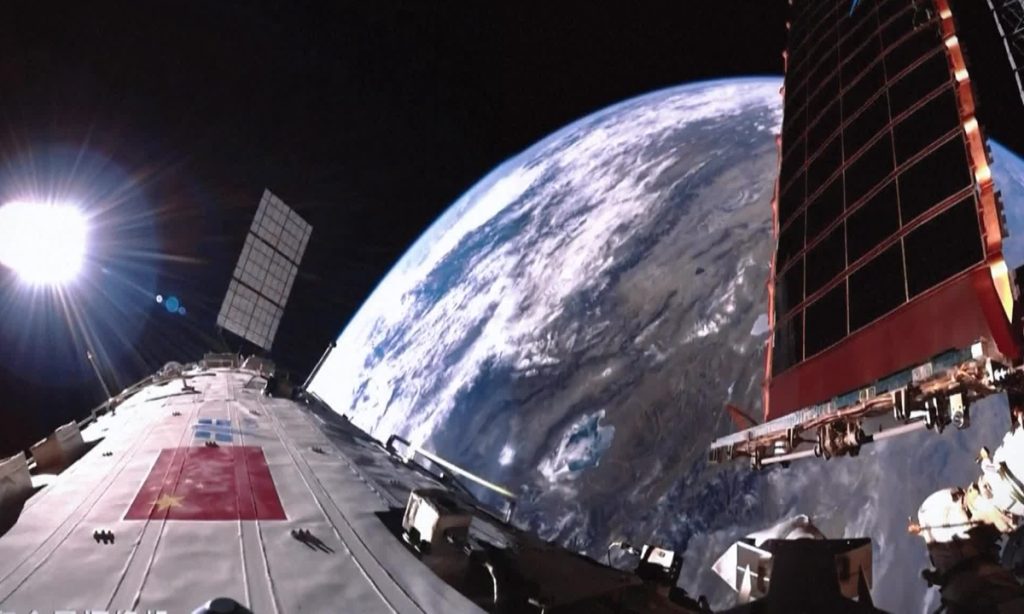
A Pakistani astronaut is set to become the first foreign astronaut to visit the China Space Station, flying aboard China's Shenzhou-24 spacecraft. The planned flight has prompted discussions in Indian media about international space cooperation. In an exclusive response to the Global Times, an Indian scientist whose research project was selected for the China Space Station praised China's openness to international collaboration while acknowledging that political considerations and concerns about public perceptions have hindered work on his project.

Jayant Murthy, principal investigator of the Spectroscopic Investigations of Nebular Gas (SING) project, which was selected in 2019 under a United Nations-China initiative to conduct experiments aboard the China Space Station, told the Global Times that international cooperation in space exploration is not merely desirable but necessary.

"My experience with the SING mission is that, unfortunately, politics gets in the way of the collaboration," Murthy said in a written response to the Global Times.

"Much of this is not even government policy but is due to an abundance of caution by people who don't want to make a wrong decision," he added, suggesting that a dedicated coordinating agency staffed by scientists could help advance the project.

Murthy also expressed appreciation for China's willingness to open its space station to international researchers.

"Chinese generosity in opening the CSS to collaboration is something that we should all take advantage of in building strong scientific and cultural links between our nations and I hope that more groups come forward," he said.

His remarks came as Pakistan's upcoming participation in China's Shenzhou-24 crewed mission prompted discussion in Indian media about the growing importance of international partnerships in space exploration, beyond the pursuit of independent technological capabilities.

In an analysis published on November 9, The Times of India examined the broader implications of Pakistan becoming the first foreign country to send an astronaut to China's Tiangong space station, placing the development in the context of evolving international space partnerships and India's own human spaceflight ambitions.

The newspaper noted that the mission demonstrated China's ability to accommodate international astronauts aboard its independently developed space station.

With the International Space Station approaching retirement, the China Space Station could increasingly provide another platform for countries seeking opportunities in human spaceflight and orbital scientific research, the report suggested.

In a November 9 report titled "Shenzhou-24 mission: China opens its orbit to Pakistan's astronauts," Indian magazine The Week quoted space analyst Girish Linganna as saying that "For India, which is building its own human spaceflight capability, it is a reminder that the region's space race is now about international relations, not just space technology."

Indian media attention to the mission reflects changes in the regional space landscape, Qian Feng, director of the Research Department at Tsinghua University's National Strategy Institute, told the Global Times.

"India has long regarded itself as a leading space power in South Asia. Pakistan's upcoming breakthrough in human spaceflight through cooperation with China has prompted Indian media to reassess the country's own space cooperation strategy," Qian said.

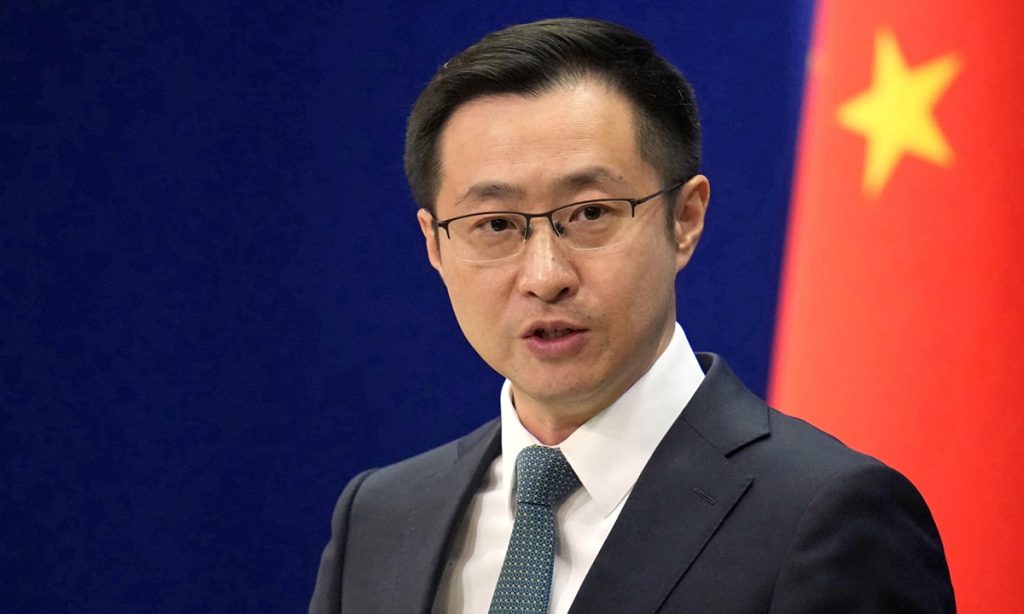
At a regular press conference on November 9, Chinese Foreign Ministry spokesperson Guo Jiakun confirmed that a Pakistani astronaut would participate in the Shenzhou-24 mission as a payload specialist and return aboard the Shenzhou-23 spacecraft after completing a short-term stay in orbit.

Guo said that exploring the vast universe and peacefully utilizing outer space are shared aspirations of humanity, adding that China has consistently advocated the peaceful use of outer space and actively pursued international space cooperation.

In 2019, the China Manned Space Agency and the United Nations Office for Outer Space Affairs (UNOOSA) jointly announced the first batch of scientific experiments selected for implementation aboard the China Space Station. According to UNOOSA, nine projects involving 23 institutions from 17 countries were selected.

Notably, Indian scientists were among the researchers selected to participate in the initiative. However, the project's implementation subsequently encountered difficulties involving export approvals from Indian authorities.

In Murthy's latest response to the Global Times, Murthy did not provide an update on whether the export approval had been granted or whether the equipment had been shipped to China. His comments, however, offered a firsthand account of the nontechnical obstacles that have affected the project.

Murthy emphasized that scientists should be able to cooperate across national boundaries, particularly given the substantial financial and technological resources required for space exploration.

"When we do anything in space, we are working for all humanity and, because it is so expensive in money and resources, it is necessary for us all to collaborate and make the most use of the opportunities that we have," Murthy added.

Qian said "such interference not only disrupts scientific research and deprives scientists of valuable experimental opportunities, but also undermines mutual trust in international scientific cooperation."

China and India have complementary strengths in space exploration, with China possessing extensive experience in space station operations, human spaceflight and deep-space exploration, while India has developed capabilities in cost-effective satellite launches, remote sensing and lunar exploration, Qian said.

"Space cooperation should not be overshadowed by narrow political considerations," Qian added.
Philippine presidential palace backs call for ‘pro-China’ officials to quit; rhetoric further narrows room for dialogue with China: experts

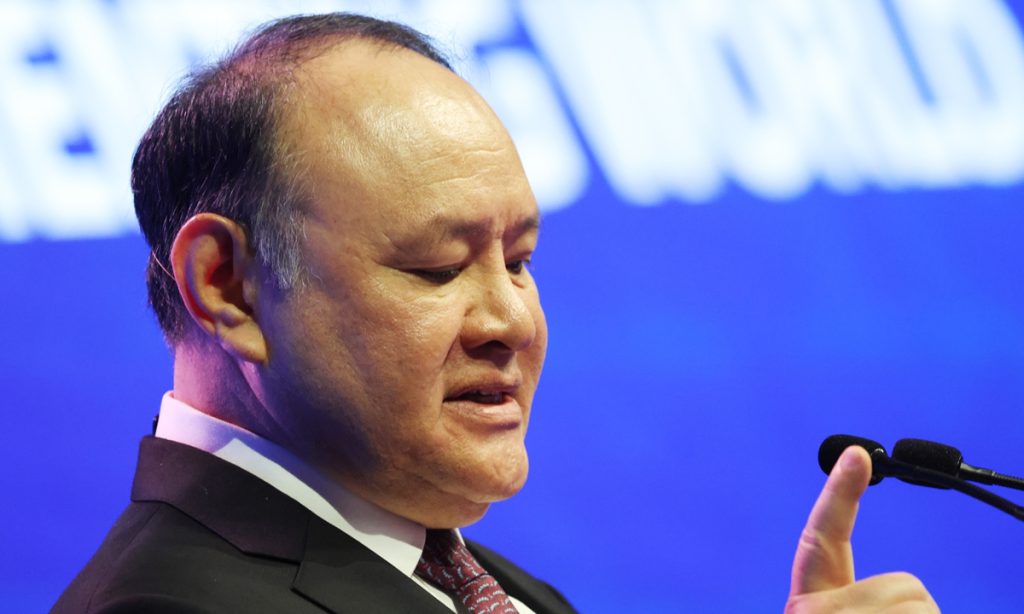
A new round of political attacks against allegedly "pro-China" officials has unfolded in the Philippines after the presidential palace endorsed Defense Secretary Gilberto Teodoro Jr.'s call for government officials who do not support Manila's position on the South China Sea to consider resigning.

Chinese experts expressed concern over the rhetoric, saying that labeling politicians with more rational views as disloyal risks excluding moderate voices from Philippine political debate. The rhetoric by Philippine officials is politically arrogant and naive. Experts also note that by stoking anti-China sentiment through what amounts to political bullying, the Philippines will only reap what it sows.

On Monday, Palace Press Officer Claire Castro endorsed Teodoro's call for government officials who side with China on issues involving the South China Sea to consider resigning from their posts, saying that "We don't see anything wrong with it. The President and the administration see nothing wrong with what Secretary Gibo Teodoro said," according to Philippine media outlet Inquirer.net. 

Castro also described as "very alarming" criticism from Davao City First District Representative Paolo Duterte, after the lawmaker accused Teodoro of "demonizing China" and acting as though he were imposing a loyalty test.

Castro claimed that Duterte's comments raised questions about his allegiance to the Philippines, "showing that his loyalty to the Philippines is not unwavering," she said, according to Inquirer.net.

Duterte had earlier urged Teodoro in a Facebook post to stop "demonizing China" after the defense chief said public officials who refused to uphold Philippine laws concerning the South China Sea should either challenge those laws in court or resign, according to Philippine media GMA News.

"Hey, Gibo, slow down. You didn't choose the elected officials; the Filipino people put them in office. If you have evidence that they are traitors to the country, then file the appropriate charges and present the evidence," Duterte said in Bisaya, according to GMA News. He also told Teodoro to stop repeatedly demanding resignations "as if you own the government."

Teodoro made the original remarks at a news forum, where he said government officials, especially those elected into office, who are siding with China on the issue of the South China Sea should consider resigning from their posts. 

The controversy reflects not only disagreements over the South China Sea but also a broader political struggle over what positions are considered acceptable in the Philippines' China policy, Ge Hongliang, deputy director of the College of ASEAN Studies at Guangxi University for Nationalities, told the Global Times on Monday.

Teodoro has long adopted a tough position toward China and has already been sanctioned by the Chinese government, Ge said. His latest remarks may be intended to further establish a domestic political image of being tough on, or even hostile toward, China, he noted.

China announced sanctions against Teodoro and his relatives on June 11. A Chinese Foreign Ministry spokesperson said at the time that "Philippine Defense Secretary Gilberto Teodoro Jr. repeatedly made irresponsible remarks on China, which undermines China's legitimate interests and sabotages China-Philippines relations."

"To uphold China's sovereignty, security and development interests, China has decided to prohibit Gilberto Teodoro Jr. and his spouse and child from entering the Chinese mainland, Hong Kong and Macao, and not allow organizations and individuals in China to engage in any transaction, cooperation or other activities with him and his spouse and child," the spokesperson said.

The Marcos administration's support for Teodoro should also be viewed against the backdrop of its need to maintain a hardline posture toward China, Ge said.

The framing used by major Philippine media outlets showed how the controversy was being directed against politicians described as "pro-China." Inquirer.net ran the headline "Palace backs Teodoro's call for pro-China officials to resign", while the Philippine Star earlier used the headline "'Pro-China government officials must resign.'"

In his capacity as Defense Secretary, Teodoro publicly demanded the resignation of officials allegedly "pro-China" over the South China Sea issue. His crude, impulsive and highly inflammatory rhetoric lays bare the hostile undercurrent running through the Philippine government's China policy, Chen Xiangmiao, a research fellow at the National Institute for South China Sea Studies, told the Global Times on Monday.

Teodoro's claims are highly irresponsible and carry multiple dangerous implications, said Chen, adding that his assertions effectively contend that there is no room for negotiation between China and the Philippines over the South China Sea, and in effect explicitly designate China as the adversarial party, he said.

Such wording risks turning legitimate policy differences into accusations of disloyalty, experts said. Teodoro's remarks are not merely an attack on particular views concerning the South China Sea, but appear to target lawmakers and political forces that support friendlier relations with China, Mi Chenxi, a researcher at the China Institute for Marine Affairs under China's Ministry of Natural Resources, told the Global Times on Monday.

By repeatedly highlighting maritime confrontation and promoting a narrative of a so-called "China threat", Manila can create a stronger sense of regional insecurity, seek greater US military investment and obtain additional external military assistance, Ge said.

The controversy also illustrates how the Marcos administration has linked South China Sea policy with domestic political loyalty. By presenting disagreement with the government's maritime position as evidence of insufficient patriotism, the administration risks marginalizing political voices that could otherwise contribute to de-escalation, experts said.

No meeting arranged between Chinese, Japanese FMs in Manila: spokesperson

When asked whether Chinese and Japanese foreign ministers had any contact or exchanges while in Manila, the Philippines, Chinese Foreign Ministry spokesperson Lin Jian said on Thursday at a press conference that "based on what I know, Foreign Minister Wang Yi had no arrangements to meet with the Japanese side during his stay in Manila."

Chinese mathematicians Deng Yu and Wang Hong winning prestigious Fields Medal sets social media abuzz

The awarding of the Fields Medal to Chinese mathematicians Deng Yu and Wang Hong has drawn widespread attention both in China and abroad, with the news becoming one of the top trending topics on Chinese social media. 

The relevant topics such as "Wang is only 35 years old" gained about 1.6 million views on Chinese X-like Weibo platform on Friday. 

Their personal journeys have also become a focus of online discussion. Some Chinese observers in the education sector said their personal achievements show that cultivating top-tier talent requires guiding students to integrate their interests and passions with their career development.

Both entered Peking University in 2007, but followed very different paths: Deng was admitted to PKU through a mathematics competition recommendation program and remained dedicated to mathematical research throughout his academic career; Wang entered university through the national college entrance examination, later transferred into mathematics, and briefly explored a different career path during her master's studies, and eventually returned to mathematics, achieving world-class accomplishments, according to media reports. 

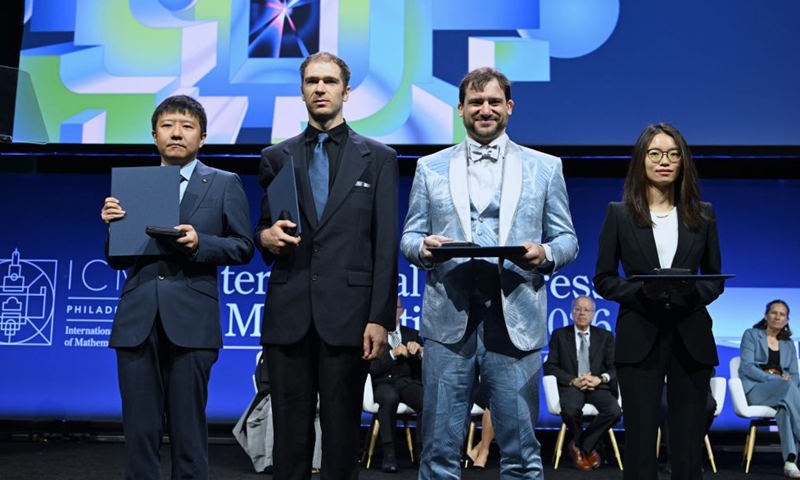
Deng and Wang were awarded the Fields Medals at the 2026 International Congress of Mathematicians opened here on Thursday, marking the first time Chinese mathematicians have won the prestigious honor, according to the Xinhua News Agency. 

At the opening ceremony of the congress, held at the Pennsylvania Convention Center, the International Mathematical Union announced that Deng won the medal for his work in partial differential equations (PDEs), while Wang won the medal for her work in harmonic analysis and geometric measure theory, Xinhua said. 

Born in 1991 in Guilin, South China's Guangxi Zhuang Autonomous Region, Wang grew up in a family with a strong connection to mathematics - her father was a mathematics teacher, according to media reports. 

When she was around five or six years old, before starting primary school, Wang received a mathematics textbook ahead of time. At the end of some chapters, the textbook included a box containing several brainteasers labeled "Think About It," China Science Daily reported.

One of the problems asked: If there are seven trees, and every three trees in a straight line count as one row, what is the maximum number of rows that can be formed? Wang was thrilled when she figured out the answer. From then on, she developed a passion for using her mind to "think through" problems, the media report said. 

"Fun" and "interesting" are the words Wang repeatedly uses when recalling her first encounters with mathematics.

During her middle school years, Wang did not have outstanding academic achievements and was not considered a "prodigy" by the public. She participated in a high school mathematics competition once, but only won an ordinary provincial-level award. In her first year of high school, Wang ranked outside the top 100 in her grade. 

By her second year, she had improved to within the top 60. In her final year, Wang made a breakthrough, rising into the top 10 students in her grade.

In 2007, Wang Hong was admitted to Peking University at the age of 16 due to the time in primary school when she skipped two grades, marking the first major milestone of her life.

Born and raised in Shenzhen, Deng showed remarkable talent from an early age. 

In his first year of junior high school, he came close to pursuing a professional career in Go, falling just one step short of qualification. At the age of 17, he won a gold medal at the International Mathematical Olympiad (IMO) and was admitted to Peking University through a recommendation program. Two years later, he transferred to the Massachusetts Institute of Technology (MIT) and went on to earn his PhD from Princeton University, according to media reports. 

"Although they demonstrated different levels of mathematical talent during their middle school years, they shared one important trait: from the beginning of their undergraduate studies, they had set their sights on becoming professional mathematicians as a long-term career goal," Xiong Bingqi, director of the 21st Century Education Research Institute, told the Global Times on Friday. 

To continue cultivating more outstanding professional mathematicians, the key is to guide students to combine their intrinsic interests and long-term passion with their future career development, Xiong said. 

Wang is now a permanent professor at the Institut des Hautes Études Scientifiques (IHES) since September 2025, where she is affiliated with the Alexander Grothendieck Laboratory (CNRS/IHES), according to the website of IHES. Wang is also a Silver Professor of mathematics at the Courant Institute of New York University (NYU) in the US. 

In a phone call, the French President Emmanuel Macron congratulated Wang for the awarding, according to a Facebook post from the French leader on Friday. 

"Educated at École Polytechnique and a researcher at the Institut des Hautes Études Scientifiques (IHES) in Paris-Saclay, she represents the excellence of our research and education system. A source of pride," Macron said. 

On Friday, news of the two Chinese mathematicians winning the award also drew widespread attention on Chinese social media. Among related discussions, the hashtag "Shing-Tung Yau  hopes Wang Hong and Deng Yu will return to China to teach" became the top trending topic on Weibo.

Yau, was awarded the Fields Medal, at the age of 33, becoming the first Chinese recipient of this prestigious honor, per Xinhua. 

Yau said he hopes that the younger generation of Chinese mathematicians who have grown up in China will be able to make their most important breakthroughs at home, forge their own path in mathematics, and help China become a leading global power in the field, according to media reports. 

For students with an interest and talent in mathematics to grow into professional mathematicians, it is essential to create an environment that allows them to pursue their interests and career aspirations. The cultivation of top-tier talent should not be distorted by utilitarian considerations, Xiong noted. 

"To achieve this, basic education and university selection and evaluation systems should adopt more diverse approaches - recognizing the talent demonstrated through competitions while also ensuring that students who start at a slower pace but steadily develop through genuine passion are not overlooked," the Chinese expert said. 

Major Chinese shale oil zone reports output of over 700,000 tonnes in 2025

China has established its first national shale oil demonstration zone in a continental faulted lake basin at the Shengli Jiyang oilfield in east China's Shandong Province, with it achieving annual output exceeding 700,000 tonnes in 2025, according to a report released by the National Energy Administration.

The demonstration zone reported proven geological reserves of 327 million tonnes, the report added.

The project is China's third national-level shale oil demonstration zone, following those in Xinjiang in northwest China and Heilongjiang in the northeast. It aims to improve the country's technological system for shale oil exploration and development in continental faulted lake basins, overcome key technical bottlenecks, achieve major exploration and production breakthroughs, and establish efficient development models that can be replicated nationwide.

Shale oil, defined as liquid hydrocarbons trapped within shale rock formations and extractable for refining, is a widely distributed energy resource with reserves that significantly exceed those of conventional oil sources.

China's shale oil output exceeded 8.5 million tonnes in 2025, more than 10 times the volume recorded in 2018, earlier data showed.

Mainland spokesperson dismisses DPP's response to submarine missile test as 'overreaction'

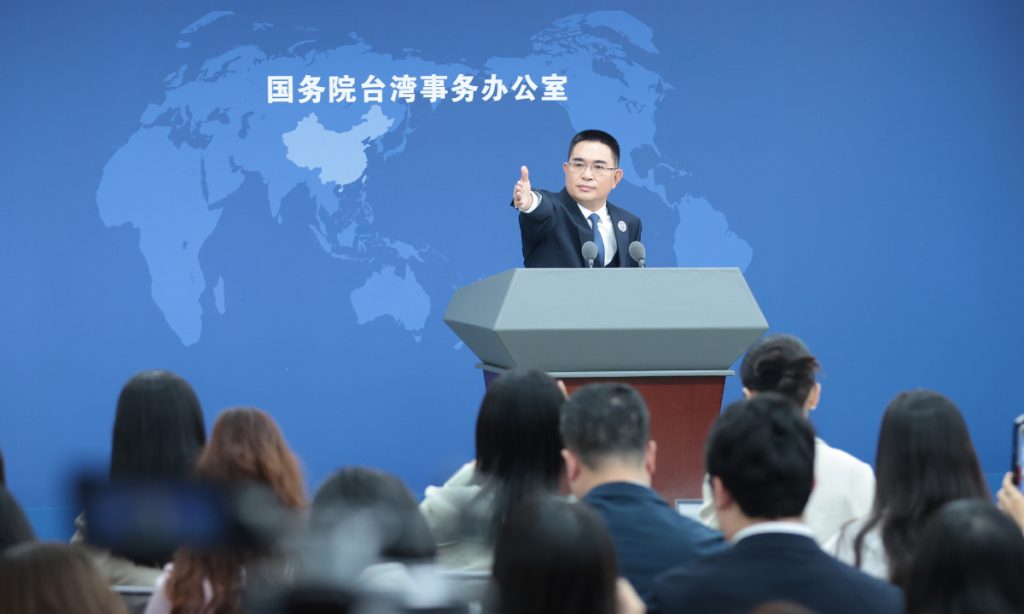
China's submarine missile launch on Monday was part of a routine annual military training exercise, and relevant countries had been notified in advance, Chen Binhua, a spokesperson for the State Council Taiwan Affairs Office, said on Wednesday. The launch was in line with international law and established international practices and not directed at any specific country or target.

Chen made the remarks in response to a query that after Chinese mainland launched the test launch of a nuclear submarine-based strategic missile, the Taiwan local authorities claimed that "the mainland is escalating tensions in the region and undermining peace and stability," adding that Taiwan would "resolutely safeguard its sovereignty, security and regional peace and stability," while calling on the international community to pay attention to the mainland's "military expansion and provocative threats."

Chen said the DPP authorities' "overreaction" to the missile test launch fully exposed their guilty conscience and weakness in pursuing "Taiwan independence" provocations.

Super Typhoon Bavi enters China's 48-hour warning zone; level IV emergency response activated for coastal provinces

Following Maysak, Super Typhoon Bavi, which formed on July 2, is set to enter China's 48-hour typhoon warning zone on Wednesday. As the massive typhoon - characterized by its enormous size and wide-ranging wind and rain impacts - approaches, China's National Flood Control and Drought Relief Headquarters activated a Level IV emergency response for flood and typhoon prevention in East China's Zhejiang and Fujian provinces.

According to Weather China on Wednesday, Bavi strengthened slightly overnight, with its maximum sustained winds increasing to 62 meters per second, exceeding Force 17 on China's wind scale and reaching its peak intensity. As of 2 pm Wednesday, the storm had maintained super typhoon strength for 108 consecutive hours, indicating that it remains an extremely powerful system.

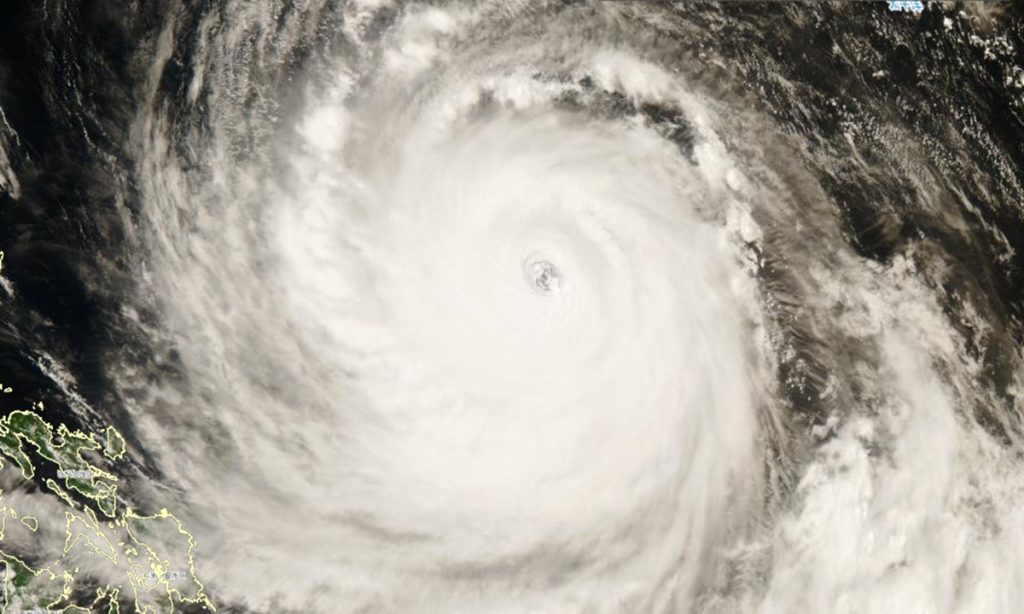
Satellite imagery shows Bavi to be an exceptionally large and dangerous storm, featuring a highly symmetrical cloud structure, a well-defined eye and vigorous convection within its eyewall. Its cloud system spans more than 1,000 kilometers in diameter, making it a rare giant typhoon. The storm is expected to enter China's 48-hour warning zone at peak intensity, meaning it will soon begin affecting the country's offshore waters.

Under China's classification system, a typhoon with maximum sustained winds of at least 51 meters per second near its center is categorized as a super typhoon. As one of the most powerful weather systems on Earth, a super typhoon can bring destructive winds, torrential rainfall, storm surges and severe convective weather, including thunderstorms and tornadoes, according to Weather China.

The next three days will be critical in determining both Bavi's track and intensity. Lin Nan, a meteorological analyst with Weather China, said the storm is expected to remain at super typhoon strength as it moves northwest through Wednesday and Thursday. After entering waters closer to China's coast on Thursday night, it is likely to weaken gradually. Even so, Bavi is still forecast to make landfall as a severe typhoon, with the potential of causing significant damage.

Current forecasts indicate that Bavi is most likely to make landfall along China's eastern coast.
According to the latest forecast, the Taiwan island is expected to experience heavy rainfall first between Friday and Saturday. Zhejiang and Fujian are forecast to see the heaviest rainfall on Saturday, with widespread torrential rain and isolated areas potentially receiving extremely heavy rainfall. From Saturday to Sunday, the rain belt is expected to expand westward and northward, affecting provinces including Hunan and Hubei. Beginning Sunday, heavy rainfall may also spread to Henan, Hebei, Shandong, Liaoning and Jilin, according to Weather China.

Starting on Thursday, winds over China's eastern coastal waters are expected to strengthen significantly, with Friday through Saturday marking the peak period for strong winds affecting offshore and coastal areas, according to Weather China. From Saturday night through Monday, strong winds are also forecast to intensify across inland regions including East and Central China, and residents are advised to secure outdoor structures and take precautions against damaging winds.

Laos formally signs memorandum to be a SCO dialogue partner

Laos formally became a dialogue partner of the Shanghai Cooperation Organization (SCO), as a signing ceremony for the memorandum granting the Laos the status of a dialogue partner of the SCO was held in Beijing on Friday morning, according to CCTV News.

Laos' entry as a dialogue partner will not only help the country expand its international cooperation and address domestic issues, but will also help the SCO further expand its regional influence, a Chinese expert said.

Previously, on September 1, 2025, at the 25th Meeting of the Council of Heads of State of the SCO held in North China's Tianjin Municipality, the heads of SCO member states unanimously agreed to accept Laos as a dialogue partner. To date, the SCO has 10 full member states, two observer states, and 15 dialogue partners, including Laos, according to the CCTV News report.

Cooperation with regional mechanisms such as the SCO is an important option for Laos to tackle various security and development challenges it faces, Zhou Shixin, director of the Center of Southeast Asia Studies, Shanghai Institutes for International Studies, told the Global Times on Friday.

"Therefore, Laos' accession as an SCO dialogue partner is, first and foremost, an important consideration from the perspectives of domestic governance and security governance," Zhou said.

Laos' entry as a dialogue partner not only strengthens its cooperation with Eurasian countries but also creates deeper mutual understanding between Laos and SCO members, the Lao News Agency reported in September 2025. It is expected to contribute significantly to Laos' social and economic development, while highlighting the SCO's unique character as a cooperation mechanism that is "open and inclusive, but not exclusive; comprehensive, but not closed," according to the report.

Laos has increasingly focused its national development efforts on economic growth in recent years, which aligns with the SCO's evolving role in expanding economic cooperation, Zhou said, noting that in addition to traditional security issues, the SCO has placed growing emphasis on cooperation in areas such as economic development and connectivity.

Notably, Laos is just the latest Southeast Asian countries to participate in the SCO. Cambodia and Myanmar are also dialogue partners of the organization.

For Southeast Asian countries, strengthening cooperation with the SCO does not mean choosing sides, but rather expanding cooperation opportunities with more countries, Zhou said.

This is a diplomatic choice widely pursued by Southeast Asian nations, Zhou added, noting that with Laos joining the SCO, the organization's regional influence is expected to grow, and its ties with more Southeast Asian countries may be further strengthened.

During a meeting with Lao Foreign Minister Thongsavanh Phomvihane on the sidelines of SCO summit in September 2025, SCO Secretary General Nurlan Yermekbayev expressed confidence in Vientiane's active involvement in promoting the SCO's multifaceted agenda, and informed about the SCO's current activities and priorities, according to the SCO's website.

China has strongly supported Laos joining the SCO family. Prior to the admission of Laos as a dialogue partner at the Tianjin summit, during a meeting with Phomvihane in August 2025, Chinese Foreign Minister Wang Yi said that China welcomes Laos' joining the SCO family and looks forward to Laos contributing to the development of the SCO, according to the Xinhua News Agency.

Thongsavanh thanked China for supporting Laos in becoming a dialogue partner of the SCO, and said that Laos is willing to maintain close communication and coordination with China to jointly safeguard international fairness and justice, Xinhua reported at the time.

As a landlocked country in the heart of the Mekong sub-region, Laos serves as a bridge between the Belt and Road Initiative (BRI) and the Regional Comprehensive Economic Partnership (RCEP). With the China-Laos railway already becoming a vital link in the regional transportation network, the Southeast Asian country is well positioned to deepen connectivity with SCO member states, the Lao News Agency said.

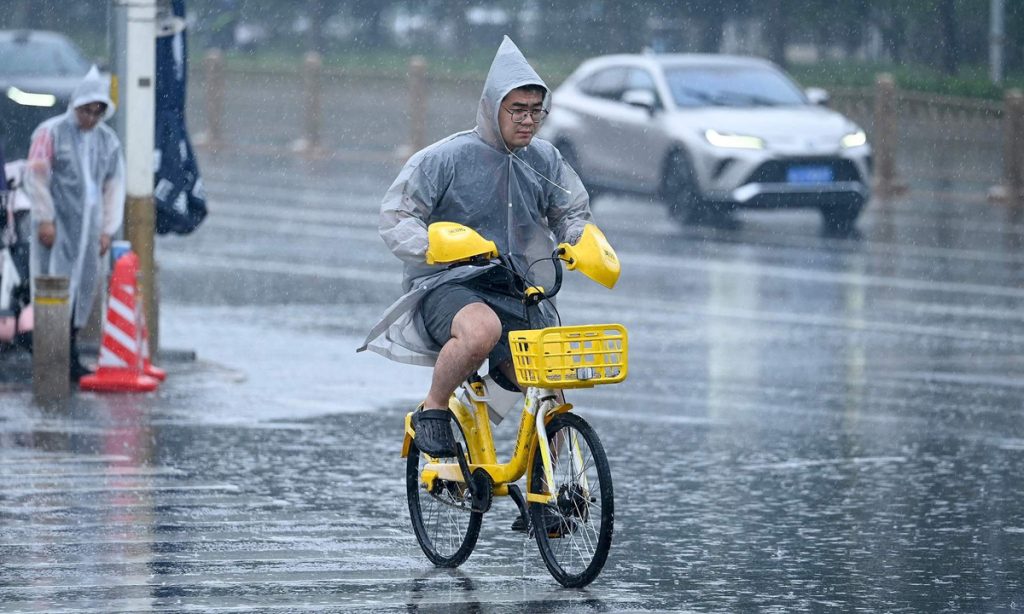
Beijing activates highest flood control emergency reponse in 9 districts

Nine districts in Beijing activated a Level-I emergency response for flood control on Saturday afternoon after a red alert for torrential rain was issued for these regions.

Downpours are forecast to batter the districts of Fangshan, Pinggu, Miyun, Huairou, Mentougou, Fengtai, Daxing, Tongzhou and Shunyi, mostly in the suburbs, from 7 p.m. Saturday to 8 a.m. Sunday, according to the Beijing Meteorological Observatory. Some areas are expected to receive more than 150 mm of rain within six hours or over 200 mm within 24 hours.

The municipal emergency management office warned of a high risk of flooding in medium and small rivers, flash floods and geological hazards in mountainous and hilly areas, as well as waterlogging in low-lying areas.

As authorities intensified flood control efforts, around 104,000 people across the city had been relocated as of 4 p.m. Saturday. In addition, 73 elderly care facilities were temporarily closed, with 1,902 elderly people evacuated, according to the office of the Beijing municipal flood control and drought relief headquarters.

As a precaution, 188 scenic areas and 167 tent campsites have been closed, 4,376 rural homestays have been suspended and construction work at 3,318 sites has been halted.

A total of 27,418 rescue workers have been placed on standby across the city to respond to potential emergencies.

China has a four-tier emergency response system, with Level I being the most severe.

Croatian city councilor: Unity is a key to CPC’s success

Kruno Raguz, a member of the Vukovar City Council in Croatia, recently said in an exclusive interview with People's Daily Online that unity is a key to the Communist Party of China's success.

Impressed by China's development, he noted that the Chinese people stand together and build their country together. Despite their different systems, he said Croatia and China share the same goal of improving people's living standards.