A praying mantis depends on precision targeting when hunting insects. Now, scientists have identified nerve cells that help calculate the depth perception required for these predators’ surgical strikes.
In addition to providing clues about insect vision, the principles of these cells’ behavior, described June 28 in Nature Communications, may also lead to advances in robot vision or other automated systems.
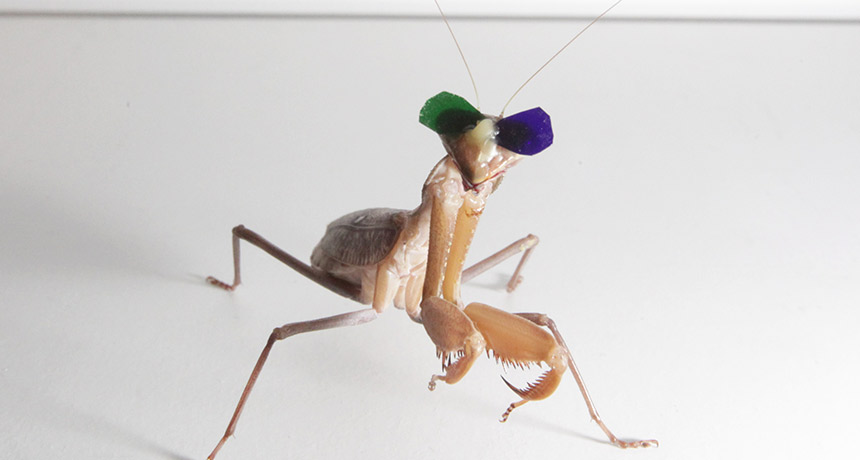
So far, praying mantises are the only insects known to be able to see in 3-D. In the new study, neuroscientist Ronny Rosner of Newcastle University in England and colleagues used a tiny theater that played praying mantises’ favorite films — moving disks that mimic bugs. The disks appeared in three dimensions because the insects’ eyes were covered with different colored filters, creating minuscule 3-D glasses. As a praying mantis watched the films, electrodes monitored the behavior of individual nerve cells in the optic lobe, a brain structure responsible for many aspects of vision. There, researchers found four types of nerve cells that seem to help merge the two different views from each eye into a complete 3-D picture, a skill that human vision cells use to sense depth, too.
One cell type called a TAOpro neuron possesses three elaborate, fan-shaped bundles that receive incoming visual information. Along with the three other cell types, TAOpro neurons are active when each eye’s view of an object is different, a mismatch that’s needed for depth perception.
The details of the various types of nerve cells, and how they might receive, combine and send visual information, suggest that these insects’ vision may be more sophisticated than some scientists had thought, the team writes. And the principles guiding praying mantis depth perception may be useful to researchers working on improving machine vision, perhaps allowing artificial systems to better sense the depths of objects.
A new biomaterial delivered to the heart soon after a heart attack can heal damaged tissue from the inside out.
Heart attacks kill cardiac muscle tissue, scarring the heart and leaving permanent damage after just six hours. The damage prevents the heart from functioning properly. If there was a way to begin healing damaged tissue soon after a heart attack, doctors could prevent scar tissue from developing.
“In an ideal world, you treat a patient immediately when they’re having a heart attack to try to salvage some of the tissue and promote regeneration,” says Karen Christman, a bioengineer at the University of California, San Diego. The pursuit of this ideal inspired Christman, along with a team of researchers, to develop the biomaterial. In rodents and pigs, it appears to repair tissue damage and reduce inflammation directly after a heart attack, Christman and colleagues report December 29 in Nature Biomedical Engineering.
“I think it has a lot of potential,” Vimala Bharadwaj, a biomedical scientist at Stanford University who was not involved in the research. The paper “is definitely good proof of concept for what they’re trying to do.”
Previously, researchers found that stem cells derived from body fat can be used to heal bones, muscles and the heart (SN: 3/9/16). Christman wanted to work with the extracellular matrix, the lattice of proteins that provide structural support to the cells in cardiac muscle tissue. Like stems cells, it has regenerative abilities but is much less expensive, she says.
In 2009, Christman’s team produced a hydrogel using particles from this matrix. Trials in rats and later in humans showed that the material bonded to damaged areas and promoted cell repair and growth. However, due to relatively large particles of the hydrogel, it could be delivered to the heart only via a needle.
“Poking the heart with a needle could set off an arrhythmia,” says Christman. To use this treatment, doctors would need to wait a few weeks until the heart is more stable and the chance of these irregular heartbeats decreases. And that would be too late to prevent scarring.
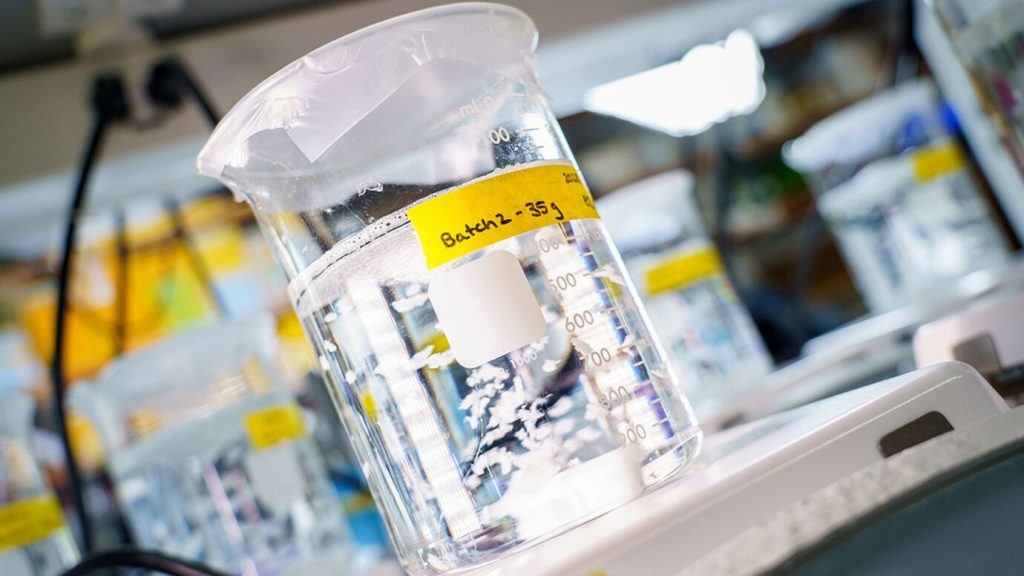
The team took the previously created hydrogel, sifted out the larger particles with a centrifuge so only nanoparticles remained, and added water to dilute the mixture. That created a material thin enough to deliver to heart blood vessels intravenously. Based on the nanoparticles’ size, the team expected the mixture would slip through any gaps in cardiac blood vessels caused by the heart attack and adhere to the surrounding tissue. Once there, it would create a protective barrier while the heart healed.
Instead, animal experiments showed that the extracellular matrix material bound to the leaky vessels, preventing some inflammatory cells from moving into the heart tissue in the first place and causing further damage. The material reduced inflammation in the heart and stimulated the healing process by encouraging cell growth, the team reports.
Further safety studies will be needed to get the biomaterial ready for clinical trials. The first trial in humans will most likely be for repairing cardiac tissue post–heart attack. “A lot of my motivation is moving things out of the lab, actually into the real world,” Christman says.
Another real-world application of the biomaterial could be treatment for leaky blood vessels in other hard-to-access organs, including in the brain after a traumatic injury, Christman notes.
While Bharadwaj finds that application potentially promising, she says tests are needed to see whether the biomaterial improves headaches and cognitive or memory deficits in the brain after a traumatic injury. That’s needed to gauge whether it really is an effective TBI treatment.
As early as 252 million years ago, some plants may have curled up their leaves at night for a cozy “sleep.”
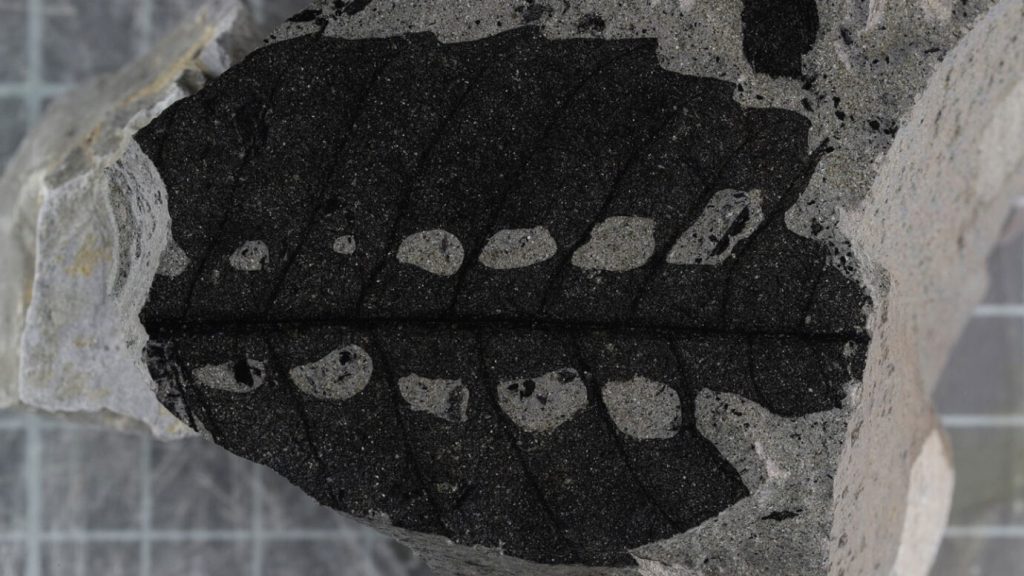
Fossilized leaves of two now-extinct Gigantonoclea species bear signs of nyctinasty, or circadian rhythmic folding at night, researchers report February 15 in Current Biology. That would make these specimens the first known fossilized examples of this curious plant behavior, the team says.
The two leaf fossils were discovered in a rock layer in southwestern China that dates to between 259 million and 252 million years ago. In both species, the leaves were broad, with serrated edges. But most curiously, they bear oddly symmetrical holes. Insects made those holes while feeding on the leaves while they were folded, say paleontologist Zhuo Feng of Yunnan University in Kunming, China and colleagues. Similar symmetrical patterns of insect damage in leaf fossils can be used to distinguish folding behavior from leaves that might have shriveled as the plant died, the team says.
Modern plants, including many in the legume family such as the orchid tree, that fold and unfold their leaves use specialized cells called pulvinus cells, which act somewhat like muscles (SN: 2/3/23). By shifting water from one part of the leaf to another, the cells can bloat or deflate, allowing the leaves to fold or curl.
These cells would be at the base of the leaves, which weren’t preserved in the fossils, so it’s not possible to say whether these ancient plants also had pulvinus cells, the team says. Although it’s also hard to prove this was nighttime behavior, the leaves would also have had to be folded long enough for insects to do their munching. But the find does suggest that such leaf folding emerged independently in different plant lineages: Nearly all the modern plants that do this are angiosperms, or flowering plants. But Gigantonoclea plants were gymnosperms, seed-producing plants such as conifers and ginkgos.
A focus on family might be the key to personal well-being.
Surveys in the social sciences, such as those measuring happiness or health, tend to focus on the smallest unit: the individual. But two new studies, each surveying over 10,000 people worldwide, show that primary unit of analysis may need scaling up. One study suggests that people adhere to public health guidelines less to protect themselves than their loved ones. And the other study provides an explanation for why that may be the case: People the world over prioritize family happiness over their own. Neither research team defined the term “family,” instead allowing respondents to interpret the term as they saw fit. As such, the results suggest that the exact nature of family, whether nuclear, blood-related or extended, does not matter.
The findings have important implications for society, says Karen Bogenschneider, a family policy expert at the University of Wisconsin–Madison who was not involved with either study. That’s because policy makers occasionally rely on research findings to develop programs such as those aimed at reducing substance abuse or inequality. When researchers frame societal issues in terms of the individual or community, so too do policy makers. And those programs may be less effective as a result.
For instance, several studies in the past couple decades have shown that including family members in addiction treatment programs lowers the addict’s risk of relapse and improves family relationships.
Moreover, these studies challenge the assumption that individualism has turned the self into the most important unit of survival (SN: 10/7/19).
Family bonds drove individuals to adopt pandemic-related health behaviors The idea that policy makers can target family to change behavior comes as no surprise to Martha Newson, an anthropologist at Kent University in England. For years, Newson has studied a concept known as fusion, where an individual becomes so enmeshed in a larger social unit that she or he is willing to sacrifice personal well-being, or even survival, for the group (SN: 6/23/16).
At the onset of the pandemic, Newson and her team began studying how social fusion might be influencing behavior around the world during the pandemic. From March to May 2020, over 13,000 participants from 122 countries were shown a sequence of five pictures, each with two circles, one for the self and the other for a given group such as family, country or all of humankind. In the first picture, the circles are far apart, but in subsequent pictures they grow closer and closer together until they fully overlap. Participants had to select one of the five pictures to indicate their level of fusion with the group. A participant had to select the fully overlapping circles to be considered fused to the group.
Participants also filled out scales to indicate how much they had performed a given public health action, such as social distancing or masking, in the previous week.
Participants who were fused to family were overrepresented among those reporting strong adherence to public health guidelines, Newson and colleagues reported January 13 in Science Advances. For instance, despite representing roughly a quarter of the participant pool, participants with strong family bonds constituted three-quarters of those who reported following social distancing guidelines. And almost half of participants with strong family bonds reported frequent handwashing compared with about one-third of participants with weaker family bonds.
Humans evolved in small-scale societies, Newson says. “When we have crises … these smaller units remain very important.”
On average, people value family happiness more than their own Meanwhile, another group of researchers had begun to question the widely accepted belief that many happy individuals sum up to a happy society. That idea originated in the West, and has often been treated as universal, says Kuba Krys, a cross-cultural psychologist at the Polish Academy of Sciences in Warsaw.
But research over the years has indicated that non-Westerners may not value personal happiness as much as people in the West. For instance, outside the West, people tend to see happiness as more interdependent, or grounded in harmony and balance with others, than independent, or grounded in the self.
If happiness exists at least partially outside the individual, then Krys and his team wondered what unit researchers should study. They looked to family.
The team had roughly 13,000 participants from 49 countries indicate how much the perfect or ideal person would agree with statements in two commonly used surveys of well-being. Statements appeared both in the standard “I” framing and in a new family framing. For instance, participants reflected on how the ideal person would respond to both the statements, “In most ways, my life is close to ideal” and “In most ways, the life of my family is close to ideal.”
Nearly half of the participants valued family well-being over personal well-being, while less than a third preferred their own happiness, the team reports in an upcoming paper in the Journal of Cross-Cultural Psychology. Moreover, participants in even the most individualistic countries, including the United States, valued family, on average, more than self. The word “family” has become associated with conservativism, Krys says. But family remains central to people’s lives, regardless of geography or political affiliation. “The shape of family has changed but family as an idea, as a basic unit, has not changed,” he says. “I would advise progressives … not to be afraid of touching on family topics.”
Bogenschneider’s research backs up this point. In a study of more than 200 state legislators, she and colleagues found that while abortion and same-sex marriage remain highly polarized, policy makers tend to view other family issues, such as those involving domestic violence, juvenile crime or teen pregnancy, as largely bipartisan.
This suggests that issues that aren’t typically centered around family, such as climate change or inequality, could be framed in terms of family to garner wider support, Bogenschneider says. Researchers who are seeking to translate their findings into policy and advocates who are advancing particular causes could, she adds, “elevate policy makers’ interest in those issues by focusing on families and family contributions.”
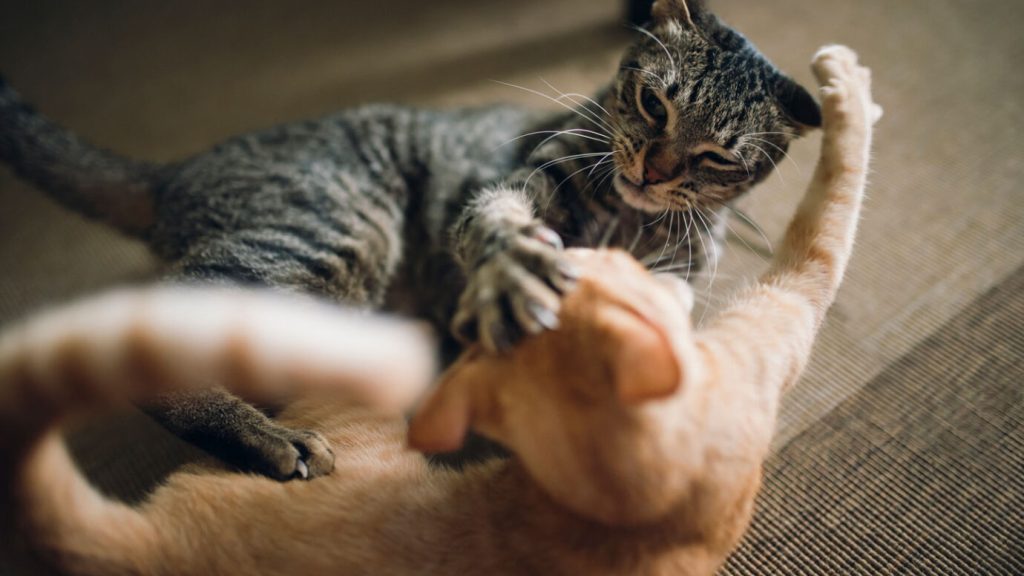
It turns out that certain behaviors in domestic cats could be telltale signs that an interaction is friendly, aggressive or something in between, researchers report January 26 in Scientific Reports.
“It is a question we hear a lot from cat owners,” says cat behavior expert Mikel Delgado of Feline Minds, a cat behavior consulting company in Sacramento, Calif., who was not involved in the study. “So I was excited to see that researchers are taking on this topic.” Scientists have studied cats’ social relationships — both with other cats and humans — but it can be tricky to tell whether two cats are playing or fighting, says veterinarian and cat behavior researcher Noema Gajdoš-Kmecová of the University of Veterinary Medicine and Pharmacy in Košice, Slovakia (SN: 9/23/19).
Sometimes cat owners miss the signs of a tense relationship because they think their pets are just playing, which can lead to stress and illness in the animals, she says. Other times, owners rehome their cats after incorrectly assuming their pets are fighting.
To assess and categorize interactions, Gajdoš-Kmecová and colleagues watched about 100 videos of different cats interacting in pairs. After viewing around one-third of the videos, Gajdoš-Kmecová identified six types of behaviors, including wrestling and staying still. She then watched all of the videos and noted how often each cat exhibited one of the specified behaviors, and for how long. By running statistical analyses on the behaviors, she pinpointed three types of interactions between the cat pairs: playful, aggressive and intermediate.
To confirm the outcome, other members of the team also watched the videos and classified each interaction between felines.
Some clear connections emerged. Quietly wrestling, for instance, suggested playtime, whereas chasing and vocalizations, like growling, hissing or gurgling, implied aggressive encounters.
Intermediate interactions had elements of both playful and aggressive encounters, but especially included prolonged activity of one cat toward the other, such as pouncing on or grooming its fellow feline. These in-between encounters could hint that one cat wants to keep playing while the other doesn’t, with the more playful cat gently nudging to see if its partner wants to continue, the authors say. This work provides initial insights into cat interactions, Gajdoš-Kmecová says, but it’s just the start. In the future, she plans to study more subtle behaviors, like ear twitches and tail swishes. Both Gajdoš-Kmecová and Delgado also stress that one contentious encounter doesn’t necessarily signal a cat-astrophic relationship.
“This is not just about one interaction,” Gajdoš-Kmecová says. Owners “really should look into the different, multiple interactions in multiple periods of life of the cats and then put it into context.”
The night sky has been brightening faster than researchers realized, thanks to the use of artificial lights at night. A study of more than 50,000 observations of stars by citizen scientists reveals that the night sky grew about 10 percent brighter, on average, every year from 2011 to 2022.
In other words, a baby born in a region where roughly 250 stars were visible every night would see only 100 stars on their 18th birthday, researchers report in the Jan. 20 Science. The perils of light pollution go far beyond not being able to see as many stars. Too much brightness at night can harm people’s health, send migrating birds flying into buildings, disrupt food webs by drawing pollinating insects toward lights instead of plants and may even interrupt fireflies trying to have sex (SN: 8/2/17; SN: 8/12/15).
“In a way, this is a call to action,” says astronomer Connie Walker of the National Optical-Infrared Astronomy Research Laboratory in Tucson. “People should consider that this does have an impact on our lives. It’s not just astronomy. It impacts our health. It impacts other animals who cannot speak for themselves.”
Walker works with the Globe at Night campaign, which began in the mid-2000s as an outreach project to connect students in Arizona and Chile and now has thousands of participants worldwide. Contributors compare the stars they can see with maps of what stars would be visible at different levels of light pollution, and enter the results on an app.
“I’d been quite skeptical of Globe at Night” as a tool for precision research, admits physicist Christopher Kyba of the GFZ German Research Centre for Geosciences in Potsdam. But the power is in the sheer numbers: Kyba and colleagues analyzed 51,351 individual data points collected from 2011 to 2022.
“The individual data are not precise, but there’s a whole lot of them,” he says. “This Globe at Night project is not just a game; it’s really useful data. And the more people participate, the more powerful it gets.”
Those data, combined with a global atlas of sky luminance published in 2016, allowed the team to conclude that the night sky’s brightness increased by an average 9.6 percent per year from 2011 to 2022 (SN: 6/10/16).
Most of that increase was missed by satellites that collect brightness data across the globe. Those measurements saw just a 2 percent increase in brightness per year over the last decade. There are several reasons for that, Kyba says. Since the early 2010s, many outdoor lights have switched from high-pressure sodium lightbulbs to LEDs. LEDs are more energy efficient, which has environmental benefits and cost savings.
But LEDs also emit more short-wavelength blue light, which scatters off particles in the atmosphere more than sodium bulbs’ orange light, creating more sky glow. Existing satellites are not sensitive to blue wavelengths, so they underestimate the light pollution coming from LEDs. And satellites may miss light that shines toward the horizon, such as light emitted by a sign or from a window, rather than straight up or down.
Astronomer and light pollution researcher John Barentine was not surprised that satellites underestimated the problem. But “I was still surprised by how much of an underestimate it was,” he says. “This paper is confirming that we’ve been undercounting light pollution in the world.”
The good news is that no major technological breakthroughs are needed to help fix the problem. Scientists and policy makers just need to convince people to change how they use light at night — easier said than done.
“People sometimes say light pollution is the easiest pollution to solve, because you just have to turn a switch and it goes away,” Kyba says. “That’s true. But it’s ignoring the social problem — that this overall problem of light pollution is made by billions of individual decisions.”
Some simple solutions include dimming or turning off lights overnight, especially floodlighting or lights in empty parking lots.
Kyba shared a story about a church in Slovenia that switched from four 400-watt floodlights to a single 58-watt LED, shining behind a cutout of the church to focus the light on its facade. The result was a 96 percent reduction in energy use and much less wasted light , Kyba reported in the International Journal of Sustainable Lighting in 2018. The church was still lit up, but the grass, trees and sky around it remained dark.
“If it was possible to replicate that story over and over again throughout our society, it would suggest you could really drastically reduce the light in the sky, still have a lit environment and have better vision and consume a lot less energy,” he says. “This is kind of the dream.”
Barentine, who leads a private dark-sky consulting firm, thinks widespread awareness of the problem — and subsequent action — could be imminent. For comparison, he points to a highly publicized oil slick fire on the Cuyahoga River, outside of Cleveland, in 1969 that fueled the environmental movement of the 1960s and ’70s, and prompted the U.S. Congress to pass the Clean Water Act.
“I think we’re on the precipice, maybe, of having the river-on-fire moment for light pollution,” he says.
The Arctic today is a hostile place for most primates. But a series of fossils found since the 1970s suggest that wasn’t always the case.
Dozens of fossilized teeth and jaw bones unearthed in northern Canada belonged to two species of early primates — or at least close relatives of primates — that lived in the Arctic around 52 million years ago, researchers report January 25 in PLOS ONE. These remains are the first primate-like fossils ever discovered in the Arctic and tell of a groundhog-sized animal that may have skittered across trees in a swamp that once existed above the Arctic Circle. The Arctic was significantly warmer during that time. But creatures still had to adapt to extreme conditions such as long winter months without sunlight. These challenges make the presence of primate-like creatures in the Arctic “incredibly surprising,” says coauthor Chris Beard, a paleontologist at the University of Kansas in Lawrence. “No other primate or primate relative has ever been found this far north so far.”
Between frigid temperatures, limited plant growth and months of perpetual darkness, living in the modern Arctic isn’t easy. This is especially true for primates, which evolved from small, tree-dwelling creatures that largely fed on fruit (SN: 6/5/13). To this day, most primates — humans and few other outliers like Japan’s snow monkeys excepted — tend to stick to tropical and subtropical forests, largely found around the equator.
But these forests haven’t always been confined to their present location. During the early Eocene Epoch, which started around 56 million years ago, the planet underwent a period of intense warming that allowed forests and their warm-loving residents to expand northward (SN: 11/3/15).
Scientists know about this early Arctic climate in part because of decades of paleontological work on Ellesmere Island in northern Canada. These digs revealed that the area was once dominated by swamps not unlike those found in the southeastern United States today. This ancient, warm, wet Arctic environment was home to a wide array of heat-loving animals, including giant tapirs and crocodile relatives. For the new study, Beard and his colleagues examined dozens of teeth and jawbone fossils found in the area, concluding that they belong to two species, Ignacius mckennai and Ignacius dawsonae. These two species belonged to a now-extinct genus of small mammals that was widespread across North America during the Eocene. The Arctic variants probably made their way north as the planet warmed, taking advantage of the new habitat opening up near the poles.
Scientists have long debated whether this lineage can be considered true primates or whether they were simply close relatives. Regardless, it’s still “really weird and unexpected” to find primates or their relatives in the area, says Mary Silcox, a vertebrate paleontologist at the University of Toronto Scarborough.
For one thing, Ellesmere Island was already north of the Arctic Circle 52 million years ago. So while conditions may have been warmer and wetter, the swamp was plunged into continuous darkness during the winter months.
Newly arrived Ignacius would have had to adapt to these conditions. Unlike their southern kin, the Arctic Ignacius had unusually strong jaws and teeth suited to eating hard foods, the researchers found. This may have helped these early primates feed on nuts and seeds over the winter, when fruit wasn’t as readily available.
This research can shed light on how animals can adapt to live in extreme conditions. “Ellesmere Island is arguably the best deep time analog for a mild, ice-free Arctic,” says Jaelyn Eberle, a vertebrate paleontologist at the University of Colorado Boulder.
Studying how plants and animals adapted to this remarkable period in Arctic history, Beard says, could offer clues to the Arctic’s future residents.
Revamped COVID-19 vaccines are poised to do battle with the super-contagious omicron variant.
On September 1, U.S. health officials greenlit the first major update of the mRNA-based shots, reformulated to recognize both the original version of SARS-CoV-2 and the recently circulating versions of omicron. Those mRNA vaccine boosters could start going into arms within days.
“They can help restore protection that has waned since previous vaccination and were designed to provide broader protection against newer variants,” Rochelle Walensky, director of the U.S. Centers for Disease Control and Prevention, said in a statement after endorsing a vaccine advisory committee’s approval of the shots. Both Moderna and Pfizer and its German partner BioNTech created boosters that contain instructions for making the BA.4 and BA.5 omicron subvariants’ spike protein as well as the original virus’ spike protein (SN: 6/30/22). Those two variants now account for nearly all the new cases in the United States. The U.S. Food and Drug Administration granted emergency use authorization for the shots August 31. The CDC action means the Pfizer booster is now OK’d for those 12 and older; Moderna’s shot is for those 18 and older.
The European Medicines Agency and Health Canada also authorized use of an updated booster vaccine on September 1. That one, made by Moderna, contains mRNA instructions for building the original coronavirus spike protein and the spike protein from the omicron BA.1 subvariant. The United Kingdom, Switzerland and Australia have already given the nod for use of that dual, or bivalent, booster.
Here’s what to know about the new shots:
Should I get a booster shot? Probably. The CDC now recommends that all fully vaccinated people 12 and older get the bivalent shot, provided it has been at least two months since their last vaccine dose. “If you are eligible, there is no bad time to get your COVID-19 booster and I strongly encourage you to receive it,” Walensky said.
That recommendation comes regardless of how many boosters people have already had.
“If you perceive this as big change … you’re right,” Evelyn Twentyman, who leads CDC’s vaccine policy unit, said September 1 during the vaccine advisory committee meeting. “We want to emphasize we’re no longer looking at total number of doses,” she said. From now on, the agency hopes to transition into a more regular schedule for COVID-19 vaccines, similar to getting annual flu shots.
The original vaccines will still be used for the first two doses, but bivalent vaccines will replace the old boosters for all but 5- to 11-year-olds. Pfizer’s original vaccine booster is still available for that age group but bivalent vaccines may come later this year for children as young as 6 months old.
There was another big difference this time around: The decision to move forward with the BA.4/5 boosters was made without data from human trials. Such trials are under way, but results won’t be known until the end of the year. In authorizing the new boosters without clinical trial data, the agencies are treating COVID-19 vaccines more like annual flu vaccines.
Data collected from people immunized with the BA.1 boosters and data from studies of mice inoculated with the BA.4/5 vaccine were used as evidence of the new boosters’ likely safety and effectiveness. The European Medicines Agency said in a Sept. 2 press briefing that it would also use the BA.1 booster to evaluate the new shots.
Why do the shots target the BA.4 and BA.5 omicron subvariants? “We very deliberately picked BA.4/5,” Peter Marks, director of the FDA’s Center for Biologics Evaluation and Research, which oversees vaccines, said in a news briefing August 31.
Both companies have tested vaccines based on the omicron BA.1 variant in humans. But BA.1, which caused the massive surge earlier in the year, is no longer circulating in the United States. As of the week of August 21 through 27, BA.5 was projected to cause about 89 percent of COVID-19 cases, with BA.4 variants responsible for about 11 percent of cases.
“This gives us a variant that is most up-to-date, and most likely looks closer to something that may evolve further in the fall,” Marks said. “The more up-to-date you are, the better chance we have of [the vaccine] working for what comes afterward.”
All omicron subvariants share common mutations. But the shape of BA.4/5’s spike protein looks much different to the immune system than other omicron subvariants do, the CDC’s Natalie Thornburg said at the advisory committee meeting. Those differences may train immune cells to build a wider variety of antibodies that can latch onto a broad array of variants.
Mice inoculated with a BA.4/5 containing booster had fewer viruses in their lungs than mice given a BA.1 boosters, Moderna’s Jacqueline Miller said at the CDC meeting. The mice make a human version of ACE2, the protein on the surface of cells that the coronavirus uses to gain entry. Mouse studies of earlier variant boosters corresponded well to levels of protection seen in human clinical trials, Miller said, so the company is hopeful that the BA.4/5 booster will provide good protection, too.
Bivalent vaccines perform better — raising antibody levels higher in people and animals — than ones that contain just the original spike protein or only a variant spike protein, Miller said. The spike protein that grabs onto human cells is a three-pronged claw. With the bivalent vaccine, each prong could be either an original or an omicron version. The mixed claw may expose parts of the spike to the immune system that are normally hidden, Miller suggested. Why now? Though the mouse data suggest the BA.4/5 booster will work, some of the CDC advisers said they’d be more comfortable having data from the ongoing human clinical trials before recommending the new shots. That data could be available in a couple of months, so why not wait?
The wait could cost lives and money, computer projections suggest. The COVID-19 scenario modeling hub, a consortium of pandemic forecasters who predict COVID-19 patterns over the next six months under varying conditions, considered what would happen in the United States if the boosters were given in September or not until November. Waiting would lead to 137,000 more hospitalizations and 9,700 more deaths, the researchers projected.
An early fall booster campaign could save more than $62 billion in direct medical costs, an analysis from the Commonwealth Fund projects.
Is it safe? Based on studies with the BA.1 bivalent booster, yes. That shot produced similar side effects to the original shots.
And it’s also safe to get flu shots and other vaccines, including ones used against monkeypox, at the same time as the COVID-19 booster. In fact, doctors should offer all vaccines for which a person is eligible at the same visit, Elisha Hall of the CDC said.
Some data indicate that the chance of serious side effects, like heart inflammation called myocarditis, happen at similar or lower rates with boosters than with the second doses of the mRNA vaccines. The side effect is rare; CDC has verified 131 myocarditis cases out of more than 126 million booster doses given, Tom Shimabukuro of the CDC COVID-19 Vaccine Safety Unit reported. The rate of myocarditis is 1.8 to 5.6 times higher after a COVID-19 infection than after vaccination for 12- to 17-year-old males — the group for which the condition has the highest risk, the CDC’s Sara Oliver said. Spacing the booster at least two months after the last dose of vaccine may help to head off any increase in myocarditis, Marks said in the FDA press briefing.
“We have a tremendous amount of experience with the monovalent, original vaccine,” the FDA’s Doran Fink said during the CDC advisory meeting. That experience made the FDA comfortable extrapolating data from the BA.1 booster trials to decide that the new shots are also safe.
“We don’t usually have too much clinical information … when we are thinking about changing influenza vaccines,” said Sarah Long, an infectious diseases pediatrician at Drexel University College of Medicine in Philadelphia. Much like the flu vaccine remodels last season’s version, the updated COVID-19 booster is built on the same scaffolding as the original version. “It’s part of the same roof. We’re just putting in some dormers and windows.”
Pablo Sanchez, a pediatric infectious diseases doctor at The Ohio State University and Nationwide Children’s Hospital in Columbus, cast the sole dissenting vote against recommending the BA.4/5 boosters. Other committee members voted to recommend the boosters, but they voiced reservations about those votes.
“I really don’t want to establish a precedent of recommending a vaccine that we don’t have clinical data on,” Sanchez said. He added, “I’m comfortable that the vaccine will likely be safe like the others,” but having the human data may help counter vaccine hesitancy.
Once is apparently enough for male dark fishing spiders. After delivering only half of their available sperm to a single female, males curl up and wait for death.
In the considerable annals of spider sex ending badly, male Dolomedes tenebrosus suffer a fate not described before, says behavioral ecologist Steven K. Schwartz of the University of Nebraska-Lincoln. Males of this widespread North American species prepare sperm for two matings but spontaneously fall into a spidery version of a coma during the first one. Their legs crumple and their bodies hang terminally motionless without any sign of the female having injured them, Schwartz and his colleagues report June 18 in Biology Letters. Male spiders deliver sperm via a pair of boxing-glove shaped projections, or pedipalps. Male dark fishing spiders load both pedipalps with sperm, but in lab and outdoor matings, males used only one before curling into a deathlike posture. Even when protected from any female attack, males’ hearts stopped beating about two hours after mating, Schwartz says.
If females eat the inert male, his death may gain him especially abundant or healthy offspring, Schwartz speculates. Or a recently fed female may be less likely to mate with the next suitor that comes along.
As dark male fishing spiders prepare to mate, the male (smaller than the female) rocks the female’s body. When he finally inserts one of his sperm-delivery organs into one of her reproductive openings, he suddenly collapses. He no longer responds when researchers pick up or poke at him. Credit: S.K. Schwartz
A mysterious gap in a star’s dusty shell of debris could be the signature of a young planet circling its sun at twice the distance of Pluto’s orbit. If it does exist, the far-flung planet’s birth may be hard for astronomers to explain.
“If this is a planet, it is extremely challenging for existing planet formation theories,” says Katherine Kretke, an astronomer at the Southwest Research Institute in Boulder, Colo.
Most planets are thought to begin their lives as small clumps of hot, rapidly moving dust and gas within vast disks of debris that orbit newborn stars. As a planet grows it behaves like a snow plow, scooping up some material to bulk up while flinging other material away, until it has cleared a smooth orbital path. John Debes, an astronomer at the Space Telescope Science Institute in Baltimore, used the Hubble Space Telescope to study a disk around TW Hydrae, a 10-million-year-old star located about 176 light-years from Earth.
Hubble images revealed an unmistakable gap 12 billion kilometers from the star, 80 times farther than Earth is from the sun. “It’s very striking,” says Phil Armitage, an astrophysicist at the University of Colorado Boulder. “It looks like what you’d expect from a forming planet.”
If the planet’s existence is confirmed, astronomers have their work cut out for them explaining how it got there. Compared with particles in tighter orbits, ones near that gap are less densely packed and move much more slowly, Kretke says. As a result, it would be difficult for a potential planet to accrue enough material to clear its own orbit.
An alternative theory of planet formation posits that clumps of gas within a disk can rapidly collapse together in a process similar to the one that forms stars. That could account for the outer bulky planets recently discovered around the star HR 8799 (SN Online: 12/3/10). But Kretke says that process is capable only of building worlds more massive than Jupiter, while this potential planet would be the size of Neptune or a large Earth.
“No matter how you look at it, if there’s a planet there it’s going to change theories of how planets form,” Debes says. His team’s results appear June 14 in the Astrophysical Journal.
The next step is to find the planet, Debes says, which will be no easy task. Just identifying the gap in TW Hydrae’s disk was akin to seeing a groove in an LP record from six kilometers away; now astronomers hope to find a speck hidden within that groove.
Debes notes that the Hubble photos were taken by a nearly 20-year-old instrument; he is confident that next-generation telescopes will see the planet if it exists.