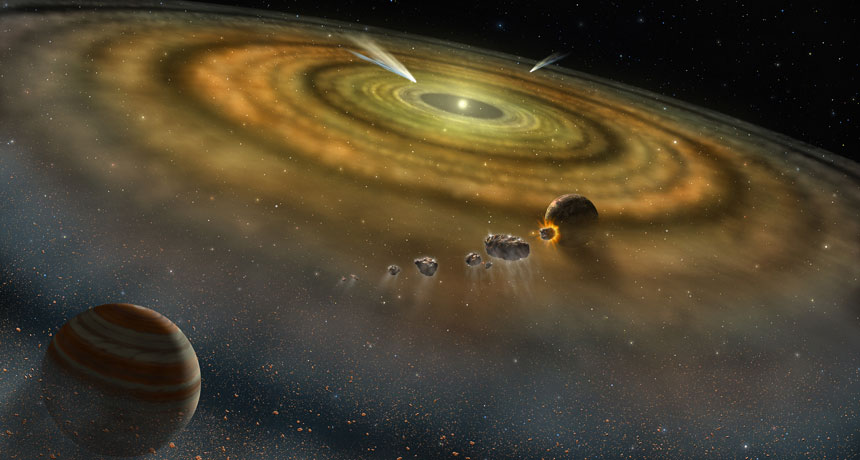
In other star systems, some moons could escape their planets and start orbiting their stars instead, new simulations suggest. Scientists have dubbed such liberated worlds “ploonets,” and say that current telescopes may be able to find the wayward objects.
Astronomers think that exomoons — moons orbiting planets that orbit stars other than the sun — should be common, but efforts to find them have turned up empty so far (SN Online: 4/30/19). Astrophysicist Mario Sucerquia of the University of Antioquia in Medellín, Colombia and colleagues simulated what would happen to those moons if they orbited hot Jupiters, gas giants that lie scorchingly close to their stars (SN: 7/8/17, p. 4). Many astronomers think that hot Jupiters weren’t born so close, but instead migrated toward their star from a more distant orbit. As the gas giant migrates, the combined gravitational forces of the planet and the star would inject extra energy into the moon’s orbit, pushing the moon farther and farther from its planet until eventually it escapes, the researchers report June 27 at arXiv.org.
“This process should happen in every planetary system composed of a giant planet in a very close-in orbit,” Sucerquia says. “So ploonets should be very frequent.”
Some ploonets may be indistinguishable from ordinary planets. Others, whose orbits keep them close to their planet, could reveal their presence by changing the timing of when their neighbor planet crosses, or transits, in front of the star. The ploonet should stay close enough to the planet that its gravity can speed or slow the planet’s transit times. Those deviations should be detectable by combining data from planet-hunting telescopes like NASA’s TESS or the now-defunct Kepler, Sucerquia says. Ploonethood may be a relatively short-lived phenomenon, though, making the worlds more difficult to spot. About half of the ploonets in the researchers’ simulations crashed into either their planet or star within about half a million years. And half of the remaining survivors crashed within a million years.
Even with few visible survivors, ploonets could help explain some bizarre exoplanetary features. Moon debris from such crashes could lead to giant ring systems around planets, like the 37 rings that encircle exoplanet J1407b, the team says.
Or, if the ploonet had an icy surface or an atmosphere before moving close to its star, the star’s heat would evaporate it, giving the ploonet a tail like a comet’s. Evaporating ploonets zipping by with a long light-blocking tail could explain strangely flickering stars like Tabby’s star, Sucerquia says (SN: 12/22/18, p. 9).
“Those structures [rings and flickers] have been discovered, have been observed,” Sucerquia says. “We just propose a natural mechanism to explain [them].”
While the solar system doesn’t have any hot Jupiters, ploonethood may be possible here, too. Earth’s moon is moving slowly away from the Earth, at a rate of about 4 centimeters per year. When it eventually breaks free, “the moon is a potential ploonet,” Sucerquia says — although that won’t happen for about 5 billion years.
The study is a good first step for thinking about what would happen to exomoons in real planetary systems, says planetary astrophysicist Natalie Hinkel of the Southwest Research Institute in San Antonio, who wasn’t involved in the new work. “Nobody’s looked at the problem quite like this,” she says. “It adds to the layers of how complex these systems are.”
Plus, ploonet is “a wonderful name,” Hinkel says. “Normally I sort of eye-roll at these made-up names, but this one is a keeper.”
Look up at the moon and you’ll see roughly the same patterns of light and shadow that Plato saw about 2,500 years ago. But humankind’s understanding of Earth’s nearest neighbor has changed considerably since then, and so have the ways that scientists and others have visualized the moon.
To celebrate the 50th anniversary of the Apollo 11 moon landing, here are a collection of images that give a sense of how the moon has been depicted over time — from hand-drawn illustrations and maps, to early photographs, to highly detailed satellite images made possible by spacecraft such as NASA’s Lunar Reconnaissance Orbiter. The images, compiled with help from Marcy Bidney, curator of the American Geographical Society Library at the University of Wisconsin–Milwaukee, show how developments in technology such as the telescope and camera drove ever more detailed views of Earth’s closest celestial companion.
Atlas Coelestis, Johann Gabriel Doppelmayr, 1742 Ancient Greek philosophers like Plato thought the moon and other celestial bodies revolved around a fixed Earth. This 1742 diagram by German scientist Johann Gabriel Doppelmayr depicts that idea. The thinkers saw the moon as perfect and struggled to explain its dark marks. In 1935, one of the moon’s most conspicuous craters was named after Plato.
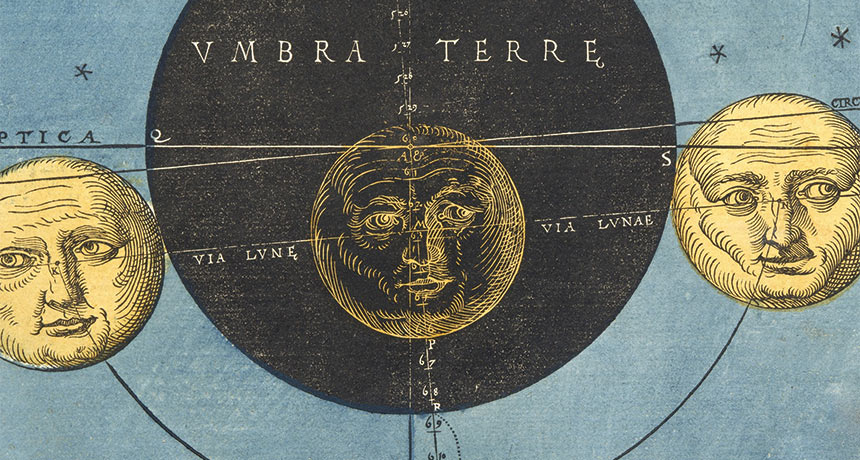
Astronomicum Caesareum, Michael Ostendorfer, 1540 This hand-colored woodcut by German painter Michael Ostendorfer appears in Astronomicum Caesareum, a vast collection of astronomical knowledge compiled by the German author Petrus Apianus and published in 1540. The image is an example of how astronomers in this early Renaissance period began to stylize the moon by giving it a face, Bidney says.
The book also contains more than 20 exquisitely detailed moving paper instruments, or volvelles, that helped predict lunar eclipses, calculate the position of the stars and more.
De Mundo, William Gilbert, ca. 1600 Created around 1600, this sketch is the oldest known lunar map, and was drawn using the naked eye. William Gilbert, physician to Queen Elizabeth I, imagined that the bright spots were seas and the dark spots land, and gave some features names, such as Regio Magna Orientalis, which translates as “Large Eastern Region” and roughly coincides with the vast lava plain known today as Mare Imbrium.
Sidereus Nuncius, Galileo, 1610 The telescope made it far easier to see the moon’s topography. By Galileo, these 1610 lunar maps are some of the first published to rely on telescope views. His work supported the Copernican idea that the moon, Earth and other planets revolved around the sun.
Although Galileo’s moon drawings were not the first to rely on telescope observations — English astronomer Thomas Harriot created the first sketch in 1609 — Galileo’s were the first published. These images appeared in his astronomical treatise Sidereus Nuncius.
Selenographia, Johannes Hevelius, 1647 In 1647, Polish astronomer Johannes Hevelius, published the first lunar atlas, Selenographia. The book contains more than 40 detailed drawings and engravings, including this one, that show the moon in all its phases. Hevelius also included a glossary of 275 named surface features.
To create his images, Hevelius, a wealthy brewer, constructed a rooftop observatory in Gdańsk and fitted it with a homemade telescope that magnified the moon 40 times. Hevelius is credited with founding the field of selenography, the study of the moon’s surface and physical features.
First known lunar photo, John William Draper, 1840 Photography opened a new way to capture the moon. Taken around 1840 by British-born chemist and physician John William Draper, this daguerreotype is the first known lunar photo. Spots are from mold and water damage.
“Moon over Hastings”, Henry Draper, 1863 Photos of the moon quickly improved. John William Draper’s son Henry, a physician like his father, also developed a passion for photographing the night sky. He shot this detailed image from his Hastings-on-Hudson observatory in New York in 1863, and went on to become a pioneer in astrophotography.
Lunar Reconnaissance Orbiter, NASA, 2018 This 2018 image, from NASA’s Lunar Reconnaissance Orbiter, shows the moon’s familiar face in incredible detail. Now we know its marks are evidence of a violent past and include mountain ranges, deep craters and giant basins filled with hardened lava.
Lunar farside, Chang’e-4, 2019 Countless images now exist of the moon’s illuminated face, but only relatively recently have astronomers managed to capture shots of the moon’s farside, using satellites. Then in February, China’s Chang’e-4 lander and rover became the first spacecraft to land there. This is the first image captured by the probe.
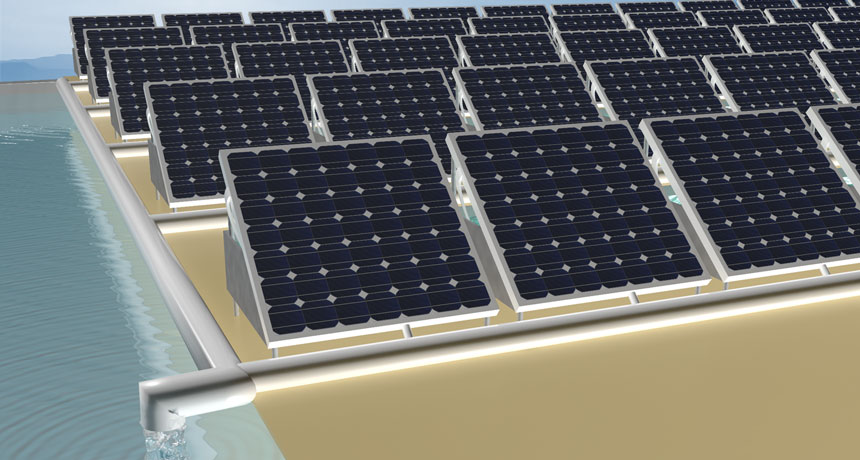
By mounting a water distillation system on the back of a solar cell, engineers have constructed a device that doubles as an energy generator and water purifier.
While the solar cell harvests sunlight for electricity, heat from the solar panel drives evaporation in the water distiller below. That vapor wafts through a porous polystyrene membrane that filters out salt and other contaminants, allowing clean water to condense on the other side. “It doesn’t affect the electricity production by the [solar cell]. And at the same time, it gives you bonus freshwater,” says study coauthor Peng Wang, an engineer at King Abdullah University of Science and Technology in Thuwal, Saudi Arabia. Solar farms that install these two-for-one machines could help meet the increasing global demand for freshwater while cranking out electricity, researchers report online July 9 in Nature Communications.
Using this kind of technology to tackle two big challenges at once “is a great idea,” says Jun Zhou, a materials scientist at Huazhong University of Science and Technology in Wuhan, China, not involved in the work.
In lab experiments under a lamp whose illumination mimics the sun, a prototype device converted about 11 percent of incoming light into electricity. That’s comparable to commercial solar cells, which usually transform some 10 to 20 percent of the sunlight they soak up into usable energy (SN: 8/5/17, p. 22). The researchers tested how well their prototype purified water by feeding saltwater and dirty water laced with heavy metals into the distiller. Based on those experiments, a device about a meter across is estimated to pump out about 1.7 kilograms of clean water per hour.
“It’s really good engineering work,” says George Ni, an engineer who worked on water distillation while a graduate student at MIT, but was not involved in the new study. “The next step is, how are you going to deploy this?” Ni says. “Is it going to be on a roof? If so, how do you get a source of water to it? If it’s going to be [floating] in the ocean, how do you keep it steady” so that it isn’t toppled by waves? Such practical considerations would need to be hammered out for the device to enter real-world use.
A praying mantis depends on precision targeting when hunting insects. Now, scientists have identified nerve cells that help calculate the depth perception required for these predators’ surgical strikes.
In addition to providing clues about insect vision, the principles of these cells’ behavior, described June 28 in Nature Communications, may also lead to advances in robot vision or other automated systems.
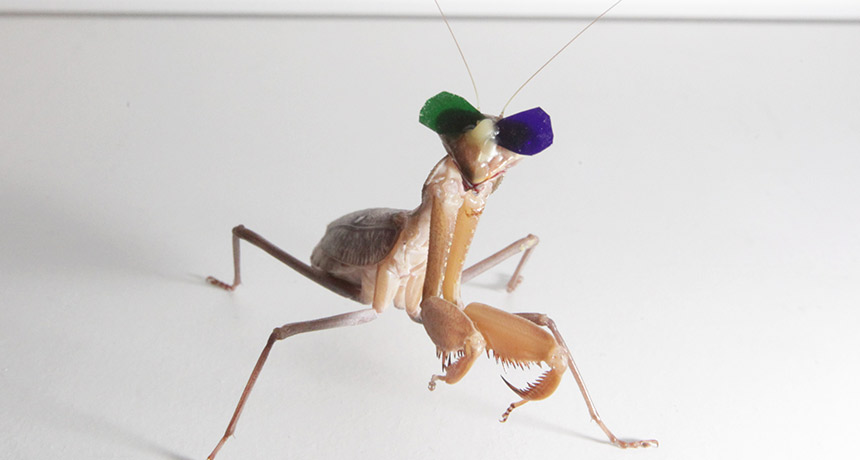
So far, praying mantises are the only insects known to be able to see in 3-D. In the new study, neuroscientist Ronny Rosner of Newcastle University in England and colleagues used a tiny theater that played praying mantises’ favorite films — moving disks that mimic bugs. The disks appeared in three dimensions because the insects’ eyes were covered with different colored filters, creating minuscule 3-D glasses. As a praying mantis watched the films, electrodes monitored the behavior of individual nerve cells in the optic lobe, a brain structure responsible for many aspects of vision. There, researchers found four types of nerve cells that seem to help merge the two different views from each eye into a complete 3-D picture, a skill that human vision cells use to sense depth, too.
One cell type called a TAOpro neuron possesses three elaborate, fan-shaped bundles that receive incoming visual information. Along with the three other cell types, TAOpro neurons are active when each eye’s view of an object is different, a mismatch that’s needed for depth perception.
The details of the various types of nerve cells, and how they might receive, combine and send visual information, suggest that these insects’ vision may be more sophisticated than some scientists had thought, the team writes. And the principles guiding praying mantis depth perception may be useful to researchers working on improving machine vision, perhaps allowing artificial systems to better sense the depths of objects.
Astronomy lovers are not the only ones excited about the 50th anniversary of the moon landing. Publishers are also taking note, serving up a pile of books to mark the occasion.
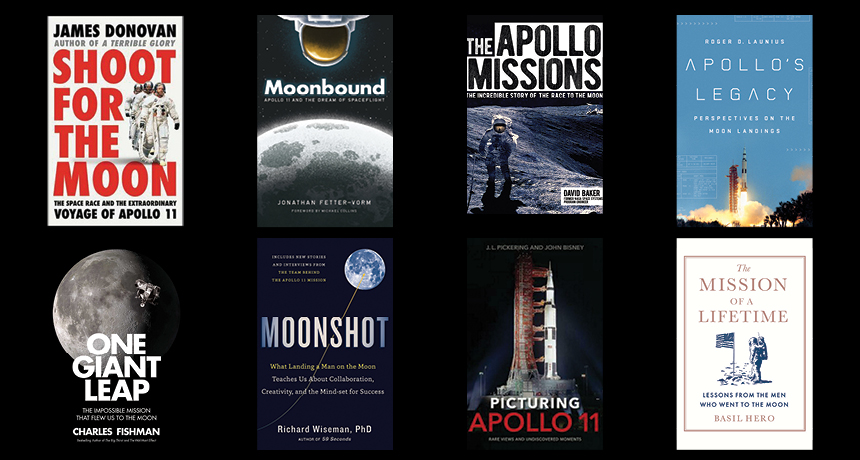
Are you looking for a general overview of the birth of the U.S. space program? Would you rather geek out on the technical details of the Apollo missions? How about flipping through a collection of photographs from the era? Science News staff took a look at the offerings and picked out a few favorites to help you decide. There’s something for everyone in the list below. For history aficionados James Donovan Little, Brown and Co., $30
This retelling of the space race begins with the launch of the Soviet Union’s Sputnik satellite in 1957 and culminates in the historic Apollo 11 mission 12 years later. The book offers insights into the personalities of the astronauts, engineers and others who made the U.S. space program a success. For detail-obsessed NASA fans Charles Fishman Simon & Schuster, $29.99
Getting to the moon demanded a million hours of work for each hour spent in space, this book argues. Accordingly, the story focuses on the engineers, coders, project managers and others who toiled to get the Apollo program off the ground. For anyone who ever dreamed of being an astronaut J.L. Pickering and John Bisney Univ. of Florida, $45
Packed with hundreds of photos, some published for the first time, this coffee-table book reads like a photo album of the Apollo 11 mission. The images focus on candid moments from astronaut training, as well as the excitement of liftoff, the historic landing and the return home of the three men.
For readers ready for a sober view of Apollo Roger D. Launius Smithsonian Books, $27.95
A space historian takes the Apollo program off its pedestal to examine it from multiple angles: as a cog in the Cold War political machine, an engineering endeavor riddled with as many failures as feats of glory and an iconic cultural moment. The book explores both positive and negative viewpoints on the U.S. moonshot project from scientists, politicians, the media and the public during the space race and beyond.
For fans of graphic novels Jonathan Fetter-Vorm Hill and Wang, $35
Colorful and detailed, the comic-style illustrations in this book of graphic nonfiction bring the moon landing to life. Much of the astronauts’ dialog is based on real recordings, making the book feel particularly authentic.
For self-improvement buffs Richard Wiseman TarcherPerigee, $26
A psychologist takes practical lessons from the Apollo era and suggests ways to apply them to everyday problems, from changing careers to raising a family.
For space enthusiasts David Baker Arcturus Publishing Limited, $19.99
A former NASA engineer uses photographs, illustrations, blueprints and other documents to guide readers through a concise history of the space race and the Apollo program, from the beginnings of rocket science to the successful return home of the Apollo 11 crew.
For history wonks with a soft spot for psychology Basil Hero Grand Central Publishing, $22
The Apollo astronauts rarely gave personal interviews. But now that they’re getting older, the astronauts are starting to get introspective. This book distills conversations with the 12 lunar voyagers still alive into general wisdom on conquering fear and appreciating life.
For photography lovers Deborah Ireland Ammonite Press, $14.95
This slim book offers an offbeat take on the mission to the moon, telling the story of the Apollo program through the development of the Hasselblad cameras that Neil Armstrong and Buzz Aldrin used to document their time on the lunar surface. Science News is a participant in the Amazon Services LLC Associates Program. Please see our FAQ for more details.
The possibility of life … on other planets has stimulated many people’s imaginations…. In the Feb. 9 Nature, James C. G. Walker of Yale University studies the possible parameters of such a search and comes to some pessimistic conclusions.
Update Walker estimated it could take 1,400 to 14 million years to contact E.T. with the available technology. That’s way longer than researchers have spent listening for alien radio signals and scouring the sky with telescopes and satellites (SN: 11/21/20, p. 18).
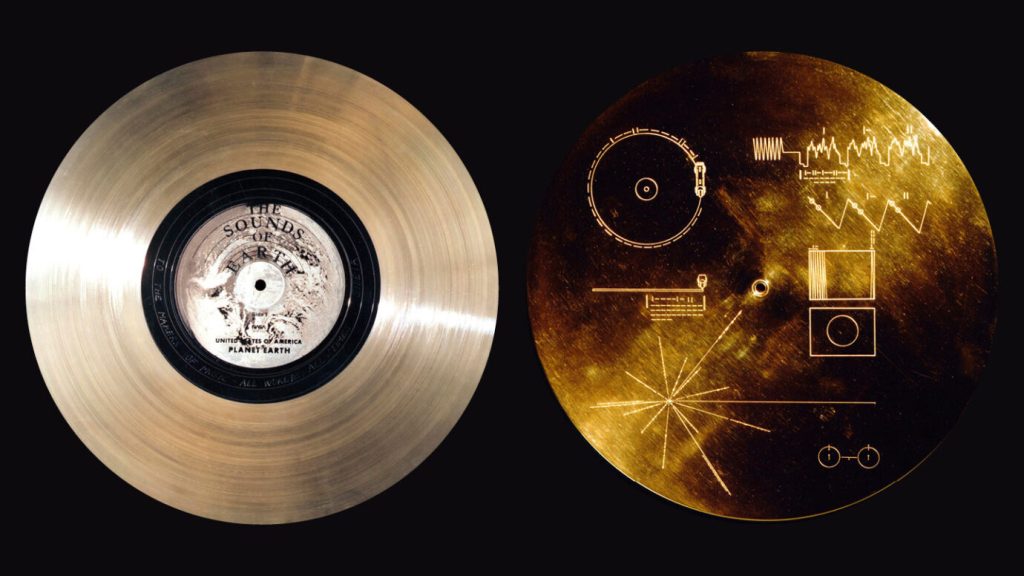
Despite the silence, scientists have sent their own messages into the void. In 1974, Earth sent a string of binary code from the Arecibo Observatory in Puerto Rico. Years later, arguably the most famous message — the Golden Record — made its way to space aboard NASA spacecraft (SN: 8/20/77, p. 124).
If aliens ever reach out, they may send quantum dispatches, scientists say (SN: 8/13/22, p. 5). Even so, the aliens are likely so far from Earth that their civilization will have collapsed by the time we get the message (SN: 4/14/18, p. 9).
A new biomaterial delivered to the heart soon after a heart attack can heal damaged tissue from the inside out.
Heart attacks kill cardiac muscle tissue, scarring the heart and leaving permanent damage after just six hours. The damage prevents the heart from functioning properly. If there was a way to begin healing damaged tissue soon after a heart attack, doctors could prevent scar tissue from developing.
“In an ideal world, you treat a patient immediately when they’re having a heart attack to try to salvage some of the tissue and promote regeneration,” says Karen Christman, a bioengineer at the University of California, San Diego. The pursuit of this ideal inspired Christman, along with a team of researchers, to develop the biomaterial. In rodents and pigs, it appears to repair tissue damage and reduce inflammation directly after a heart attack, Christman and colleagues report December 29 in Nature Biomedical Engineering.
“I think it has a lot of potential,” Vimala Bharadwaj, a biomedical scientist at Stanford University who was not involved in the research. The paper “is definitely good proof of concept for what they’re trying to do.”
Previously, researchers found that stem cells derived from body fat can be used to heal bones, muscles and the heart (SN: 3/9/16). Christman wanted to work with the extracellular matrix, the lattice of proteins that provide structural support to the cells in cardiac muscle tissue. Like stems cells, it has regenerative abilities but is much less expensive, she says.
In 2009, Christman’s team produced a hydrogel using particles from this matrix. Trials in rats and later in humans showed that the material bonded to damaged areas and promoted cell repair and growth. However, due to relatively large particles of the hydrogel, it could be delivered to the heart only via a needle.
“Poking the heart with a needle could set off an arrhythmia,” says Christman. To use this treatment, doctors would need to wait a few weeks until the heart is more stable and the chance of these irregular heartbeats decreases. And that would be too late to prevent scarring.
The team took the previously created hydrogel, sifted out the larger particles with a centrifuge so only nanoparticles remained, and added water to dilute the mixture. That created a material thin enough to deliver to heart blood vessels intravenously. Based on the nanoparticles’ size, the team expected the mixture would slip through any gaps in cardiac blood vessels caused by the heart attack and adhere to the surrounding tissue. Once there, it would create a protective barrier while the heart healed.
Instead, animal experiments showed that the extracellular matrix material bound to the leaky vessels, preventing some inflammatory cells from moving into the heart tissue in the first place and causing further damage. The material reduced inflammation in the heart and stimulated the healing process by encouraging cell growth, the team reports.
Further safety studies will be needed to get the biomaterial ready for clinical trials. The first trial in humans will most likely be for repairing cardiac tissue post–heart attack. “A lot of my motivation is moving things out of the lab, actually into the real world,” Christman says.
Another real-world application of the biomaterial could be treatment for leaky blood vessels in other hard-to-access organs, including in the brain after a traumatic injury, Christman notes.
While Bharadwaj finds that application potentially promising, she says tests are needed to see whether the biomaterial improves headaches and cognitive or memory deficits in the brain after a traumatic injury. That’s needed to gauge whether it really is an effective TBI treatment.
“I remember carrying my little sister on my back because she’s too tired and walking through the huge sunflower fields … and me feeling so tired I didn’t think I could walk another step.”
“I remember being in a taxi with my mother, coming back to the man who had been violently abusive to all of us…. Her words to me were, ‘Just trust me, Trish. Just trust me.’ ” “I’m waiting at a train station … to meet my mother who I haven’t seen in many years…. Hours pass and eventually I try to call her … and she says to me, ‘I’m sorry, Trish. My neighbor was upset, and I needed to stay back with them.’ And her voice was slurring quite a lot, so I knew she had been drinking.”
Tran, who lives in Perth, Australia, is dispassionate as she describes a difficult childhood. Her account lacks what are generally considered classic signs of trauma: She makes no mention of flashbacks, appears to have a generally positive outlook and speaks with relative ease about distressing events. Yet she narrates her life growing up and living in the Australian Outback as a series of disconnected events; her life story lacks connective glue.
Two photos of Trish Tran. On the left is a black and white family photo with Tran as a small child sitting on her fathers lap while to their right her mother holds a baby and her three siblings stand. The photo on the right is Tran as an adult holding a microphone and smiling. That disjointed style is not how people, at least people in the West, tend to talk about themselves, says psychologist Christin Camia. Autobiographical accounts, like any good narrative, typically contain a curation of key past experiences, transitions linking those experiences and larger arcs about where life is headed. People use these stories to make sense of their lives, says Camia, of Zayed University’s Abu Dhabi campus in the United Arab Emirates.
But a growing body of evidence from fields as wide-ranging as psychology, neuroscience, linguistics, philosophy and literary studies suggests that, as with Tran, trauma can shatter the narrative coherence of one’s life. People lose the plot.
Life’s crises can trigger an existential crisis, Camia says. People think: “I don’t know who I am, and I don’t know where I go from here.” One therapy now in testing aims to re-tether traumatized individuals to their mental timelines, or their sense of themselves as connected across past, present and future. The therapy focuses on the future, which once rife with possibilities now appears as a void. It asks: What would it take for someone like Tran, or anyone traumatized by war, abuse, mass shootings, the ongoing pandemic and other calamities, to flip their life script, to say that they know who they are and where they go from here?
People maintain a sense of self across time In a nod to an established research approach, I have asked Tran to tell me her story in two parts. First, she should narrate seven snapshots of key moments in her life. Second, Tran, who is a lecturer on mental health recovery at Curtin University in Perth, should stitch those snapshots together to tell me how she became who she is today.
The first task comes easy. The second task eludes her. She switches to generalities. “I’ve always been a highly reflective person,” she says. “I’ve had to rely on my brains to keep myself and my family alive.”
I try to nudge her toward specifics, but her timeline disintegrates. She repeatedly attempted suicide. Her mother brought home many violent men.
The developer of this two-question approach, psychologist Tilmann Habermas, wasn’t focused on people who had experienced trauma. Habermas, now at Goethe University Frankfurt, wanted to understand how adolescents develop a narrative identity and then sustain that sense of self over time.
In 2003, Habermas launched a study that would follow participants for up to 16 years. Participants came into the lab every four years and dictated their life story in roughly 20-minute increments, using the two-task format I tried with Tran. Habermas analyzed the resulting transcripts line by line, coding them for emotion, tense, transitions and other features.
With few psychologists at the time studying autobiography as a window into the mind, Habermas turned to theorists from other fields for guidance. “After I read psychology, I read narratology, literary theory, linguistics, social linguistics,” he says. “I had to steal … all these concepts from the other areas.”
One of Habermas’ questions was how people retain their sense of self in the face of life’s many disturbances, such as divorce, illness, job loss or moving to a new location.
Philosophers have been puzzling over this question for millennia. “Your body has changed. Your experiences have changed. Your knowledge has changed. And yet, people generally think of themselves as being the same person … in the past and future,” says psychologist Yosef Sokol of Touro University in New York City. “That’s a hard problem.”
This general belief in self-continuity appears universal, even though how it is constructed may differ across cultures. In the third wave of Habermas’ long-term study, when 150 participants were ages 16, 20, 28, 44 and 69, Habermas and Camia, who joined Habermas’ lab in 2009, also analyzed the transcripts for a type of thinking called autobiographical reasoning. This reasoning links the self across space and time.
“Autobiographical reasoning is this conscious reflection. How did my past impact me? How did I become the person I am today, and what does it mean for my future?” Camia says. Such reasoning tends to stem from change, she adds. “If there is perfect stability in life, you don’t do a lot of autobiographical reasoning … it’s the changes and the crises that compel meaning-making.”
The researchers divvied such reasoning into eight categories, such as turning points, lessons learned, generalized insights and using an event to explain a change in personality.
Participants also filled out two surveys. One survey summed up the number of big life changes experienced over the previous four years. The other gauged self-continuity, with participants rating the truth of statements such as, “When I look at pictures of myself four years back, it feels a little unfamiliar” and “I have the feeling that at the core I am the same person I was four years ago.”
Researchers then compared the three variables: autobiographical reasoning, levels of life change and sense of self-continuity. As expected, levels of autobiographical reasoning showed no discernible pattern among participants who experienced few changes in life, the team reported in 2015 in Memory.
But when the researchers zoomed in on the quarter of participants reporting the greatest level of change, more autobiographical reasoning came with higher levels of self-continuity. “Constructing continuity in the life story buffers against the effect of change in your life,” Habermas says. Other teams have made similar findings. Most disruptions, however, do not rise to the level of trauma — such as that experienced by Tran. Several years later, Camia would study how traumatic events, notably being forced to flee one’s home and the resulting isolation and bereavement, affect people’s sense of self.
Trauma messes with our sense of time “What does war change first? One’s sense of time, one’s sense of space,” said Ukrainian writer Serhiy Zhadan in an October speech translated to English in the online magazine LitHub.
Zhadan speaks from experience. But the idea that trauma disrupts time perception is also borne out by research. Researchers have found that emotions frequently dictate whether we experience time as passing fast or slow. And traumatic events, which come with intense emotions, can cause people to experience time in slow motion, researchers reported in 2012 in Frontiers in Psychology.
During a car accident, for instance, a person’s whole body is ready to act, says Marc Wittmann, a psychologist with the Institute for Frontier Areas of Psychology and Mental Health in Freiburg, Germany. “Your inner workings, your processing, is speeded up. Relative to that, your outside slows down.”
What’s more, says health psychologist Alison Holman of the University of California, Irvine, in that moment or moments of crisis, you do not think about the past or future. All that matters is survival.
Zhadan speaks directly to this idea in his speech: “People in a war-torn space try not to plan for the future or think too much about what the world will be like tomorrow. What’s happening to you here and now is all that matters, just the people and things that will be with you tomorrow morning — tops. That’s if you survive and wake up.”
That narrow focus can wreak havoc on mental health. “[When] that present moment is so intense that it sears into your mind … it may set up the likelihood that you will have a hard time moving past it,” Holman says. “The past never passes.”
Such breakdowns in time can show up in language, particularly among those most severely affected by trauma. For instance, Habermas and his team compared the speech patterns of 14 women diagnosed with post-traumatic stress disorder following a singular shocking event, such as physical or sexual abuse, and 14 women without such a diagnosis. The women with PTSD used more immersive language. They quoted people directly and spoke of the past as if it was ongoing, says Habermas, who reported the findings in 2014. “Instead of saying, ‘He hit me,’ they would say, ‘He hits me.’ ”
This immersive language dominates Tran’s narration. She is “carrying” her little sister. Her mother is “coming” back to the violent man. She is “walking many kilometers to school in the rain and then opening up my newspaper-wrapped wet and warm tomato sandwiches. They’re so wet, but I’m so hungry that I know I have to eat them otherwise I’ll never make the walk back.”
And always there, her mother’s voice: “Just trust me, Trish. Just trust me.”
“I don’t think I will ever forget those words,” Tran says.
Traumatized people can lose their life story Tran remembers her mother’s words exactly, but other details of the abuse she experienced as a child are fuzzier. That’s common among people who experience trauma. People with trauma “have both an excess and depletion of memory,” says cognitive neuroscientist Elisa Ciaramelli of the University of Bologna in Italy.
How memory changes among trauma survivors remains controversial, write the authors of a 2021 opinion piece in Frontiers in Psychology. But mounting evidence suggests that people tend to remember stressful memories in detail. As the mind fixates on those traumatic memories, memories unrelated to the trauma seem to fade, while new memories fail to register.
For example, when asked to describe memories associated with a specific word, such as “beach,” people who do not have PTSD offer detailed reports, describing what they were wearing, what they said and who they were with, Ciaramelli says. People who have PTSD, on the other hand, typically provide general memories with little color.
Other memories can’t find a foothold. In one study, researchers asked 52 participants — 26 people with PTSD and 26 people who had experienced trauma but not developed PTSD — to keep a diary recording their memories over the course of a week. Participants also responded to questions about the memory, such as whether or not it related to their trauma, how central it was to their current life and how far away in time the memory felt.
Participants without PTSD recorded an average of 21.4 memories across the week while participants with PTSD recorded an average of just 11 memories, the team reported in 2017 in Clinical Psychological Science. The PTSD participants had more trauma-related memories than the non-PTSD group.
Tran recognizes this paucity of detail in her own life story. “My memories are lightbulb memories,” she says. “They are always attached to significant events like trauma or happy times. I may have 57 years of life, but you could truncate them into a chapter.”
Everyone’s memory has imprecision of course. That imprecision allows us to cut extraneous details and make sense of our story. The traumatized person’s relative lack of memories, though, both in clarity and quantity, means they struggle to construct a cohesive narrative of their past and to envision themselves moving forward.
“Ten years ago, people have found that the same brain regions that are activated and are necessary for remembering the past are also necessary to imagine the future,” Ciaramelli says. “We need memories to imagine the future.”
Camia’s work with refugees shows what can happen to the sense of self as people struggle and fail to reconcile a traumatic experience with the larger story of their life. Her central aim, which built on work with Habermas, was to see if the same autobiographical arguments people used to buffer against life’s everyday changes could help those facing traumatic disruptions. She and Rida Zafar, a psychology student at New York University Abu Dhabi, recruited 31 refugees living in Germany and asked them to narrate their life stories, plus fill out the life change and self-continuity surveys used in the 2015 study.
Among the 16 refugees who experienced relatively less change since arriving in Germany, such as fewer upheavals in relationships and fewer moves, more autobiographical reasoning did correlate with higher self-continuity, the team reported in 2021 in Frontiers in Psychology. Refugees who experienced high change also used autobiographical reasoning, but their sense of self-continuity remained low.
These individuals cannot settle their trauma, Camia explains, so their reckoning with the past leads not to resolution but rumination. They are stuck.
Therapy could restore the future self For most of her adult life, Tran grappled with that sense of stagnation. “My identity was rooted in the past, and I couldn’t move forward,” she says. “Time was this eternal loop. Every time a problem came up, it felt like a replication of a past problem. I couldn’t see that I could change anything.”
Over and over again, unable to envision a viable escape, Tran tried to kill herself.
Suicide attempts serve as the clearest signal that a person’s future has gone blank, says Sokol, the psychologist at Touro University. The thinking here is intuitive. “If you think you have a meaningful life into the future, you’re not going to kill yourself,” he says.
Conventional therapies for treating people struggling with suicidal thinking often fail to meet their needs because the therapies do not directly address people’s future self, Sokol and his team wrote in 2021 in the Journal of Cognitive Psychotherapy. For instance, dialectical behavior therapy emphasizes focusing on the present to cope with stress and manage emotions. Narrative therapy likewise aims to help patients incorporate traumatic and other events into a continuous timeline, but focuses on linking past to present, not present to future.
So Sokol developed a therapy that incorporates elements of past- and present-oriented treatments but prioritizes future thinking. It’s known as continuous identity cognitive therapy. His goal is to help military veterans struggling with mental illness re-create the plot in the mental timeline of their lives, to answer those foundational questions: Who am I? Where do I go from here?
Sokol tested an initial version of the therapy in a four-week pilot study with 17 veterans. The program contains many work-arounds for participants struggling to access or make sense of their memories. The specific memory is less important than the larger story, or the broader values contained within that memory, Sokol says. “I have all sorts of techniques to help people tap into something that they find important, meaningful.”
In the first week, participants are asked to define their core values. The hope is that those values, rather than specific past events, will form the core of a person’s life story. To get to that core, participants review negative and positive experiences from their past and identify choices they made.
Many veterans struggle with what are called moral injuries — choices they made that don’t seem to align with who they wish to be, Sokol says. So veterans push those memories away. With the values approach, he hopes participants can start to see that they made the best choices they could under challenging circumstances. One way to access those values is to have participants identify people they admire, and the values those people embody. Participants can then use those people’s experiences to identify their own core values.
The focus of the second week shifts to the future. Participants assemble possible futures by reflecting on how life might play out if they work with, or against, their stated values. Participants also actively construct self-continuity. For instance, they write letters to themselves across different time points, such as from their present self to their future self or vice versa.
In week three, participants learn to differentiate between external life stories, the series of events outside their control, and internal life stories made up of choices in line with their stated values. By week four, participants should be able to visualize their future self overcoming an issue that their present self faces. Tran came across Sokol’s research while embarking on her own journey to healing. That process began when Tran realized how her trauma was hurting the people she loved most. “I’m just causing my children and everybody near and dear trauma. I’m going to take [suicide] off the table,” she eventually realized. “This is not my pathway anymore. If it’s not my pathway, what am I going to do with the next 50 years of my life?”
Tran felt lost. So she dug into research on trauma survivors, eventually stumbling upon Sokol’s project. She was moved by the idea that participants did not have to reconstruct the past to build a new future. “This is true. My soul knows this to be true,” she remembers thinking.
Tran, who is also a trainer with DISCHARGED, a nonprofit organization that provides peer group support for people experiencing suicidal thoughts, and an occasional adviser to researchers writing about suicide, reached out to Sokol and offered to help him make the language used in his program more sensitive to people who have experienced trauma. For instance, she suggested changing references to “you” to “we” to give people a greater sense of belonging and agency. The two still work together.
Research on the therapy remains limited to Sokol’s lab, but initial results are promising. The pilot study showed that the program decreased previously reported levels of suicidal ideation and depression. Those levels stayed low one month after completion. Now Sokol has received a five-year, $1.1 million grant from the U.S. Department of Veterans Affairs to scale up the program and eventually roll out a randomized controlled trial. In its newer iteration, the program will run for three months instead of one.
With input from Tran and veterans in the program, Sokol made another substantial modification to the pilot program. Participants will now identify how their own story intersects with the stories of other people in their lives. That addition makes sense to Tran, who has become engrossed in research showing the intergenerational nature of trauma. She now sees her life as part of a larger story with many characters, each on their own often troubled journey.
She says her story will always be truncated. But even without a clean narrative arc, she has managed to sever time’s eternal loop. “You can change your relationship with your past experiences in a way that makes living a future possible,” Tran says.
Setting sail into a plastic sea — Science News, February 10, 1973
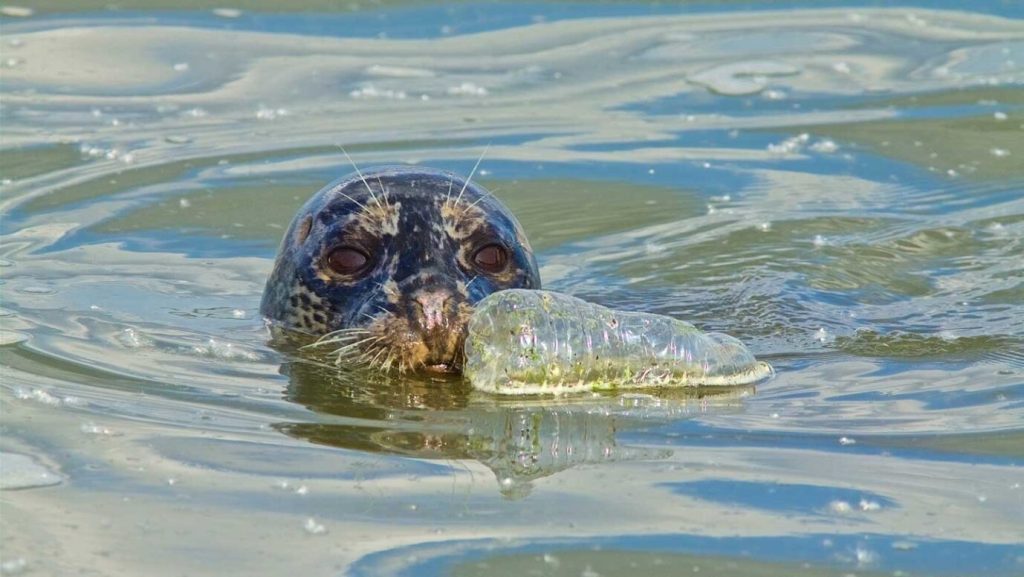
Scientists on an oceanographic voyage in the Central North Pacific last August became startled about the number of manmade objects littering the ocean surface. [Far from civilization and shipping lanes], they recorded 53 manmade objects in 8.2 hours of viewing. More than half were plastic. They go on to compute that there are between 5 million and 35 million plastic bottles adrift in the North Pacific.
Update The Great Pacific Garbage Patch is larger now than it was in 1973, containing an estimated 1.8 trillion pieces of plastic within an area twice the size of Texas (SN Online: 3/22/18). In recent years, marine biologists have started seeing evidence that garbage is disrupting ocean ecosystems. For instance, large pieces of trash have helped species cross into new territories (SN: 10/28/17, p. 32). But an even greater threat may lurk beneath the waves. Tiny bits of plastic concentrate hundreds of meters deep where they can be eaten by filter feeders and potentially make their way into the guts of larger predators (SN: 7/6/19 & 7/20/19, p. 5).
As early as 252 million years ago, some plants may have curled up their leaves at night for a cozy “sleep.”
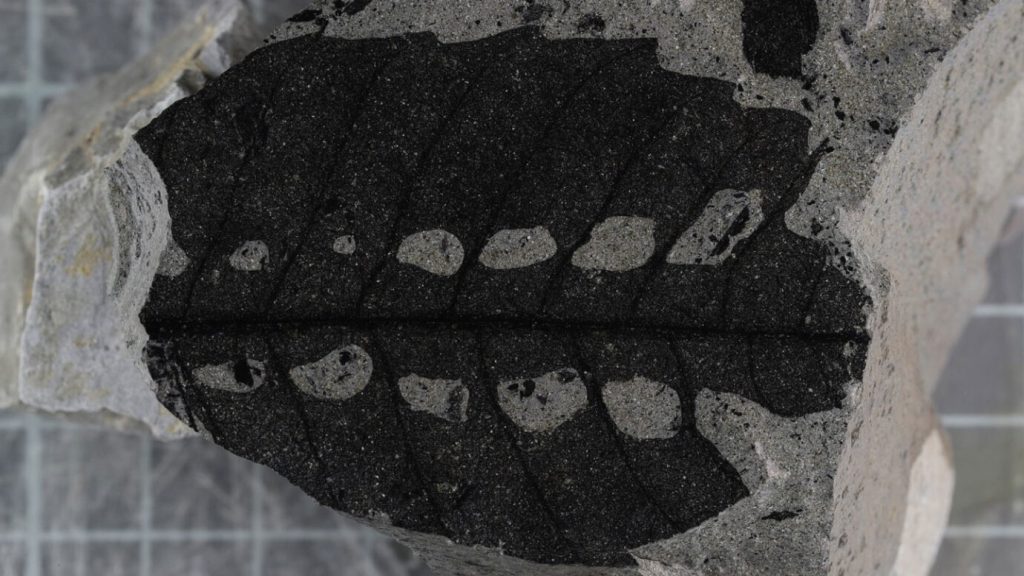
Fossilized leaves of two now-extinct Gigantonoclea species bear signs of nyctinasty, or circadian rhythmic folding at night, researchers report February 15 in Current Biology. That would make these specimens the first known fossilized examples of this curious plant behavior, the team says.
The two leaf fossils were discovered in a rock layer in southwestern China that dates to between 259 million and 252 million years ago. In both species, the leaves were broad, with serrated edges. But most curiously, they bear oddly symmetrical holes. Insects made those holes while feeding on the leaves while they were folded, say paleontologist Zhuo Feng of Yunnan University in Kunming, China and colleagues. Similar symmetrical patterns of insect damage in leaf fossils can be used to distinguish folding behavior from leaves that might have shriveled as the plant died, the team says.
Modern plants, including many in the legume family such as the orchid tree, that fold and unfold their leaves use specialized cells called pulvinus cells, which act somewhat like muscles (SN: 2/3/23). By shifting water from one part of the leaf to another, the cells can bloat or deflate, allowing the leaves to fold or curl.
These cells would be at the base of the leaves, which weren’t preserved in the fossils, so it’s not possible to say whether these ancient plants also had pulvinus cells, the team says. Although it’s also hard to prove this was nighttime behavior, the leaves would also have had to be folded long enough for insects to do their munching. But the find does suggest that such leaf folding emerged independently in different plant lineages: Nearly all the modern plants that do this are angiosperms, or flowering plants. But Gigantonoclea plants were gymnosperms, seed-producing plants such as conifers and ginkgos.