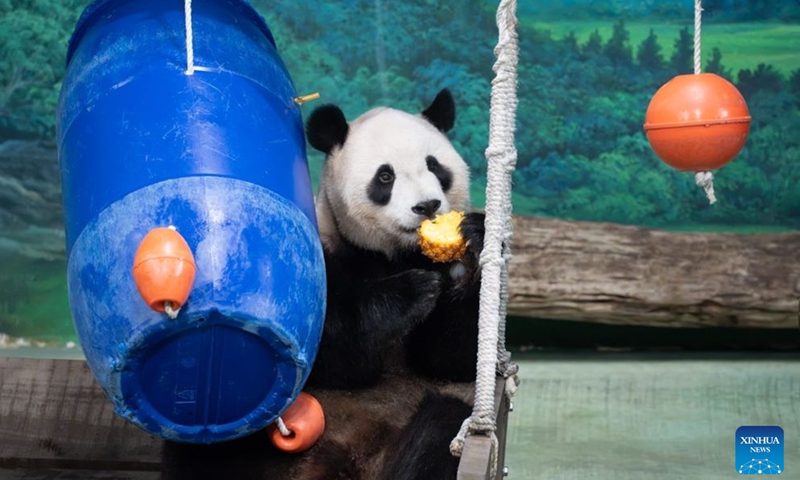
Taipei Zoo on Sunday celebrated the sixth birthday of Yuanbao, the youngest offspring of a pair of giant pandas presented by the mainland to Taiwan in 2008.
Despite currently being closed to the public for maintenance, Taipei Zoo on Sunday morning did a live-streaming session of about 30 minutes showing Yuanbao enjoying specially prepared treats, including a birthday cake, fruits and toys.
Yuanbao was born in 2020, following the birth of her sister Yuanzai in July 2013, to the giant panda pair Tuantuan and Yuanyuan. The male Tuantuan died from a cerebral tumor in 2022 shortly after his 18th birthday, having lived at the zoo for 14 years.
According to Wang Chien-po, curator of the Giant Panda House at the Taipei Zoo, the birthday treats this year were designed to help Yuanbao cope better with behavioral changes suspected to be caused by pseudopregnancy, a cycle her sister and mother have previously experienced.
During a pseudopregnancy, female giant pandas tend to eat less, move less and sleep for longer periods, thereby going through similar changes as they would if they were pregnant.
The zoo hopes to enrich the environment for Yuanbao to encourage her to explore more and eat more during her pseudopregnancy, Wang explained.
At the invitation of Member of the Political Bureau of the CPC Central Committee and Minister of Foreign Affairs Wang Yi, Austrian Federal Minister for European and International Affairs Beate Meinl-Reisinger will visit China from June 22 to 26.
Chinese Foreign Minister Wang Yi on Monday met with Qadir Nizamipour, deputy secretary of Iran's Supreme National Security Council, in New Delhi.
During the meeting, Wang, also a member of the Political Bureau of the Communist Party of China Central Committee and director of the Office of the Central Commission for Foreign Affairs, said that China welcomes the launch of follow-up consultations -- with the assistance of Pakistan and Qatar -- between Iran and the United States based on the Memorandum of Understanding (MoU) signed between the two countries, as well as the consensus reached on the mechanism for the next phase of negotiation.
The core provisions of the 14-point MoU are hard-won, said Wang, adding that effectively maintaining and implementing the MoU will help consolidate the hard-won ceasefire situation, open up new prospects for Iran-U.S. relations, and help bring peace back to the Middle East region, said Wang.
Wang noted that China, as a comprehensive strategic partner of Iran, has always maintained a fair position and supported all efforts conducive to peace, supported Iran in safeguarding its sovereignty, security and national dignity, and supported Iran in improving relations with the Gulf countries and regional countries.
China is willing to continue to provide assistance in its own way and play a constructive role in restoring regional peace and tranquility at an early date, he added.
China has always viewed and advanced China-Iran relations from a strategic and long-term perspective, and is willing to work with Iran to enhance high-level exchanges, consolidate political mutual trust, deepen practical cooperation and promote the steady and long-term development of bilateral relations, said Wang.
On his part, Nizamipour briefed on the latest situation in the Middle East and the negotiations between Iran and the United States. He expressed the hope that China can continue to play an important role in facilitating the effective implementation of the first-phase MoU between Iran and the United States.
Nizamipour said that Iran has always attached great importance to its relations with China and highly appreciates the positive role China has played in international and regional affairs, adding that deepening the comprehensive strategic partnership between the two countries is the consensus of all sectors in Iran.
Iran firmly adheres to the one-China principle and is willing to further enhance exchanges at all levels with China, strengthen mutual support, tap cooperation potential, and enhance collaboration under multilateral frameworks such as BRICS to jointly address common challenges, Nizamipour said.
Both Wang and Nizamipour are in New Delhi to attend the 16th Meeting of BRICS National Security Advisors and High Representatives on National Security.
At the invitation of the Communist Party of China (CPC), Cambodian People's Party (CPP) President and Senate President Samdech Techo Hun Sen will pay an official goodwill visit to China from June 25 to 27, a spokesperson for the International Department of the CPC Central Committee announced on Tuesday.
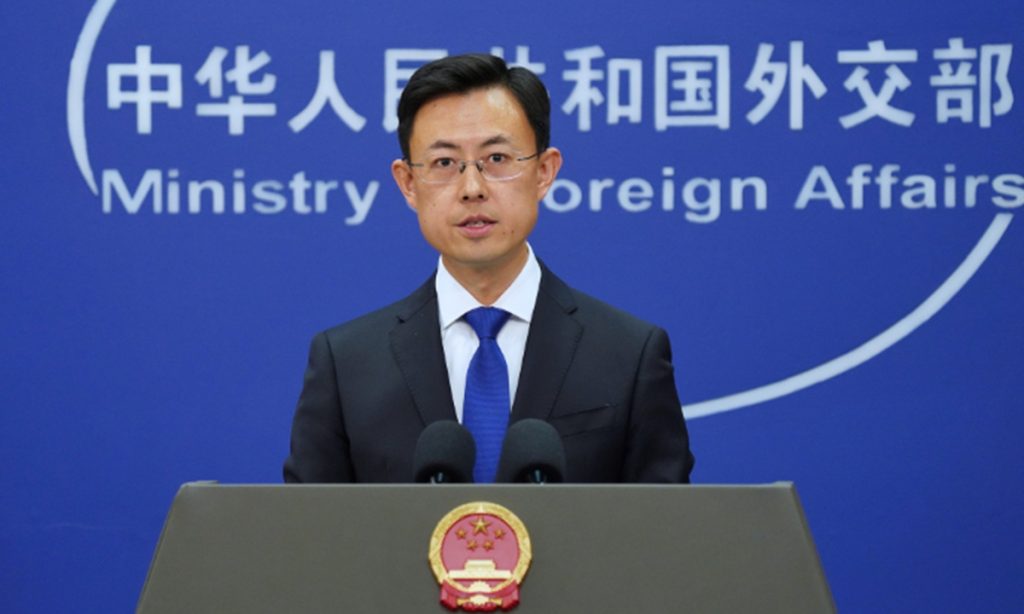
In response to a question about how China, as Iran's comprehensive strategic partner, might leverage its influence to ensure US compliance with the ceasefire agreement and help Iran achieve peace, Chinese Foreign Ministry spokesperson Guo Jiakun said on Wednesday that China stands ready to continue providing assistance in its own way, guided by the four-point proposal for promoting peace and stability in the Middle East, and to play a constructive role in restoring regional peace and stability at an early date.
Guo said China has always maintained that regional hot-button issues and differences between parties should be resolved through dialogue and negotiation, and opposes the use or threat of force.
The Memorandum of Understanding signed by the US and Iran, in which they commit to respecting each other's sovereignty and territorial integrity, refraining from any further military actions, and avoiding interference in each other's internal affairs, sends a positive signal to the international community, said Guo, adding that this commitment should be jointly upheld and implemented.
China has always taken an impartial stance, supporting all efforts conducive to peace, supporting Iran in safeguarding its sovereignty, security and national dignity, and supporting Iran in improving its relations with Gulf countries and other regional states, the spokesperson said.
A 6.3-magnitude earthquake jolted Haixi Prefecture in northwest China's Qinghai Province at 5:06 p.m. Tuesday (Beijing Time), according to the China Earthquake Networks Center (CENC).
The epicenter was monitored at 37.80 degrees north latitude and 95.56 degrees east longitude. The quake struck at a depth of 10 km, said a report issued by the CENC.
China will host the inaugural Xiong'an Global Governance Forum this autumn, according to a press conference held by China's State Council Information Office on Wednesday.
The event, to be held in the Xiong'an New Area in north China's Hebei Province, is expected to bring together all parties to discuss ways to reform and improve global governance, according to the press conference.
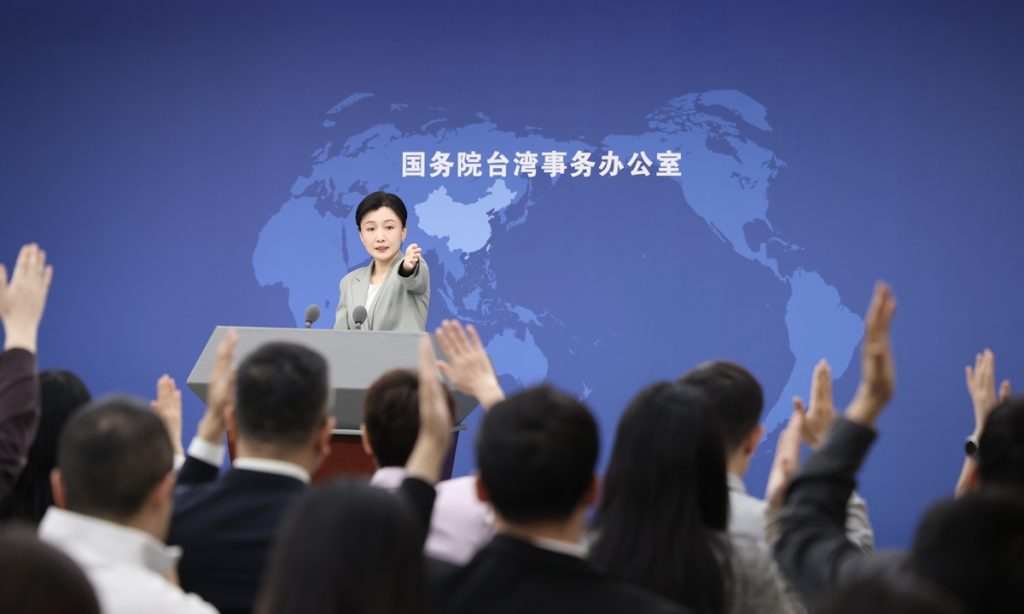
When asked to comment on the claim by the Democratic Progressive Party (DPP) authorities that a Chinese mainland coast guard vessel entered the so-called “restricted waters” of the Dongsha Island on June 5, triggering a vessel standoff, Zhang Han, a spokesperson for the Taiwan Affairs Office of the State Council, said on Wednesday that China has indisputable sovereignty over the South China Sea islands, including the Dongsha Island, and their adjacent waters. The law enforcement patrols conducted by the Chinese mainland coast guard in relevant waters are a normal exercise of its duties. Should the DPP authorities dare to provoke, they must bear all the consequences arising therefrom, Zhang added.
In response to the Philippine foreign minister's claim that its boundary discussions with Japan "have nothing to do" with China, a Chinese expert on Thursday said the so‑called Japan-Philippines maritime delimitation talks concern an area east of China's Taiwan island and contradict international law and the United Nations Convention on the Law of the Sea. The expert noted the move carries ulterior purposes beyond bilateral discussions.
Philippine Secretary of Foreign Affairs Maria Theresa Lazaro said that establishing clear maritime boundaries between the Philippines and Japan is of vital importance to the country's national defense in an interview on Wednesday.
China has criticized such negotiations, while Lazaro claimed the discussion "has nothing to do with them" and "just between the Philippines and Japan." She added, "We should continue with our delimitation talks," even if China keeps objecting or increases pressure, Nikkei Asia reported.
Lazaro also expressed so-called concern over increasing activities by Chinese vessels in waters close to the Taiwan island, per the outlet.
Ding Duo, Director of the Research Center for International and Regional Issues at the National Institute for South China Sea Studies, told the Global Times on Thursday that Lazaro's words constitute three violations.
First, it violated the international law, in particular the Vienna Convention on the Law of Treaties, which stipulated, in simple words, that "bilateral treaty does not create obligations or rights for a third State." If the Philippines and Japan reach any agreement regardless of China interests, that constitute a violation, Ding said.
Second, such discussions ran counter to the United Nations Convention on the Law of the Sea, which stipulated equity in maritime boundary delimitation. Based on this principle, given that the delimitation involves China's interests, and the final decision must not bypass China, Ding added.
The expert further noted that third, in a situation that three parties interests are involved, the acts of Philippines and Japan violated the "obligation of restraint" and "principle of good faith" in international law.
Japan and the Philippines have been hyping so-called maritime delimitation issue recently, concerning an area east of China's Taiwan island. Japanese Prime Minister Sanae Takaichi and Philippine President Ferdinand Marcos Jr. agreed to start formal talks on EEZ boundaries and the continental shelf when the president visited Tokyo on a state visit in May, per reports.
In response, Chinese Foreign Ministry spokesperson Mao Ning said on May 29 that according to China's domestic law and international law including UNCLOS, China has exclusive economic zone and continental shelf in this area. Japan and the Philippines' so-called maritime delimitation talks constitute a severe violation of China's maritime rights and interests, UNCLOS and other international law and basic norms governing international relations. China strongly deplores and firmly opposes that and has lodged serious protests with both countries.
The so-called delimitation talks are completely illegal, null and void, and will have no effect on China's claims to rights in the area east of the Taiwan island or exercise of China's lawful rights. China urges Japan and the Philippines to immediately stop any violation of China's maritime rights and interests and take concrete actions to uphold regional peace and stability.
Ding also noted that in addition to diplomatic methods to break the Japan-Philippines collusion, China can also conduct normal maritime law enforcement, patrols and drills to demonstrate its legitimate rights. These are all granted by the international law and can be routinized, he said.
The expert also warned that the collusion between Japan and Philippines aims beyond "delimitation," but serves as stepping stone to squeeze China's maritime operational space in the waters east of the Taiwan Island.
After so-called delimitation, they could scheme to carry out security cooperation, military collaboration and naval exercises, confining China's maritime activities in this area, Ding elaborated.
"Such geostrategic moves are disguised under the pretext of legal frameworks and maritime delimitation. And they may also blend in "Taiwan independence" agenda in this process," Ding warned.
The negative impact of their collusion could go further, analysts said, citing the two countries' deepening military cooperation.
"The defense cooperation with Japan is one of the most important vital elements that we have in the Philippines, both nationally and for regional peace and security," Lazaro said, according to Nikkei Asia.
The two nations agreed last month to deepen their cooperation, with Japan considering to export defense equipment to the Philippines. "This is part of the modernization process and towards the peace and security in the free Indo-Pacific," Lazaro said.
The so-called cooperation between Japan and the Philippines cater to both countries' respective ambitions and carries strong Cold War undertones, analysts said, warning against Japan's dangerous neo-militarist resurgence and Philippines' adventurist tendency.
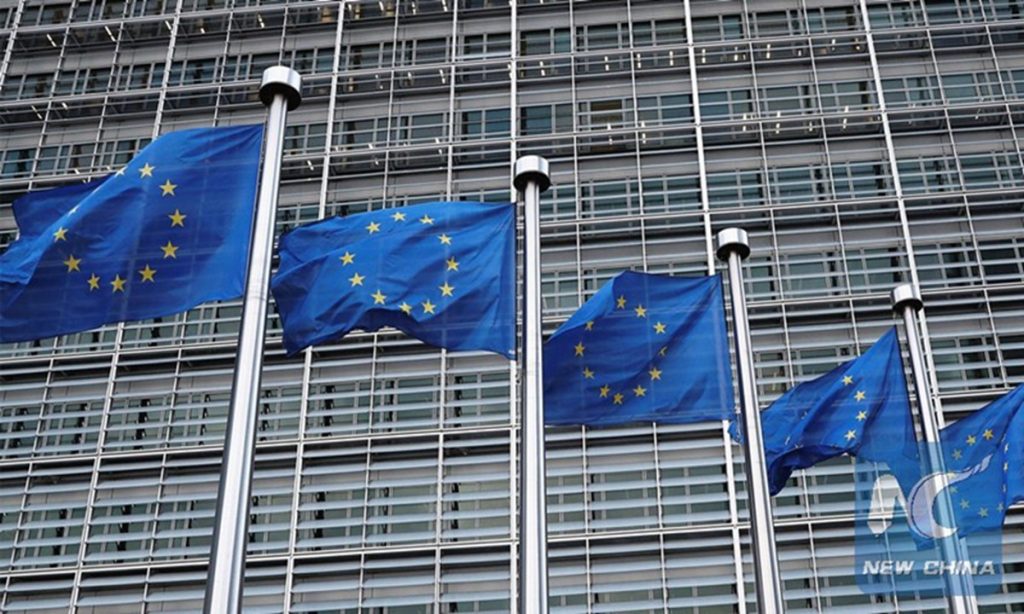
As the G7 summit and a key EU leaders' meeting draw near, a series of communication signals has emerged in China-EU economic relations, even as Brussels weighs tougher trade tools against China and some European politicians sharpen their rhetoric on the bloc's second largest trade partner.
The European Commission said on Thursday that contacts with Beijing "continue at various levels", while making clear that securing results from dialogue with the Chinese government remains its "priority", according to media outlet EFE, citing Olof Gill, deputy chief spokesperson of the commission.
Gill's remarks were made in response to a Financial Times (FT) report claiming that China had recently canceled two planned high-level diplomatic meetings with the EU in Beijing this month in protest against measures being considered by Brussels.
The same week, Chinese and German officials met in Berlin to discuss China-Germany and China-EU economic and trade relations, while Chinese Vice Premier Zhang Guoqing, addressing a France-hosted video summit, called for economic cooperation, inclusive growth and a free and open trade environment.
Analysts said the mixed signals show that dialogue is a practical need for both sides. If the EU wants results from engagement with China, they said, it should not allow new protectionist tools and negative political rhetoric to erode the trust needed for those results to emerge.
Channels remain open
In response to a question regarding the cancellations reported by FT, Chinese Foreign Ministry spokesperson Lin Jian told a press briefing on Thursday that "as we've learned, China and the EU are in communication on relevant dialogue."
China's Vice Minister of Commerce Ling Ji, also the deputy China international trade representative, met with Ditte Juul Jorgensen, director-general of the Directorate-General for Trade and Economic Security of the European Commission on Tuesday. The two sides held in-depth and comprehensive discussions regarding the preparations for the establishment of a China-EU trade and investment consultation mechanism, according to a statement on China's Ministry of Commerce (MOFCOM) website on Wednesday.
The statement came after the Global Times learned from a source who is familiar with the situation, Ling is visiting the EU headquarters from June 9 to 14 to discuss with European officials the relevant arrangements for establishing the China-EU Trade and Investment Consultation Mechanism.
This move demonstrates China's willingness in implementing the consensus of China-EU leaders and properly handling differences and frictions through dialogue and consultation, according to the source, who declined to be named.
Ling also held talks in Berlin on Thursday with senior German officials on economic and trade issues, MOFCOM said on Friday. Ling said China has consistently advocated resolving differences through dialogue and consultation, and urged the German government to play a constructive role within the EU.
The German side said it opposes trade wars and supports China-EU dialogue and consultations to properly address each other's concerns and prevent an escalation of economic and trade frictions, while expressing willingness to strengthen communication with China on economic and trade policies.
Jian Junbo, director of the Center for China-Europe Relations at Fudan University's Institute of International Studies, told the Global Times on Friday that the recent communication signals are important because they show that both China and pragmatic voices in Europe still see dialogue as necessary, even as Brussels hardens its trade and economic-security approach toward China.
"The bloc faces internal divergence, declining industrial competitiveness and weakening growth momentum. Turning such anxieties into restrictive tools will not solve Europe's structural problems but could instead add uncertainty to China-EU cooperation," Jian said.
In an exclusive video interview with the Global Times on Thursday, Esko Aho, former Finnish prime minister and chairman of the board at the China Office of Finnish Industries, said Europe's challenges are linked to its capacity to create competitiveness and to invest in science, technology and innovation, while stressing that Europe also needs to create a better-functioning internal market, where weaknesses still remain.
Against the backdrop of Europe's internal challenges and growing global fragmentation, Aho said the EU and China share an interest in ensuring "a rules-based economic and political system," adding that challenges and risks also present opportunities.
Complexity remains
The recent pragmatic signals are unfolding at a difficult and complex moment for China-EU economic ties, as Europe ramps up pressure to impose trade restrictions, and weighs broader "economic security" tools seen as directly affecting China.
Reuters has reported that Brussels is weighing rules to cut reliance on single suppliers - notably in China - as part of a broader review of trade-defense tools.
German Chancellor Friedrich Merz said on Thursday that the EU must defend itself against unfair trade practices, signaling greater openness to recent European Commission proposals for a tougher approach to China, Politico reported.
Without mentioning China specifically, Merz said EU leaders meeting next week in Brussels will discuss ways to better equip the bloc's trade "toolkit" as it looks to reset its trade relationship with China, according to Bloomberg.
Belgian Prime Minister Bart De Wever, described by news website Euractiv as being "at the forefront of the debate about China's impact on the European economy", has urged European leaders to develop a "serious strategy" against what he claimed was China's drive for economic domination, Euractiv reported on Tuesday.
Industry insiders warned that the EU's "economic security" toolbox targeting China is gradually moving from concept to implementation, with related policy frameworks taking shape at a faster pace, from supply-chain diversification to upgraded trade-defense measures.
Chinese authorities have repeatedly made clear their firm position on the EU's moves. After the European Commission's May 29 discussion on relations with China, MOFCOM said that "if the bloc insists on unilaterally introducing new trade tools and adopting discriminatory restrictions, China will firmly counteract them and take effective measures to safeguard its legitimate interests."
Aho said Europe has realized the need to avoid excessive dependence in critical areas, but the real challenge is where to draw the line between legitimate national interests and limits on global trade. "There are many areas where we can work together without feeling restricted," he added.