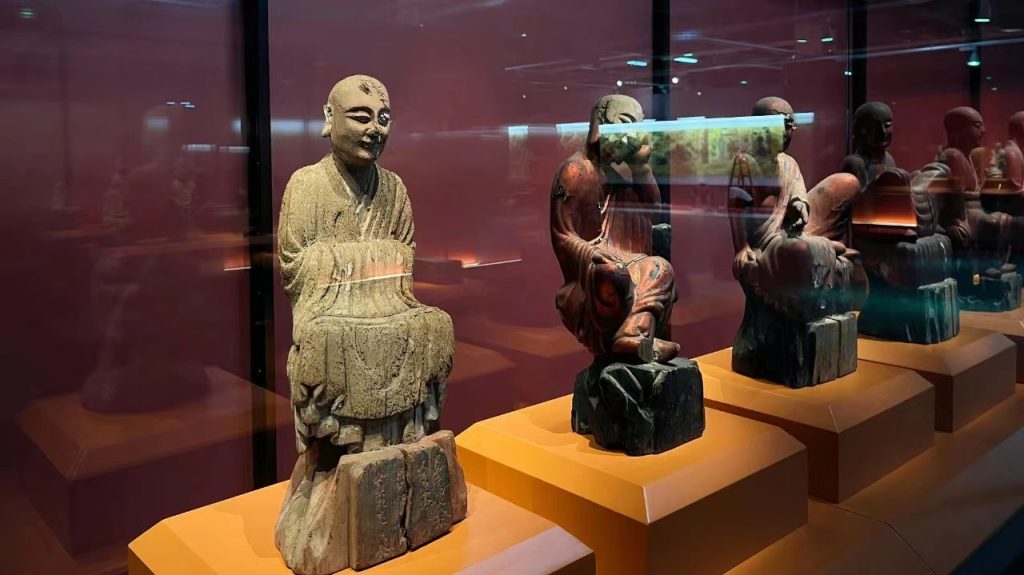
Amid the first Guangdong-Hong Kong-Macao Greater Bay Area Chan Buddhism Culture Festival, the exhibition themed “Passing Down Dharma: Nanhua Buddhist Temple in The Past 1500 years,” kicked off at the Nanhua Temple, with a total of 53 pieces of treasured cultural relics showcased for the first time.
This exhibition aims to further strengthen exchanges with the Buddhist community in Guangdong, Hong Kong, Macao and the Belt and Road partner countries to contribute to the construction of the Guangdong-Hong Kong-Macao Greater Bay Area, and to enrich the connotation of the humanistic Bay Area, according to the media report.
The Northern Qi Dynasty (550-557) bronze statue of the Buddha as the earliest of the numerous artifacts in the collection of Nanhua Temple is also featured at the exhibition.
Another attraction is the wooden figure of a Buddhist monk, dated Northern Song Dynasty (960-1127). The carving style is thick and simple, and it is an outstanding representative of the existing Northern Song Dynasty wooden carving statues of five hundred Buddhist monks.
Nanhua Temple in Shaoguan, South China’s Guangdong Province, is the birthplace of southern Zen advocated by Mater Huineng (AD638-713), who is highly respected as the Sixth Patriarch of Zen Buddhism.
Built in AD502, the temple preserves many of the national treasures, including the “Da Zang Sutra,” decree and cassock.
One of the most precious relics in the temple is the mummified body of Master Huineng. He sits cross-legged with his eyes closed in the center of the Six Patriarch Hall, and stands about 80 centimeters tall. The mummy is painted reddish brown and sits on a sheet of linen cloth.
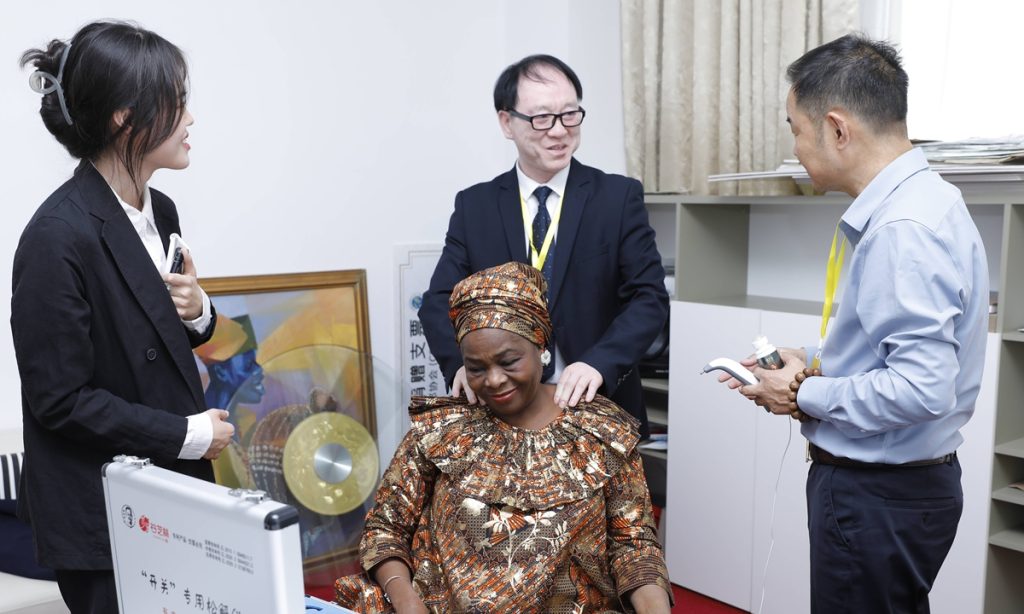
An event to promote Traditional Chinese Medicine (TCM) was held at the Nigerian Embassy in Beijing, themed "Promote Chinese Medicine and Global Health."
The event was attended by the Nigerian Ambassador to China Baba Ahmad Jidda, Nigerian Deputy Ambassador Fumen Tyeni Dogo, Secretary General of the China Information Association of Traditional Chinese Medicine Kang Xiaofei, and more than 40 experts in the TCM and healthcare industry from all over the country.
Dogo praised the significant contribution made by the culture of TCM to the world, and expressed hopes that the Belt and Road Initiative (BRI) will promote common cooperation and development of the culture in more countries. The Nigerian Embassy in China also took the opportunity to promote cultural exchanges between China and Nigeria, and further strengthen cooperation in the field of TCM.
During the event, a number of invited Chinese medicine experts communicated their experiences and showcased technology, while exchanging Chinese medicine treatment protocols, adding impetus to the high-quality development of the Chinese medicine cause.
In order to let the Nigerian diplomats experience the charm of Chinese medicine culture, Chinese medicine experts carried out a clinical checkups at the end of the activity, further showcasing the therapeutic qualities of the unique Chinese medicine tuina remedial massage.
Chinese people believe that letters are as valuable as gold. For thousands of years, letters, across mountains and oceans, have been delivering the writers' sentiments, friendship, and expectations.
Xi Jinping, general secretary of the Communist Party of China (CPC) Central Committee, has managed to find time to reply to some letters from different parts of the society and the world despite his busy work schedule. Xi is also Chinese president and chairman of the Central Military Commission.
Through his letters, Xi has corresponded with international friends from all walks of life on numerous occasions. His letters have also been delivered to "home" senders such as Chinese experts and artists. The Global Times traced and contacted some of the addressees of Xi's letters to hear the inspiring stories behind the letters.
This installment tells the story of letters exchanged between Xi and Matias Tarnopolsky, president and CEO of the Philadelphia Orchestra. When Chinese President Xi Jinping replied to a letter from Matias Tarnopolsky, president and CEO of the Philadelphia Orchestra, on November 10, the friendship of half a century was further strengthened through the art of music. This not only reflects the importance that both sides attach to cultural exchanges, but also provides a good opportunity for cooperation and understanding between the two countries.
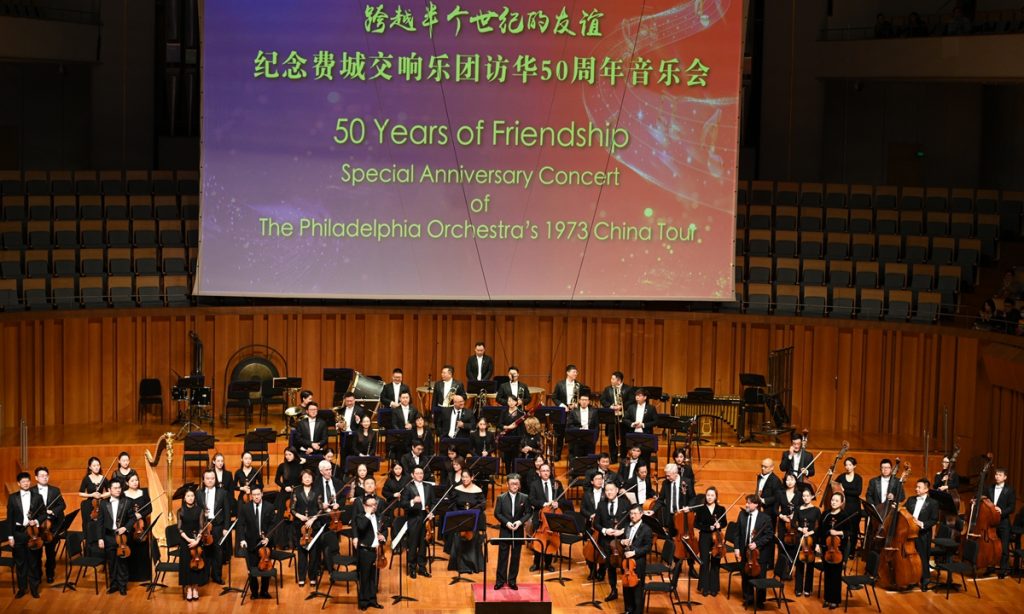
On the evening of November 10, the National Centre for the Performing Arts (NCPA) in Beijing hosted a concert titled "50 Years of Friendship" to commemorate the 50th anniversary of the Philadelphia Orchestra's first visit to China in 1973. The concert was performed by the Philadelphia Orchestra and the China National Symphony Orchestra.
As the baton of Tristan Rais-Sherman, assistant conductor of the Philadelphia Orchestra, was raised, the Overture of Candide composed by American conductor Leonard Bernstein was played to unveil the performance. The spirited piece was followed by a tranquil Chinese melody, Two Springs Reflect the Moon, that both Chinese and American audiences were familiar with.
Ahead of Friday's special concert, the letter was read inside the concert hall, in which President Xi expressed hopes that orchestras and artists from China, the US, and across the world would persist in efforts to strengthen people-to-people ties between China and the US, and spread friendship among the peoples of the world. Tarnopolsky said he was honored and grateful.
The concert was held at a special moment as, on the other side of the NCPA, the ballet Giselle mounted by the American Ballet Theater was also in progress on the same day.
These cultural exchanges were held only several days ahead of the planned meeting of the heads of state of China and the US.
"It's going to be an important meeting, and we're very much looking forward to it and receiving President Xi in our country," Tarnopolsky said on the day of the concert.
During the interview after the inaugural performance in Beijing, Tarnopolsky told the Global Times that he was honored and grateful to receive the letter from Xi.
"It is an honor for the Philadelphia Orchestra to receive a letter from President Xi in this moment of 50 years of visits to China. And we're very grateful for the warmth of the welcome that the Philadelphia Orchestra always receives in China," he said.
"President Xi has recognized that is a very important gesture and encourages us to keep coming and keep playing music and making these connections with the people of China."
No matter how the world changes, he believes that there are neither hierarchies nor differences between people when it comes to music. "Music can give voice to ideas that words alone cannot convey," added the CEO. Collaborative endeavor
Tarnopolsky firstly wrote to Xi, reviewing the history of the orchestra's ties with China and introducing the activities to be held in China in November to commemorate the 50th anniversary of its first China tour.
In return, President Xi wrote back to Tarnopolsky.
In his reply, President Xi said that he hopes the orchestra and artists from China, the US, and across the world will continue efforts to strengthen people-to-people ties between China and the US, and spread friendship among the peoples of the world.
Half a century ago, the orchestra's historic China tour marked a thaw in China-US cultural exchanges, which was a very important part in the normalization process of the two countries' diplomatic relations. Since then, the orchestra had visited China 12 times as an active cultural envoy, playing an instrumental role in strengthening China-US ties, Xi said.
Over the course of half a century, the orchestra has served as a dynamic cultural envoy between China and the US. Some of the musicians, such as Davyd Booth, were part of the ensemble since their first visit to China in 1973.
Ryan Fleur, executive director of the Philadelphia Orchestra, told the Global Times on Friday that the 50th anniversary celebration was a collaborative endeavor from both sides, which was made possible by the invitation from The Chinese People's Association for Friendship with Foreign Countries that has been their partner since 1973.
But the connection of the orchestra with China goes back even further: As early as the 1940s, the orchestra staged concerts to raise funds for China's Eighth Route Army led by the Communist Party of China (CPC), in their resistance against Japanese aggression during World War II.
"It was a great achievement. Both China and the US want to celebrate the 50th anniversary of the tour, which was a historic event. Music had a profound impact on people's lives, and the orchestras' performance in 1973 was a life-changing event for many people," Tarnopolsky told the Global Times in a previous interview.
Adding to that, the CEO gave a glimpse into the perceived future.
"We're planning the next 50 years. And we also have another Chinese Lunar New Year concert planned in Philadelphia, so we'll be celebrating Chinese Lunar New Year in January."
Exchanges beyond music
Visits by the Philadelphia Orchestra to China over the years have been very influential to musicians from the two countries. They not only get to share the same stage, but also have exchanges beyond the musical arena.
Fifty years has passed, contributions by two members of the then Central Philharmonic (now China National Symphony Orchestra), 90-year-old Zhu Xinren and 88-year-old Yang Shi, in training with US musicians continue to be unforgettable experiences.
Eugene Ormandy, the then conductor of the Philadelphia Orchestra until 1980, and other US musicians watched a performance by their Chinese counterparts on September 15, 1973. They showed great interest in the string ensemble Two Springs Reflect the Moon, which had just been adapted by Wu Zuqiang, leader of the composition group of the Central Philharmonic. The charm of Chinese melody immediately attracted them.
"They asked to get the score sheets in the hopes of performing it in the US. It was just finished a year before by Wu and the debut had made it possible for it to head to the US stage," violinist Zhu recalled.
Chinese conductor Li Delun led the Chinese orchestra in a performance of one movement from Beethoven's Fifth Symphony. He then handed his baton to Ormandy and requested that he conduct the next movement. Ormandy led the orchestra to thunderous applause.
"Music connects the world. He also praised us young performers for our strong receptivity. This can be said to have been a worldwide cooperation," said Zhu.
When musicians had talks after the performances, US musicians were particularly surprised when they saw the musical instruments that their Chinese counterparts held, recalled Yang.
At the time, the conditions under which our orchestra mounted performances were not good as instruments were broken or glued back together, and the scores were old handwritten ones and were pasted together. "They didn't expect that our musicians could play such good music with such instruments."
Musical instruments were given as gifts to each other. Chinese musicians were moved when their US counterparts presented them with instruments such as a clarinet, trumpet, flute, and a set of triangles, as well as scores of famous European and American composers, and hundreds of records and orchestra's professional books.
For the Central Philharmonic, which was facing a difficult period at the time, these instruments and materials solved the orchestra's urgent needs. Yang Shi said: "They sent us a batch of woodwind and brass instruments, which was a timely help. But the instruments we gave them also made them even more surprised and happy."
The Chinese musicians presented pipa, Chinese gongs, erhu, flower drums, and other national musical instruments that best represent Chinese music as gifts to US musicians. Zhu recalled: "The indispensable Chinese musical instrument is the gong. The gong we sent was custom-made by a master from Shandong. The diameter of the gong is 1.1 meters. Their gong is only 60 centimeters. So when they saw that we brought in such a big one, they were all shocked."
This past weekend, China again bestowed another gift to the Philadelphia Orchestra to mark the special occasion: A rare vinyl record of Yellow River.
As Yin Bo, deputy director of the China National Symphony Orchestra, noted on Friday, Chinese and American musicians will collaborate through music to foster cultural understanding among the youth of both nations.
"The gesture from President Xi was an acknowledgment and an incentive for most literary and art workers," Liu Zhiyong, deputy chief of the same orchestra said. "President Xi's reply letter conveyed his sincere aspiration for enhancing extensive cultural exchanges and cooperation between China and the US."
The Jakarta-Bandung High-Speed Railway (HSR), a landmark project under the China-proposed Belt and Road Initiative (BRI), is undergoing intensive joint commissioning and testing, paving the way for commercial operations scheduled to begin soon this year.
Chinese Premier Li Qiang aboard a bullet train during a trial run on Wednesday during his official trip to the ASEAN summit in Indonesia from September 5 to 7, Reuters reported.
The Jakarta-Bandung HSR is the first high-speed railway line in Indonesia and Southeast Asia, connecting Indonesia's most densely populated areas.
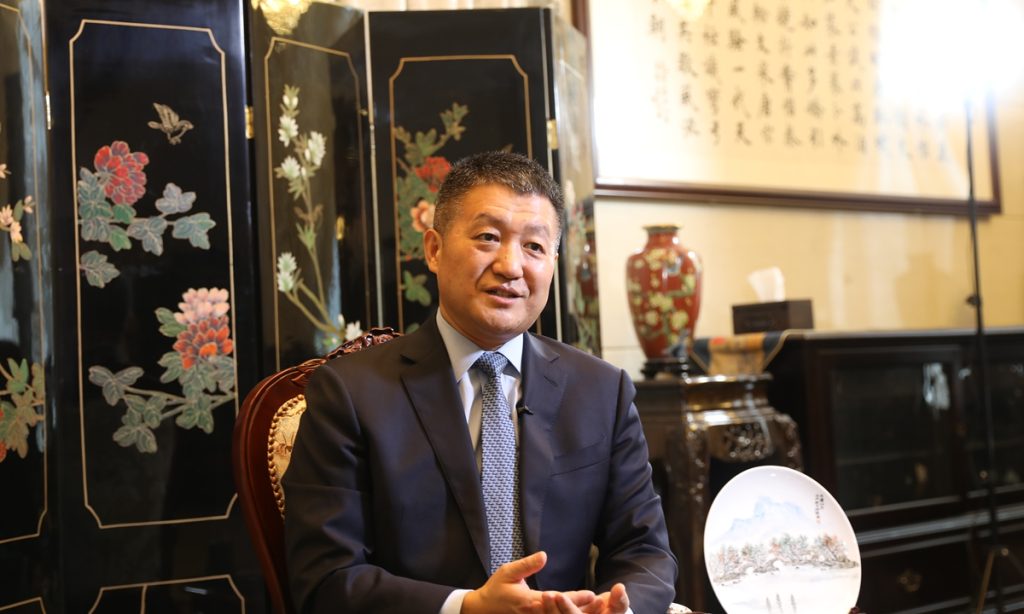
As the Jakarta-Bandung high-speed railway line is set to open, Global Times reporters Hu Yuwei and Zhao Juecheng (GT) interviewed the Chinese Ambassador to Indonesia Lu Kang (Lu), who is also a former spokesperson of Chinese Foreign Ministry.
Lu believed that the Jakarta-Bandung HSR will bring tangible benefits to Indonesia, while expecting the project to become a new growth point and create a high-speed railway economic corridor. He argued that the consensus reached by the heads of China and Indonesia further illuminates the direction to be taken and injects strong momentum into future relations. China supports Indonesia's chairmanship of ASEAN and is willing to deepen comprehensive strategic partnerships with ASEAN members. GT: What changes will the Jakarta-Bandung HSR bring to Indonesia? What are local people's expectations?
Lu: The opening of the Jakarta-Bandung HSR will bring many tangible benefits to Indonesia such as more efficient travel conditions. The travel time from Jakarta to Bandung will be reduced from three and a half hour to just 40 minutes, effectively alleviating commuting traffic pressure between the two cities.
In the long run, the project will further boost investment and create employment opportunities for the people, and drive commercial development and tourism along the route. It may even become a new growth point, accelerating the formation of a high-speed railway economic corridor.
On June 22, I was invited to take a trial ride on the train together with Indonesia's Coordinator for Cooperation with China and Coordinating Minister of Maritime Affairs and Investment Luhut Binsar Pandjaitan, Transport Minister Budi Karya Sumadi, West Java Governor Ridwan Kamil, and president of railway operator China State Railway Group Liu Zhenfang. During the trial ride, the train reached a speed of over 355 kilometers per hour, surpassing the current fastest commercial speed of any high-speed railway in the world, which amazed our Indonesian friends and earned praise for Chinese-made high-speed railway technology.
On that day, I also noticed that many locals were watching the train along the way. I was told that Indonesian people take videos of the passing trains along the high-speed railway every day, which reflects their high expectations for the project.
GT: The construction of the Jakarta-Bandung HSR marks the first all-round implementation of Chinese high-speed railway technology abroad, from the whole system and all of its elements, to the whole industrial chain. Does it mean a big step for China's high-speed railway manufacturing going global?
Lu: The Jakarta-Bandung HSR vividly embodies the concept of "extensive consultation, joint contribution, and shared benefits" under the BRI framework and has important reference significance for us to carry out other similar projects.
The successful completion of the Jakarta-Bandung HSR directly proves that Chinese manufacturing technology is mature, efficient, internationally standardized, adaptable to local environments, and actively integrated into the development plans of the host country. This will greatly facilitate China's manufacturing going global and inspire developing countries to have confidence in pursuing development paths that suit their own national conditions. GT: According to your observations how has the BRI benefited livelihoods and brought tangible benefits to the Indonesian people?
Lu: Taking infrastructure connectivity as an example, since the proposal of the BRI, China and Indonesia have cooperated to build a number of high-quality projects, covering areas such as power plants, roads and bridges, dams, and telecommunication networks, making positive contributions to Indonesia's passion to become a traffic hub.
A series of iconic projects have been completed, such as the Suramadu Bridge, the longest sea-crossing bridge in Southeast Asia, the Tayan Bridge, the longest corbeled stone-arch bridge in Indonesia, and the Jatigede Dam, the second-largest dam in Indonesia, bringing convenience to the local populations.
Chinese-funded enterprises in Indonesia have not only provided a large number of job opportunities for the locals but also contributed to the development of local livelihoods through knowledge and technology sharing. Taking the Jakarta-Bandung HSR as an example, over 75 percent of the services and procurement for the project are sourced locally in Indonesia, significantly boosting the local supply chain and employment. It is estimated that the project will create 30,000 job opportunities in Indonesia.
GT: Chinese President Xi Jinping met with Indonesian President Joko Widodo On July 27 in Chengdu when Widodo visited China. How do you evaluate the achievements of President Widodo's visit to China this time?
Lu: This is the third face-to-face meeting between the two heads of state within a year, which reflects the high level and special nature of China-Indonesia relations. As President Xi said, on the path to national modernization and rejuvenation, China and Indonesia share highly aligned visions and present opportunities for each other's development, are like-minded companions, and good partners.
This further clears the direction and injects strong momentum into the future friendship between China and Indonesia. After the meeting, the two leaders witnessed the signing of multiple bilateral cooperation agreements, including agricultural product exports to China, health cooperation, joint research and development, as well as the construction of the new Indonesian capital and the "Two Countries, Twin Parks" project, achieving significant practical results.
GT: This year marks the 10th anniversary of the BRI and the comprehensive strategic partnership between China and Indonesia. We have noticed that President Widodo's "Global Maritime Fulcrum (GMF)" strategy resonates with China's 21st Century Maritime Silk Road initiative. How do you envision future cooperation between China and Indonesia with synergy of strategies?
Lu: In November 2022, Chinese President Xi and Indonesian President Widodo reached an important consensus on building a community of shared future between China and Indonesia. They agreed to take the 10th anniversary of the establishment of the comprehensive strategic partnership between China and Indonesia in 2023 as an opportunity to create a new pattern of high-level cooperation.
The two sides signed a cooperation plan under the framework of aligning the BRI with the GMF concept, and significant progress has been made in its implementation. The Jakarta-Bandung HSR is one of the flagship projects.
In July this year, the two heads of state met again in Chengdu and reached an important consensus on deepening strategic cooperation between China and Indonesia.
We will take the 10th anniversary of the comprehensive strategic partnership between the two countries and the first year of the China-Indonesia community of shared future as a chance to promote deeper and higher-level strategic cooperation between the two sides, injecting more certainty and positive energy into the region and the world.
GT: How do you evaluate the current level of cooperation between China and Indonesia in the fields of economy, trade, and investment? What suggestions do you have for further enhancing bilateral economic and trade cooperation?
Lu: In recent years, with the comprehensive integration of the BRI and Indonesia's GMF, China-Indonesia economic and trade cooperation has achieved fruitful results. China has been Indonesia's largest trading partner for 10 consecutive years. In 2022, the bilateral trade volume between China and Indonesia reached $149.1 billion, a year-on-year increase of 20.16 percent. Investment cooperation is also a highlight of the two countries' economic and trade cooperation. In 2022, the Chinese mainland's investment in Indonesia reached $8.2 billion, a year-on-year increase of 156.25 percent, maintaining its position as the second-largest foreign investor in Indonesia.
According to the consensus reached by both sides earlier this year, China is willing to further expand the importation of Indonesian bulk commodities and high-quality agricultural and fishery products according to market demand.
The Chinese government encourages its enterprises to invest in Indonesia and expand cooperation in infrastructure, green development, the digital economy, healthcare, and other fields. We aim to create highlights in maritime cooperation and promote the resumption of fisheries cooperation.
GT: In the current tense geopolitical situation, ASEAN members have become objects of competition for major powers. Indonesia is the key member of the ASEAN. How can China-Indonesia cooperation better deal with geopolitics challenges and achieve long-term stability?
Lu: This year marks the 10th anniversary of the establishment of the comprehensive strategic partnership between the two countries and the 20th anniversary of China's accession to the Treaty of Amity and Cooperation in Southeast Asia. As President Xi once said, the Asia-Pacific is no one's backyard and should not become an arena for big power contests and no attempt to wage a new cold war will ever be allowed by the people or by our times. This is the inevitable requirement for maintaining peace, stability, and prosperity in the Asia-Pacific region and the common wishes of people in the ASEAN and other countries.
One important reason why the ASEAN can maintain its central position in the regional architecture is its long-standing commitment to independence, non-alignment, and neutrality. The ASEAN has repeatedly stated that it will adhere to openness, inclusiveness, dialogue, and cooperation, and focus on economic development without aligning with or targeting any party.
In the process of achieving national modernization and rejuvenation, China and Indonesia have highly compatible ideas that present mutually beneficial development opportunities. They are like-minded partners and good companions.
China supports Indonesia's role as the rotating chair of the ASEAN this year and is willing to deepen comprehensive strategic partnerships with ASEAN countries, including Indonesia, and jointly create a positive energy.
GT: Shortly after taking office as Chinese Ambassador to Indonesia in 2022, you opened a Twitter account. Do you have any interesting or memorable stories to share with us about your interactions with locals on social media?
Lu: Since opening my Twitter account over a year ago, I have been able to interact closely with Indonesian and global netizens through this platform, and I am deeply impressed by their interest in China.
A friend once told me that the Indonesian people seem less interested in politics, but the content I shared on Twitter about President Xi's activities and the interpretation of Xi Jinping Thought on Socialism with Chinese Characteristics for a New Era have received widespread and positive responses.
In the comments section, many Indonesian netizens have expressed their appreciation, saying that Indonesians like to cooperate with China for development and that cooperation with China is friendly trade, not a command.
Such enthusiastic feedback was unexpected but reasonable. China's wisdom and solutions have made it possible to solve more global issues and inject new energy into global development.
Over the last four years, China-Solomon Islands cooperation under the Belt and Road Initiative (BRI) has achieved fruitful results, bringing profound benefits to both nations. In a recent interview with the Global Times, the first Chinese Ambassador to the Solomon Islands expressed confidence in the future cooperation between China and the Solomon Islands.
"The Solomon Islands will undoubtedly become a magnet for Chinese business investments," Li Ming, who served as the Chinese Ambassador to the Solomon Islands from September 2020 to September 2023, told the Global Times.
According to Li, the development of China-Solomon Islands relations has been multifaceted. At the highest level of engagement, Prime Minister Sogavare has made two official visits to China, establishing a comprehensive strategic partnership of mutual respect and common development for a new era. Head-of-state diplomacy has charted a grand blueprint for high-quality joint construction of the BRI and provided strategic guidance for bilateral relations.
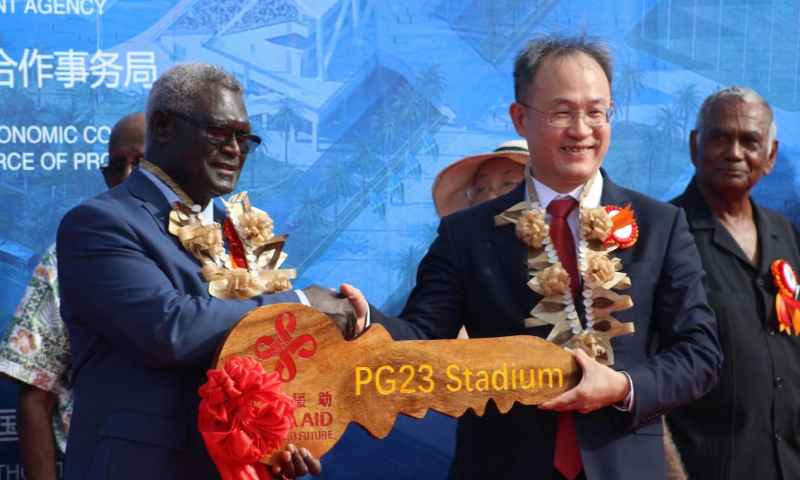
In terms of infrastructure connectivity, China has become the Solomon Islands' largest infrastructure cooperation partner. China-aided facilities like the Pacific Games' main stadium and the Solomon Islands National University dormitories have become local landmarks, providing essential support for the hosting of major sporting events, promoting economic and social development.
Regarding trade facilitation, China has been the Solomon Islands' largest trading partner for several consecutive years. China provides 98 percent tariff-free treatment to products from Solomon Islands in nearly all categories, and both countries are steadily advancing cooperation in inspection and quarantine, creating favorable conditions for the expansion of exports of agricultural and fishery products from the Solomon Islands to China, leading to an increase in incomes for its people.
In terms of financial connectivity, an increasing number of Chinese companies are turning their attention to the Solomon Islands. During Prime Minister Sogavare's visit to China in July, a "China-Solomon Islands High-Level Enterprise Exchange Meeting" was held in Beijing, at which Chinese enterprises in agriculture, forestry, animal husbandry, energy and mineral resources, infrastructure, telecommunications, and tourism engaged in in-depth communication with representatives from the Solomon Islands. It is believed that in the next phase, the Solomon Islands will become a magnet for Chinese business investments.
In terms of people-to-people exchanges, China has established friendly relations with multiple provinces and cities in the Solomon Islands. More than 100 young students from the Solomon Islands have come to China to further their studies under government scholarships. China also continues to be committed to improving the Solomon Islands' medical and healthcare conditions by donating a large quantity of medical and epidemic prevention supplies, and Chinese medical teams have alleviated the suffering of many patients in the country. When the Chinese navy's Ark Peace hospital ship visited the Solomon Islands, it treated tens of thousands of patients in just one week.
In September 2019, the Solomon Islands established diplomatic relations with China, becoming one of China's newest diplomatic partners. Less than a month after establishing diplomatic ties, Prime Minister Sogavare visited China and signed a Memorandum of Understanding on jointly building the BRI, media sources reported.
Since the establishment of diplomatic relations, the friendly cooperation between the two countries has steadily advanced and has been at the forefront of China's relations with Pacific island countries, becoming a model of solidarity, cooperation, and joint development among large and small countries and developing countries.
In a previous interview with the Global Times in May, former ambassador Li said, "As the first Chinese Ambassador to the Solomon Islands, my most prominent impression after arriving in the Solomon Islands was the enthusiasm and expectations of the Solomon Islands' government and people for China-Solomon Islands relations."
He told the Global Times that since the establishment of diplomatic relations, both governments and peoples have been committed to promoting friendship, expanding cooperation, and have achieved fruitful results, proving with practical actions that the establishment of diplomatic relations between China and the Solomon Islands is on the right side of history.
"Various sectors of the country's society have shown significantly increased enthusiasm for cooperation with China, with a more resolute attitude toward upholding China-Solomon Islands relations, and support for the One-China principle has become a common consensus among various sectors," he said.
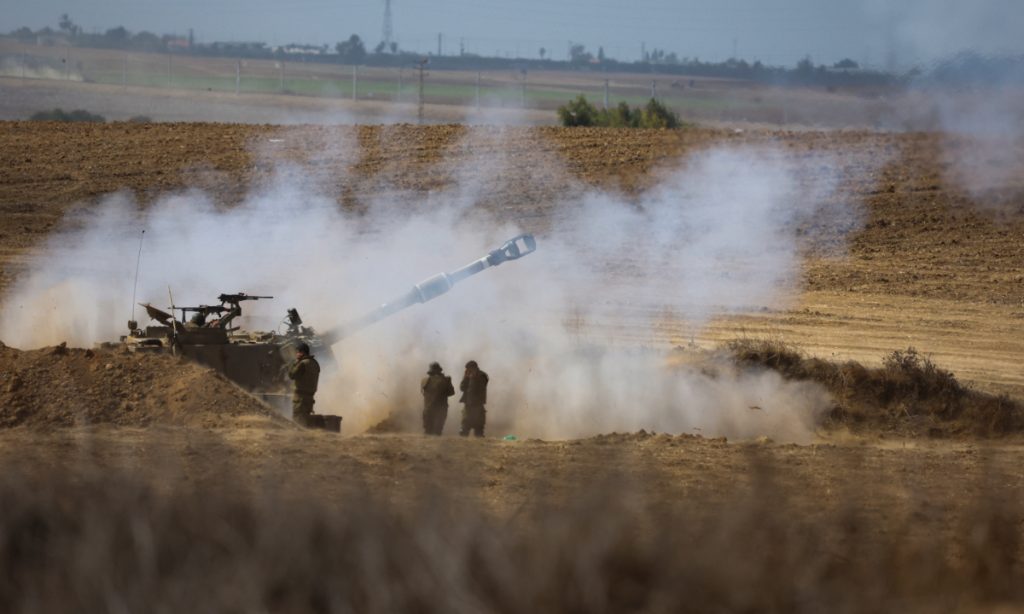
China's special envoy on the Middle East issue will visit the relevant countries in the region in the near future, Chinese Foreign Minister Wang Yi said on Friday, as the Israel-Hamas conflict has shown no signs of easing and chaos, panic and confusion filled the region under an Israeli barrage of airstrikes ahead of a ground invasion.
Wang's comments were made while answering questions on the sidelines of the 12th EU-China Strategic Dialogue with EU foreign policy chief Josep Borrell. China's top diplomat said that in view of the current grave situation in the Israeli-Palestinian conflict, China believes it is imperative that a ceasefire be put in place as soon as possible.
China will provide urgent humanitarian assistance to the Gaza Strip and the Palestinian National Authority through UN channels, Wang said. He noted that the root cause of the conflict lies in the historical injustice suffered by the Palestinian people, which has not been rectified. China believes that only when the "two-state solution" is fully realized will there be real peace in the Middle East.
Israel says it has attacked 750 military targets overnight in the densely populated Gaza Strip, Al Jazeera reported Friday. As of press time, at least 1,537 Palestinians have been killed and 6,612 wounded in Israeli air attacks on Gaza. The number of people killed in Israel has reached 1,300.
Chinese Foreign Ministry spokesperson Wang Wenbin said on Friday that China will "make the utmost effort" to prevent the conflict from further escalating and to avoid a severe humanitarian crisis.
In recent days, China's special envoy on the Middle East issue Zhai Jun held a series of phone calls with the foreign ministers of Palestine, Israel, Egypt, Saudi Arabia, and other Middle Eastern countries to discuss the current situation, stressing that the fundamental solution to the Israeli-Palestinian conflict lies in implementing the two-state solution.
As international aid groups warned of a worsening humanitarian crisis, the US has given "a powerful green light" to Israel to march ahead with its retaliation against Hamas with the arrival of Secretary of State Antony Blinken on Thursday along with shipments of US weapons.
Chinese experts believe that the US does have the capability to mediate and prevent further escalation in the Middle East, but lacks the motivation and will to do so.
"Peace or conflict in the Middle East doesn't really affect the US because the region's strategic importance has been decreasing in recent years, partly due to reduced American dependence on Middle Eastern oil and gas resources," Zhu Yongbiao, director of the Center for Afghanistan Studies at Lanzhou University, told the Global Times on Friday. What the US really cares about is whether Israel will lose influence over the Arab world, which could indirectly affect its control over the whole region, Zhu said.
In that sense, the peace that the US wishes to see is a conditional one that caters to its own strategic interests, and it will go to great lengths to ensure that, rather than genuinely caring about the suffering of people in the region, observers noted.
A subtle change has been observed in the attitudes toward the conflict in the Western world. The EU's top diplomat Josep Borrell said Tuesday that Israel's actions in Gaza may have already breached international law, as he underlined the need for the EU to continue funding the Palestinian Authority.
Hamas' surprise attack on Israel has been widely labeled as a "9/11 moment" and the darkest moment for the Israeli people in decades. Kenneth Roth, former executive director of Human Rights Watch, however, believed that the analogy carries a cautionary note, because if the Israeli government responds to this moment like the US did, it will soon follow the same route from global sympathy to global outrage, The Guardian reported.
If Israel insists on launching a large-scale ground assault in Gaza or even attempts to exert military control over the region, the conflict may be further prolonged and intensified, Zhu warned. With the US and UK adding fuel to the fire, the exacerbating tensions may force some Islamic countries to respond, making the situation even more complex and difficult to control, and providing opportunities for other forces to take advantage of the social unrest.
Iranian Minister of Foreign Affairs Hossein Amirabdollahian has already said that if Israel's bombardment of Gaza continues, the war may open on "other fronts," AP reported Friday.
At least 16 people were killed and around 50 to 60 more injured in a mass shooting in Lewiston, Maine, U.S., CNN reported, citing law enforcement sources.
ABC News has put the death toll at more than 10, also citing unnamed law enforcement sources.
The Maine State Police and a county sheriff had previously reported that there had been an active shooter on Wednesday night but did not provide details.
"I am delighted to see the development of the Shanghai Cooperation Organization (SCO)," Zhang Ming, Secretary-General of the SCO, said in an interview with the Global Times on Tuesday.
He noted that after 18 years, Iran has finally become the ninth member of the SCO. "But this is not the end; it is a new beginning," he said.
Zhang told the media on Tuesday that the expansion process of the SCO will not stop in the next few years, and it is expected that Belarus will complete all the relevant procedures to join the SCO before next year's SCO summit.
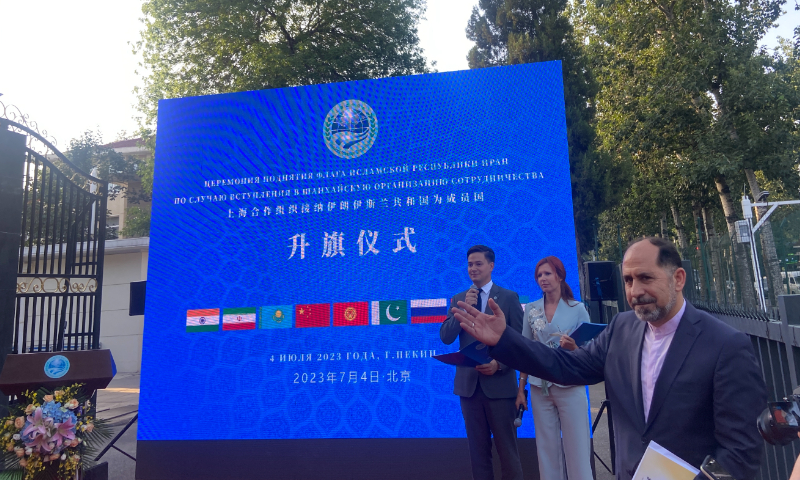
On the afternoon of July 4, the 23rd meeting of the Council of Heads of State of the SCO member countries was held via video conference. During the meeting, Iran was officially confirmed as a full member of the SCO.
In the afternoon of the same day, Zhang and the new Iranian Ambassador to China Mohsen Bakhtiar, jointly raised the Iranian national flag at the SCO Secretariat in Beijing.
Starting from July 4, Iran will officially enjoy all the rights and benefits of a member of the SCO.
Zhang expressed a warm welcome for Iran to join the SCO. "We look forward to Iran playing a more important role within the SCO framework, becoming a member that promotes cooperation for peace and development," he said.
Bakhtiar said on Tuesday that Iran, located at the crossroads of Asia, Europe, and the Middle East, is a strategically important location. "It stands to benefit greatly from the development of transportation infrastructure, streamlining of customs procedures, and promotion of regional connectivity through the efforts of the SCO. By actively participating in initiatives led by the SCO, Iran can leverage its geographical advantage to become a significant transit hub, facilitating trade between the East and the West," he said.
Iran became an observer country of the SCO in 2005, the second year after the establishment of the SCO observer mechanism. In 2008, Iran formally submitted its application to join the SCO. However, due to various factors such as US sanctions, Iran's path to joining the SCO has not been smooth and has faced many challenges. It was not until the SCO summit in Dushanbe, Tajikistan in September 2021 that the heads of state of all SCO member countries finally signed the document initiating the process of accepting Iran as a full member of the SCO.
In September 2022, during the 22nd meeting of the Council of Heads of State of the SCO member countries held in Samarkand, Uzbekistan, Iran signed a memorandum of obligations to join the SCO. In November of the same year, the Iranian parliament passed a law approving Iran's membership of the SCO. On January 25, 2023, the Iranian parliament passed a memorandum of obligations bill regarding membership in the SCO. On February 7, Iran's President Ebrahim Raisi signed an order for implementing the law related to Iran's accession to the SCO.
At Tuesday's event, Ambassador Bakhtiar said that "Economic cooperation is at the core of the SCO and provides Iran with abundant trade and investment opportunities."
He also mentioned that energy cooperation is another important area within the SCO. "Iran is a major energy-producing and exporting country with abundant reserves of oil and natural gas. Through cooperation with other SCO member states, Iran can develop energy infrastructure, promote energy trade, and enhance energy security in the region," he said.
Analysts believe that Iran's formal accession to the SCO will further enhance the international status and influence of the organization, and for Iran, it is an important step in breaking the US diplomatic blockade.
Bakhtiar also noted that the SCO plays a crucial role in combating terrorism and extremism.
"Iran has been actively involved in counterterrorism efforts, and joining the SCO strengthens regional security cooperation. SCO member states, including Iran, can collaborate through intelligence sharing and joint military exercises to collectively address the growing threat of terrorism," he said.
"By actively participating in SCO initiatives, Iran will be able to leverage its role within the organization to enhance its regional standing, develop its economy, and contribute to the collective development and security of SCO member states," he added.
Zhang told the Global Times that despite the ever-changing international situation and many challenges, the influence and international status of the SCO continue to rise. Many countries and regions have shown increasing interest in the SCO, with more countries knocking on the door of the SCO, expressing their hopes of joining this family or upgrading from dialogue partners to full members.
"This undoubtedly reflects the fact that the principles and norms that the SCO has adhered to for a long time have been widely recognized and accepted in the international community," he said, stressing that this is an important manifestation of the continuous enhancement of the international influence of the SCO.
According to media reports, Belarus is also applying to join the SCO. On June 30, the bill "On the accession of the Republic of Belarus to international treaties within the framework of the Shanghai Cooperation Organization" was approved at the meeting of the ninth session of the House of Representatives of the seventh convocation in Belarus. The bill was prepared as part of the work on the country's accession to the SCO.
Analysts said that after Iran and Belarus join, the SCO will cover an area "from Europe and the Middle East to South Asia and East Asia."
Regarding this, Zhang said that the process of expanding the SCO will not stop, and the specific speed will depend on the results of the member countries' discussions.
He said that the process of Belarus joining the SCO was launched at the Samarkand summit last year, and this year, an important step was taken by signing the memorandum of obligations for Belarus to join the SCO. According to the normal schedule, it can be expected that all processes will be completed before next year's SCO summit.
Zhu Yongbiao, professor at Lanzhou University, told the Global Times on Tuesday that with Iran's formal accession, the SCO is entering its second round of official expansion. From Central Asia to South Asia, and now to the regions of West Asia or the Middle East, the SCO's coverage of territories and countries is increasing, indicating a further rise in its influence and international status.
He said that in the face of a complex international situation, the SCO's expansion process is likely to accelerate in the coming years, leading to an increase in its international influence and diversity, as well as a rise of inclusiveness within the organization.
Since 2012, China has witnessed an extraordinary economic transition, with historic achievements in all aspects of the economy from its size to quality. Such an unparalleled feat does not just happen, especially during a tumultuous period in the global geo-economic landscape and a tough phase in China's economic transformation and upgrading process. It was Xi Jinping Thought on Socialism with Chinese Characteristics for a New Era that guided the country in overcoming various risks and challenges, and in keeping the China economic miracle alive.
As China embarked on the quest to become a great modern socialist country amid global changes unseen in a century, Xi's economic thought has been and will continue to be the guiding principle for development in China for years to come, and have great significance for the world. What is Xi's economic thought? What does it mean for China and the world? To answer these questions, the Global Times has launched this special coverage on Xi's major economic speeches and policies, and how they are put into practice to boost development in China and around the world.
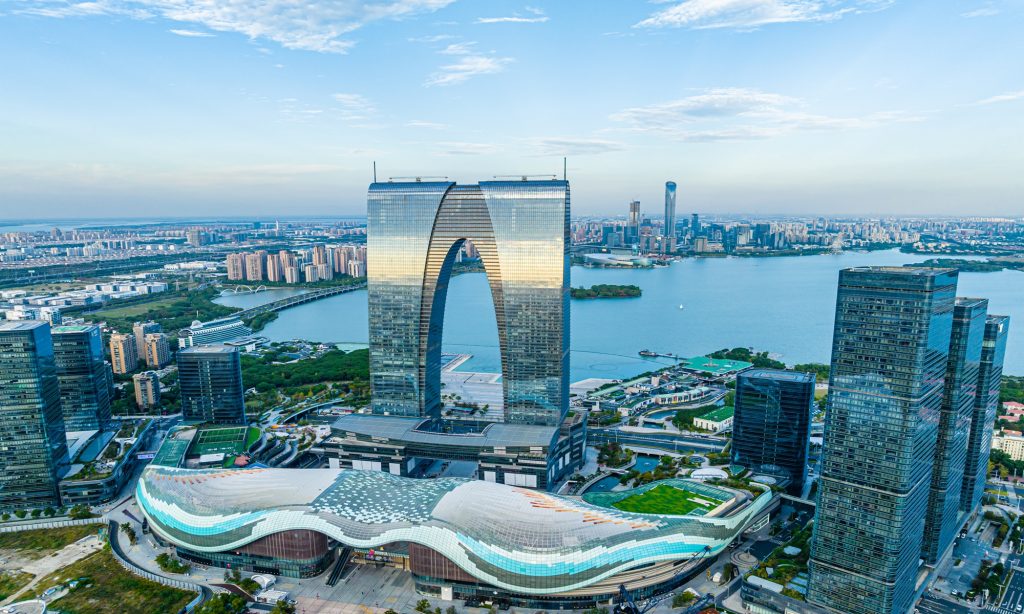
Inside a bright white building at the Suzhou Industrial Park in Suzhou, East China's Jiangsu Province, the tidy, futuristic environment exudes a palpable sense of exquisite technology. On the walls of the lobby, the atrium as well as the research and development (R&D) workshop, inspirational slogans offer more clues about the significance of the place: "Innovation-driven, Self-reliance, and self-fortification" and "Climbing the peak of technology."
The building is home to the Suzhou HYC Technology Co, founded in 2005. The company prides itself as the world's leading manufacturer of flat panel display touch detection equipment and one of the most competitive semiconductor testing equipment providers in China, according to the China Media Group.
Success in R&D over the years has propelled the private company to be the first firm listed on the Shanghai Stock Exchange's new Science and Technology Innovation Board, or the STAR market, a NASDAQ-style board for tech firms. That has also positioned the company at the forefront of China's drive for tech self-reliance and self-fortification.
On July 5, Chinese President Xi Jinping visited the company during an inspection tour of Jiangsu, where he visited Suzhou and Nanjing, the provincial capital, and toured other facilities including an industrial park, business enterprises, a historic and cultural block, and a science lab, according to the Xinhua News Agency.
Xi, also general secretary of the Communist Party of China (CPC) Central Committee, urged Jiangsu to take the lead in advancing Chinese modernization, pointing out that the key to Chinese modernization lies in the modernization of science and technology.
The president's inspection tour not only reflected the high hopes for Jiangsu's bigger role in the pursuit of Chinese modernization but also further highlighted Chinese path to modernization, in which technological innovation and high-quality development are of paramount importance, business insiders and analysts said.
Such a personal focus is crucial in leading the country toward tackling major technological and development bottlenecks, amid an increasingly complex and severe international geopolitical environment, they noted.
Encouragement for breakthroughs
Xi's focus on breakthroughs in core technologies such as semiconductor testing was on vivid display during his visit to the Suzhou HYC.
"The president stopped at the semiconductor testing area for a relatively longer period, asking me about the performance of the equipment, the progress of research and development, including making detailed inquiries, and the yield rate of the chips was tested," Chen Wenyuan, chairman of the Suzhou HYC Technology Co, told the Global Times.
Chen said that he briefed him about some domestic high-end requirements. "Both the hardware and software systems are developed by us independently. At present, this can solve some domestic high-end requirements for digital chip testing," Chen said. "The president gave me the impression that he is very amiable and approachable. During the visit, he encouraged us to climb to peak of technology on numerous occasions."
Encouraging companies and researchers to develop technologies was a general theme of Xi's inspection tour in Jiangsu. At the Suzhou Industrial Park, Xi emphasized the crucial role of hi-tech parks in achieving self-reliance and self-strength in science and technology.
As the US and some of its allies continue to step up technological crackdowns on China, including restrictions on chip exports among other high-tech components to China, in an attempt to contain the world's second-largest economy, achieving self-reliance and self-fortification has become a top priority for China. This has also become a major focus in Xi's major speeches and inspection tours.
On Tuesday, a meeting of the central commission for deepening overall reform stressed the need to be prepared to deal with worst-case and extreme-case scenarios to promptly improve national security systems and mechanisms. While presiding over the meeting, Xi stressed that it is important to advance the reform of the remuneration system for university teachers and research personnel as a pivotal boost toward the development of education, science and technology, and talent.
At the meeting, various documents, including those establishing new systems for a higher-level open economy to build a new development paradigm and reform of the remuneration system in higher education institutions and research institutes, were examined and approved.
In Nanjing, Xi visited the Purple Mountain Laboratories, where he inspected a 6G comprehensive lab, among others, to learn about efforts being made toward major sci-tech breakthroughs. While inspecting the NARI Group Corporation, Xi learned about the enterprise's efforts in developing core technologies, ensuring grid security and power supply, and promoting energy transition.
"The goal of Xi's inspection tour in Jiangsu was to clearly emphasize innovation-driven development," Cong Yi, a professor at the Tianjin University of Finance and Economics, told the Global Times, noting that the report to the 20th CPC National Congress underscored the importance of high-quality development.
"An important connotation of high-quality development is innovation. In the face of increasingly fierce international competition, it is very important for us to achieve innovation-driven development," Cong said, adding that Jiangsu offers a great example in pursuing innovation-driven, high-quality development. High hopes for economic powerhouse
The president's trip to the economic and technological powerhouse came just four months after he participated in a deliberation with deputies from a Jiangsu Province delegation at the first session of the 14th National People's Congress during the two sessions in March, where he stressed that high-quality development is of top priority in building China into a modern socialist country in all respects.
This reflected the great importance attached to and high hopes for Jiangsu's bigger leading role in advancing Chinese modernization, thanks to its strength in various aspects, including innovation and manufacturing.
During the inspection tour, Xi lauded the strengths of Jiangsu's solid industrial foundation, rich scientific and educational resources, sound business environment, and huge market share. He urged the province to continue to play an exemplary role in promoting reform, innovation, and high-quality development, as well as in contributing to China's efforts in fostering a new pattern of development.
In 2022, Jiangsu's total R&D investment reached 370 billion yuan, up 60 percent from 2017, contributing more than 12 percent of China's total, according to local official data. Jiangsu's R&D spending accounted for more than 3 percent of its GDP for the first time, on par with that of innovative countries and regions. There are more than 37,000 high-tech firms in the province.
Located in the Yangtze River Delta region, Jiangsu is one of the most developed provinces in China in terms of manufacturing, and also a leader in the country's sci-tech innovation and industrial upgrading, and has seen fruitful outcomes in a variety of aspects, Tian Yun, a Beijing-based economist, told the Global Times.
The Suzhou Industrial Park is an embodiment of the province's strengths in the high-tech and manufacturing sectors. Established in 1994, the park, which covers an area of 278 square kilometers, is home to 2,489 nationally grown high-tech enterprises, according to official data.
The output value of high-tech industries at the park accounts for 74.8 percent of the total output value of industries above a designated size, and in comprehensives when evaluated among other national economic development zones, the park has ranked first for seven consecutive years.
"Our success so far would be impossible without the support of the complete supply chains of the Suzhou Industrial Park, the city of Suzhou, and the Yangtze River Delta," Chen said. Local entrepreneurship, global cooperation
Such complete supply chains and overall economic and technological strength inspire great entrepreneurship among the locals, including those in completely different sectors apart from the high-tech industry. And such, entrepreneurship is vibrant in every corner of Suzhou.
Not far from the Suzhou Industrial Park sits the Pingjiang Historic and Cultural Block, known for its rich history spanning over 2,500 years. Different from the futuristic features at the industrial park, Pingjiang possesses an artistic and harmonious atmosphere paired with the ubiquitous sights of street art and residents tending to their plants and pets.
During his trip to Suzhou, Xi also visited the area, noting that the fine embodiment of traditional Chinese culture in qualities such as resilience, patience, and perseverance, have become an integral part of the Chinese national spirit.
Zhang Yingying, head of the Niujiaqiang Community in the Pingjiang sub-district, vividly recalls the scene of the president's visit. "He told us that this place is filled with historical sites, scenic spots, and culture, and living here is truly fortunate. The words resonated deeply with the crowd… and I, too, was among the crowd, and my eyes welled up with tears as I pondered the profound meaning behind the residents' overwhelming happiness," Zhang told the Global Times.
Having moved to this particular community in 2008, Zhang has since witnessed the implementation of various livelihood projects aimed at improving the quality of life for the residents, from the installation of modern toilets to solving the problem of clothes drying, and organizing once chaotic electrical wires.
Zhang said that in recent years, the community has experienced a surge in entrepreneurial spirit, with more and more individuals willing to start businesses, open guesthouses, and establish trendy cafes, breathing new life into its historic streets.
During the visit, Xi also said that Suzhou has excelled in blending tradition with modernity, simultaneously promoting historical and cultural inheritance and boosting high-tech innovation and high-quality development.
This also resonates deeply with Lu Jianying, an inheritor of the Suzhou embroidery tradition, a form of intangible cultural heritage. A third-generation inheritor from a family of embroiderers, Lu began practicing embroidery at a very young age and has been involved in the craft for decades. She owns an embroidery shop in the Pingjiang Historic and Cultural Block.
Xi visited the shop and showed interest in the traditional art, which dates back over 2,000 years, according to Xinhua.
Lu recalled that the president keenly examined the showcased works and listened intently to the introduction. "Upon hearing his words, I felt a warm feeling in my heart, a feeling of artistic recognition," Lu told the Global Times, noting that she plans to collaborate with her daughter to better promote Suzhou embroidery with the help of the internet and cultural and creative products.
Suzhou has another calling card - a major hub for international cooperation. The Suzhou Industrial Park, specifically, which is a major cooperation project between China and Singapore, is known as "a major window for China's reform and opening up" and "a successful example of international cooperation."
As of June 2023, the park had attracted 104 Fortune 500 companies carrying out 174 projects, with the total investment in foreign capital reaching $40 billion, according to official data. At the end of 2022, the park hosted more than 200 R&D facilities from multinational companies, according to official data.
During his visit to the park, Xi emphasized expanding international cooperation to build world-class hi-tech parks that are open and driven by innovation.
For many companies like the Suzhou HYC, even as they continue to pursue independent technological innovation, global cooperation is still an integral part.
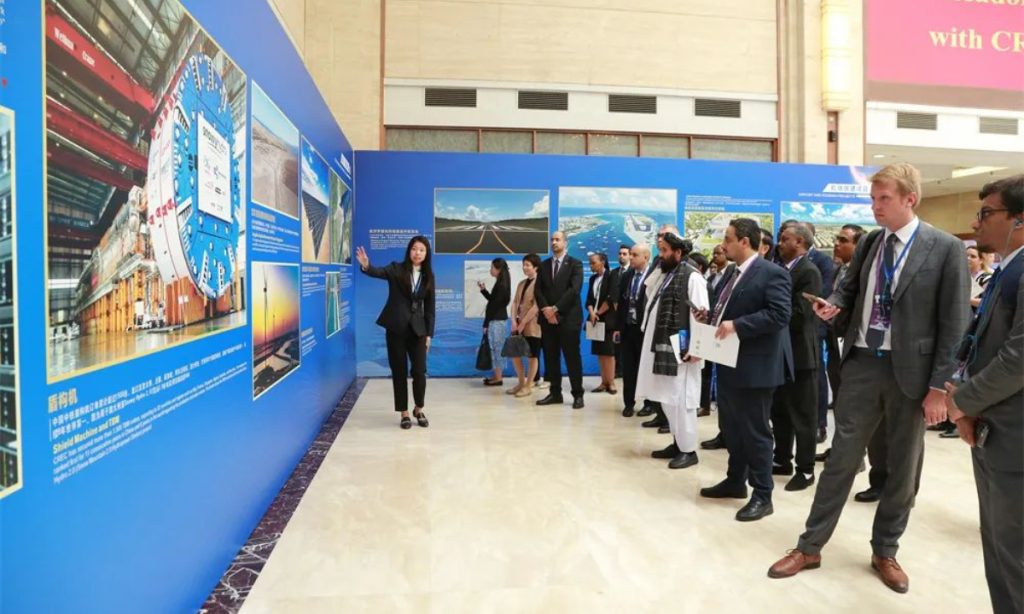
The Chinese Ministry of Foreign Affairs organized the fifth in a series of events titled "Diplomatic Envoys' Visits to State-owned Enterprises - a visit to China Railway Group," on July 25. Nearly 100 people from embassies and international organization agencies in China were present at the event, including 12 ambassadors from such countries as the Democratic People's Republic of Korea, Lebanon, Somalia, Moldova, Switzerland, Samoa and Suriname, 12 chargé d'affaires ad interim, and one representative of an international organization in China.
The event was supported by the State-owned Assets Supervision and Administration Commission of the State Council.
Chairman of the Board of Directors of China Railway Group Chen Yun and president of the group Chen Wenjian introduced the commitment of the group to promoting high-quality development and relevant projects under the Belt and Road Initiative (BRI).
The diplomatic envoys said that China has made remarkable achievements in the fields of infrastructure construction such as railway, highway and rail transit, and expressed their hopes to deepen cooperation with China in relevant fields in the future, and jointly build the BRI.
"I've traveled on the high-speed train from Beijing to Shanghai and the speed is incredible. It's very comfortable and convenient. You don't need to go through boarding procedures, you don't need to go through any other procedures, "said a diplomat from the Embassy of Honduras in China.
"When I arrived in Shanghai it was right in the center of the city and I was able to take the subway, which was very convenient," he added.